Stamped Concrete vs. Pavers in Fort Collins: Durability & Maintenance
A side-by-side durability, maintenance, and freeze-thaw comparison for Fort Collins homeowners.
The Short Answer
Both materials can perform well along the Front Range, but stamped concrete resists frost heave better because its continuous, sealed surface blocks melting snow from pooling underneath. Pavers flex with shifting ground without cracking, but water easily penetrates joint sand, leading to sunken stones, heaving edges, and persistent weed growth after repeated freezing cycles. For low-maintenance durability in Fort Collins, properly sealed stamped concrete holds a distinct advantage.
Fort Collins winters create a punishing proving ground for outdoor living spaces. High-altitude sunshine frequently pushes afternoon temperatures into the upper forties or fifties, melting snow cover across backyards. As soon as the sun dips behind the foothills, temperatures plummet back into the teens. That rapid swing happens dozens of times between October and April along the Front Range. When moisture enters the spaces beneath outdoor hardscapes and turns to solid ice, it expands by nearly ten percent with enough force to shift heavy masonry, displace base sand, or crack unsealed surfaces.
Homeowners planning a new patio or outdoor walkway routinely weigh two leading options: poured decorative concrete and interlocking pavers. Both materials look stunning when the installation crew leaves the driveway, but their structural behavior changes drastically after three or four Colorado winters. Deciding between them requires looking past the surface finish and understanding how sub-base soils, moisture infiltration, and seasonal maintenance dictate their longevity.
The Front Range Climate Test: Freeze-Thaw Cycles and Expansive Clay
Most parts of the northern United States endure winter conditions where the ground freezes solid in November and stays frozen until March. Fort Collins does not work that way. Because Northern Colorado experiences abundant sunshine throughout the colder months, local hardscapes thaw during the day and freeze again at night. Regional climate data indicates that the Front Range experiences between 90 and 120 freeze-thaw cycles every single year.
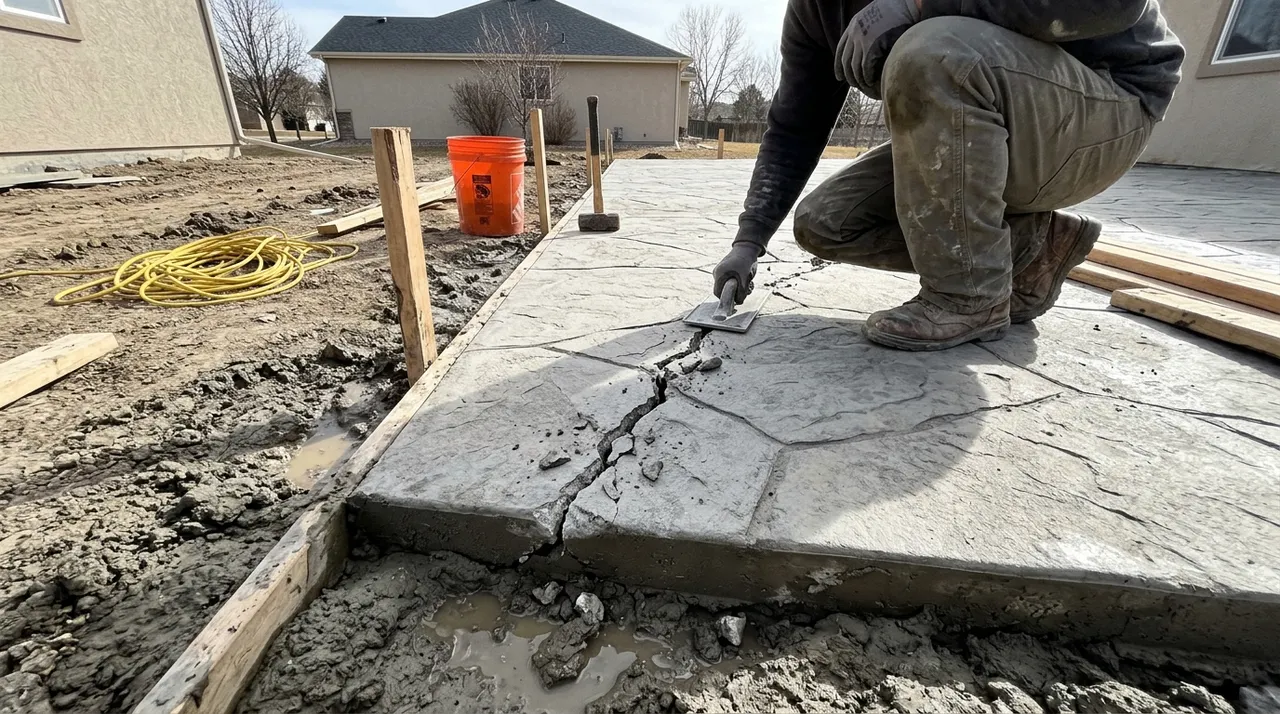
Every time melted snow seeps into small openings, the drop in overnight temperature causes that moisture to expand by roughly 9 percent. That repeated physical expansion acts like a hydraulic wedge inside any porous building material or beneath loose joints.
Compounding this temperature swing is the native soil structure in Larimer County. Much of the Front Range sits atop expansive clay formations rich in minerals like bentonite. As Colorado State University Extension natural resources research points out, expansive clay soils swell significantly when wet and contract during dry periods, exerting immense pressure on residential foundations, slabs, and flatwork. When wet clay heaves beneath a patio and freezes simultaneously, a poorly constructed outdoor surface has no chance of remaining level.
How Stamped Concrete Performs in Fort Collins Winters
Stamped concrete is a continuous, reinforced slab that is poured, colored, and patterned while wet to replicate stone, slate, brick, or wood planking. Because it is a monolithic system, its structural behavior is defined by the strength of the concrete mix and the base beneath it.
For freeze-thaw resistance, modern concrete mixtures depend on three elements: high compressive strength (typically 4,000 PSI or higher), synthetic fiber or steel rebar reinforcement, and air-entrainment admixtures. Air-entraining agents introduce billions of microscopic air voids into the wet mix. When moisture inside the cured slab freezes, these micro-bubbles give the expanding ice room to move without fracturing the concrete paste. Without air entrainment, concrete surfaces in Colorado flake and peel, a condition known as spalling.
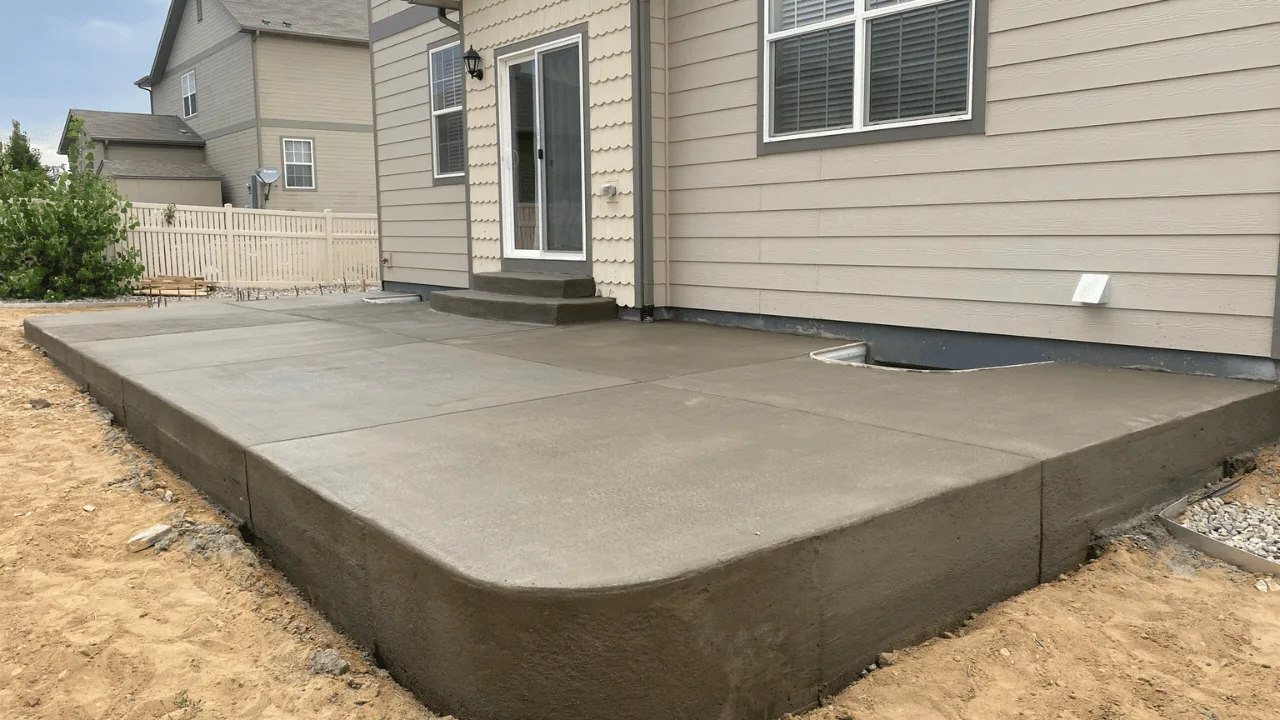
Control joints are another vital engineering element. All concrete shrinks slightly during hydration and thermal cooling. Instead of allowing the slab to develop random spiderweb cracks, contractors saw or tool control joints into the slab at precise intervals, usually every 8 to 10 feet. When ground movement or temperature stress occurs, the slab relieves tension within those pre-cut grooves, keeping the main visible surface intact.
Protection from surface water comes from sealers. Choosing decorative stamped concrete surfaces gives you a continuous top layer that is coated with a topical acrylic or penetrating sealer. This coating closes the surface pores, shedding rain and snowmelt toward the yard instead of letting moisture soak into the concrete body.
How Pavers Perform Under Repeated Freeze-Thaw Stress
Interlocking pavers take a completely different architectural approach. Rather than acting as a single rigid sheet, a paver patio is a flexible system composed of hundreds of individual precast blocks set over a bedding sand layer and a compacted aggregate base.
The primary advantage of pavers is their flexibility. Because each paver is isolated, ground movement from expansive clay does not snap the individual stones. If the subgrade heaves slightly, the individual blocks shift independently rather than cracking across the entire patio width.
However, that flexibility introduces its own winter vulnerability: joints. A typical 400-square-foot paver patio contains hundreds of linear feet of sand-filled gaps. While polymeric sand is designed to bind the joints together, frequent freeze-thaw cycles break down the polymers over time. Melting snow penetrates the joints, pools in the bedding sand layer, and freezes overnight.
As that trapped water expands, it creates frost heave under individual stones. By spring, homeowners often notice uneven edges, sunken areas where base sand washed away, and tipped border stones where edge restraints gave way under frost pressure. These uneven ridges create tripping hazards and make patio furniture wobble.
Maintenance Realities: Season-by-Season Care
Longevity is directly tied to the work you must put in each year. Both materials require attention, but the type of maintenance differs substantially.
Winter Snow Removal and Ice Control
Clearing snow reveals an immediate practical difference. On a continuous concrete patio or walkway, a plastic snow shovel or rubber-bladed snow blower slides across the surface cleanly. On a paver surface, uneven stones or raised edges catch metal and plastic shovel edges abruptly, often chipping corners or gouging joint sand.
Deicing chemicals require extreme caution on both surfaces. Traditional rock salt (sodium chloride) accelerates freeze-thaw damage by drawing moisture deeper into pores before freezing. Chemical deicers can also chemically attack concrete paste and paver binders. The safest approach for both surfaces in Fort Collins is coarse traction sand or non-corrosive calcium magnesium acetate, combined with prompt snow shoveling before packed ice forms.
Spring Cleaning and Weed Prevention
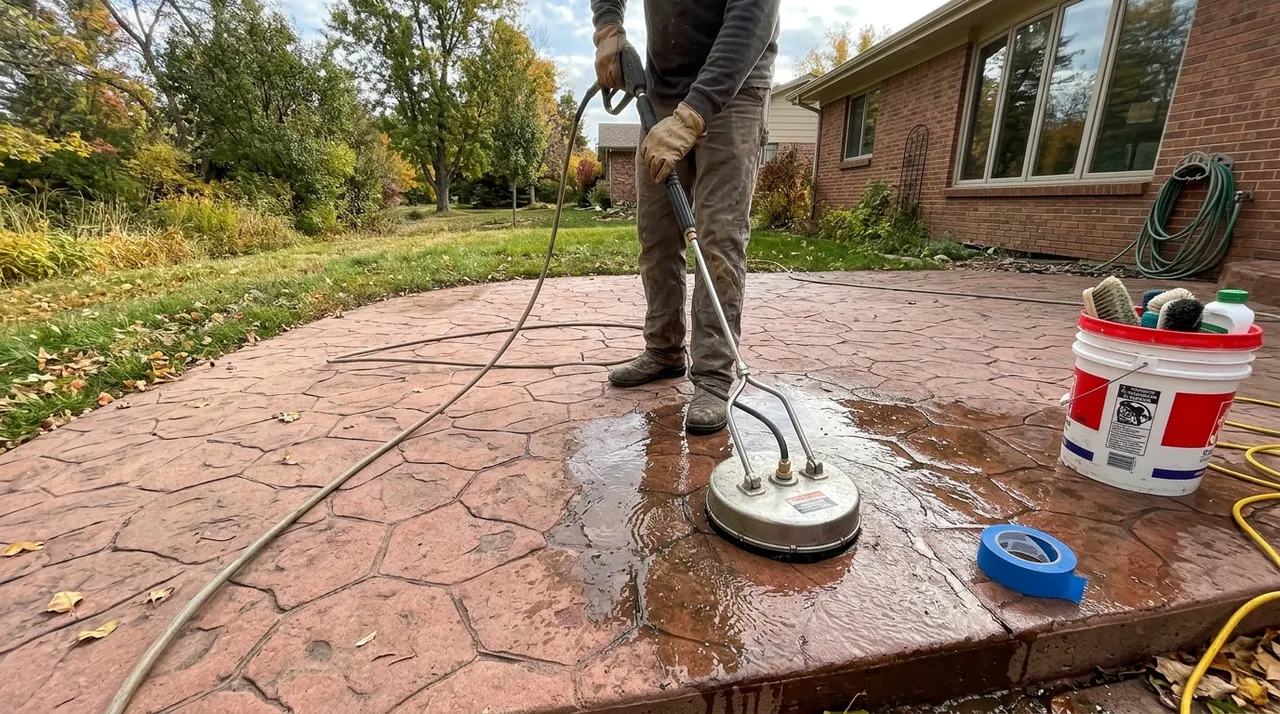
Spring is when the maintenance gap widens. With stamped concrete, spring maintenance usually involves rinsing away winter dirt with a garden hose and a mild surface cleaner. Because there are no open dirt or sand joints, weeds cannot sprout across the middle of your patio.
Pavers, on the other hand, demand regular weed control. Windblown seeds settle into loosened joint sand, taking root as soon as warm weather arrives. Ants also dig through degraded joint sand, creating mounds across the surface. If you attempt to pressure-wash paver weeds away, high water pressure inevitably blows out the polymeric sand, forcing you to sweep fresh sand into every joint and compact the patio again.
Sealing Requirements
Both surfaces need sealing to look their best and resist moisture intrusion. Stamped concrete should be resealed every two to three years depending on sun exposure and foot traffic. Applying sealer is a straightforward process: clean the slab, let it dry completely, and roll on a coat of breathable acrylic sealer with an anti-slip additive.
Pavers also require sealing to protect against stains and stabilize the joint sand. Sealing pavers involves significantly more surface area because of the joints, requiring more product and careful application to prevent sand from sticking to the paver faces. Homeowners planning custom concrete patios often prioritize stamped concrete specifically to avoid the endless cycle of re-sanding and hand-weeding joints.
Repairability: What Happens When Damage Occurs?
No outdoor hardscape is completely indestructible. Understanding how each material is repaired helps you evaluate the twenty-year reality of ownership.
Pavers win the theoretical contest for spot repairs. If an underground sprinkler pipe breaks or a tree root lifts three stones, you can pull up those specific pavers, repair the line or trim the root, re-level the crushed stone base, and set the original pavers back in place. The practical catch is color matching. If an individual paver cracks or stains and you need to replace it, finding an exact color match is extremely difficult. Years of intense Front Range ultraviolet sunlight will have weathered the installed patio, making new replacement pavers stand out noticeably.
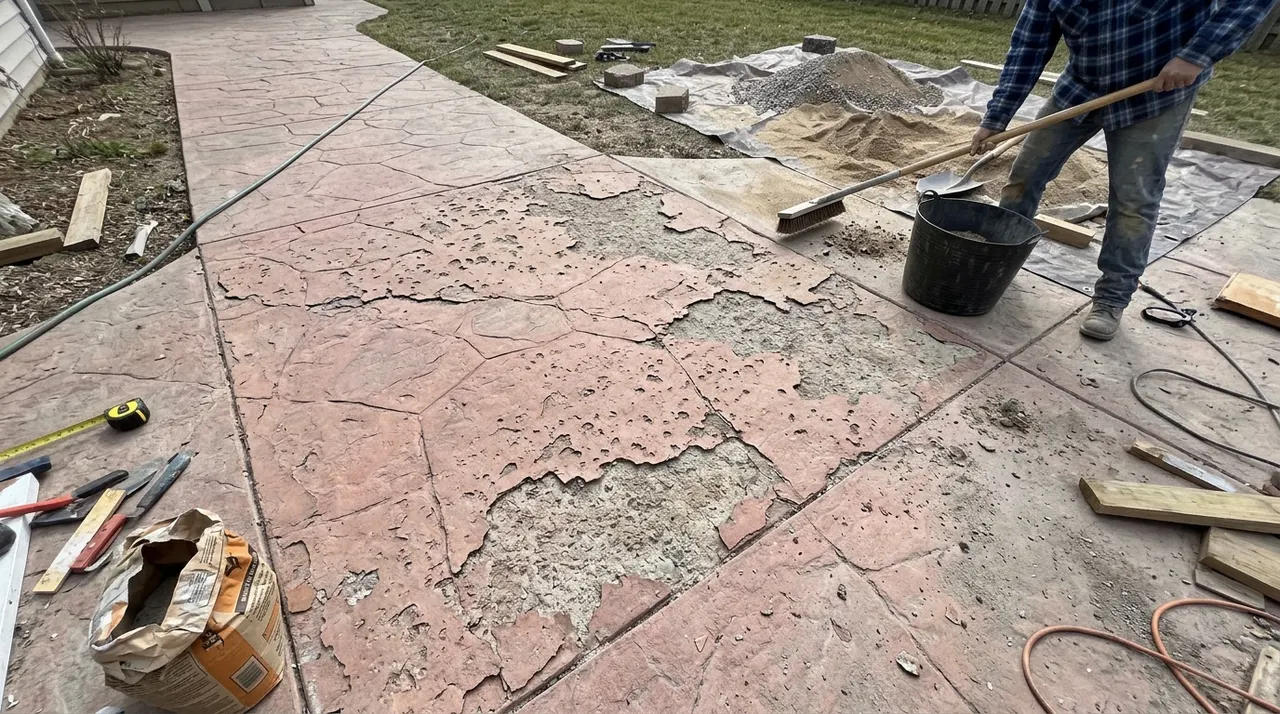
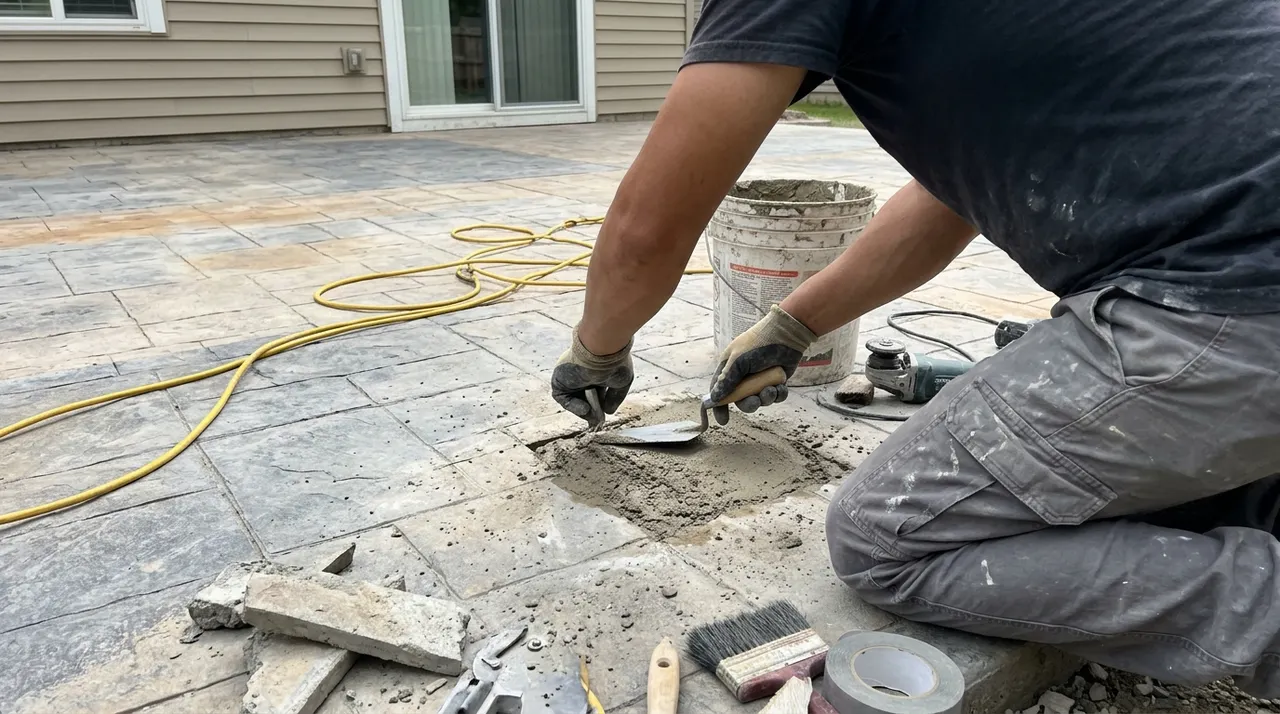
Stamped concrete is more permanent. If a crack occurs outside a control joint, repairing it invisibly is difficult. Cracks can be sealed with color-matched flexible polyurethane or structural epoxy to prevent water infiltration, but the hairline scar will remain noticeable. That is why professional installation standards are critical from day one. At Above & Below Concrete, our team brings five years of dedicated local experience to every project, focusing on sub-base preparation, proper steel reinforcement, and precise control-joint spacing so that internal slab stresses never turn into unsightly surface fractures.
Comparing Cost Drivers Over a Twenty-Year Horizon
When comparing estimates, homeowners often notice that professional stamped concrete and premium pavers carry comparable upfront pricing. The financial difference reveals itself over ten to twenty years.
Upfront paver costs are driven primarily by manual labor. Placing individual stones, cutting perimeter edges, setting heavy-duty border restraints, and plate-compacting the joint sand is time-intensive work. Stamped concrete upfront costs are driven by formwork, heavy material handling, specialized stamping tools, integral color pigments, and experienced finishing crews.
The long-term financial equation favors stamped concrete for most Fort Collins properties. Pavers require ongoing purchases of polymeric sand, weed control chemicals, and professional re-leveling every five to eight years if frost heave shifts the sub-base. Stamped concrete costs over two decades are limited to a drum of concrete sealer and a roller every couple of years. When evaluating total ownership expense, the reduced labor of a solid slab provides steady financial value.
Site Factors That Favor One Option Over the Other
Your property layout should influence your decision just as much as aesthetic preferences. Specific backyard conditions tilt the scale toward one material:
- Sunlight and Drainage: North-facing yards in Fort Collins often hold hard-packed snow and ice sheets for weeks. Stamped concrete with an anti-slip sealer prevents meltwater from entering the base, whereas pavers can become waterlogged beneath the snowpack.
- Soil Conditions: Sites with deep, active bentonite clay demand heavy base excavation regardless of material. Stamped concrete reinforced with rebar provides bridging strength across minor soil shifts, while pavers adapt to minor settling without snapping.
- Yard Slope: On steep slopes, retaining edges for pavers must be built with heavy concrete curbing to prevent outward creeping. Stamped concrete forms can be shaped and reinforced to handle moderate grade transitions cleanly.
- Mature Trees: If you are building within the root zone of large cottonwoods or pines, pavers allow for future root adjustments. Concrete slabs placed over aggressive root systems risk structural cracking unless root barriers are installed deeply.
Local Building Codes and Site Preparation in Fort Collins
Any outdoor hardscape project in Fort Collins must respect proper drainage patterns and property setbacks. Patios and walkways must slope away from building foundations at a minimum slope of one-quarter inch per foot to keep water away from basement walls—though requirements vary by municipality, so confirm with your local building department. When disturbing soil for excavation, you must avoid blocking municipal drainage easements or routing stormwater runoff directly toward adjacent neighbors. Always verify municipal zoning setbacks, impervious surface limits, and permit requirements with the Fort Collins Building Department before starting excavation, though requirements vary by municipality and neighborhood HOA rules, so confirm with your local building department before relying on this.
Summary Comparison: Stamped Concrete vs. Pavers
Here is how both hardscape solutions compare for Colorado homeowners:
- Freeze-Thaw Durability: Stamped concrete relies on air entrainment and surface sealing to lock water out. Pavers resist block cracking but suffer from frost heave and shifting joints.
- Maintenance Requirements: Stamped concrete requires power washing and resealing every 2 to 3 years. Pavers require weeding, sand replenishment, edge stabilization, and re-leveling.
- Weed Resistance: Stamped concrete is completely weed-free across the slab surface. Paver joints are susceptible to weed intrusion as polymeric sand weathers away.
- Winter Usability: Stamped concrete provides a flat surface for shoveling. Paver edges can catch shovels and crack under metal blades.
- Repair Process: Pavers allow individual stone replacement (though color fading makes matching tough). Concrete requires proactive crack prevention during initial pour.
Plan Your Outdoor Project with Fort Collins Specialists
Investing in a custom outdoor patio or walkway should give you decades of relaxation, not an annual chore list. If you want the timeless look of flagstone, slate textures, or decorative borders, getting the sub-base and drainage right is what makes your patio endure Northern Colorado weather. Contact Above & Below Concrete today to discuss your project requirements, schedule an on-site property evaluation, and receive an accurate quote built for your specific Fort Collins property.
Common Questions
Frequently Asked Questions
Ready To Start?
Get Your Free Quote Today
Get a free quote from Above and Below Concrete — serving Fort Collins and surrounding areas.