When to Repair vs. Replace a Concrete Garage Floor in Fort Collins
Find out when you can save a cracking slab and when you need a total replacement.
The Short Answer
You should replace your concrete garage floor when it exhibits structural failure, such as severe heaving, differential settlement, or wide, deep cracking. Minor issues like hairline cracks or superficial surface pitting can typically be repaired. Because Northern Colorado features expansive clay soils, a professional inspection is the only reliable way to determine if a patch will hold or fail.
Northern Colorado properties are hard on concrete. Between the wild temperature swings and the unpredictable soil beneath your driveway, the flatwork around your home takes a daily beating. When your garage floor starts showing its age, the debate between a quick patch and a full tear-out is one of the most common dilemmas homeowners face. Nobody wants to spend money on a completely new slab if a tube of sealant will do the trick. However, paying for a cosmetic repair on a fundamentally broken slab is just throwing money away. Understanding exactly what is happening beneath the surface is the first step to making a smart, long-lasting decision for your property.
Understanding What Is Happening Under Your Garage
Let's talk about the ground beneath your home. Northern Colorado is notorious for its challenging soil conditions. The dirt holding up your driveway and garage isn't just passive material. It moves. According to the Colorado Geological Survey, the Front Range is highly susceptible to expansive swelling soils. When it rains or snow melts, the clay absorbs moisture and expands, exerting massive upward pressure on the slab. When things dry out in the heat of the summer, the soil shrinks, leaving empty voids underneath the concrete.
This constant freeze-thaw and wet-dry cycle is brutal on concrete. It creates a seesaw effect. Over time, an unsupported slab will crack under the weight of parked vehicles. Knowing this helps you understand whether a simple patch will hold or if the entire slab is compromised. If the soil has severely eroded or heaved the slab out of alignment, a surface patch is just putting a bandage on a broken bone.
When to Repair a Garage Floor
Not every crack means you need to tear out the whole slab. If the underlying base is stable, repairs are often perfectly viable and much more cost-effective.
Hairline Cracks
A few hairline cracks are practically inevitable in concrete. As the material cures and shrinks, small stress fractures often appear. As long as these cracks remain narrow, usually less than a quarter inch, and the concrete on either side is level, they can usually be cleaned out and sealed with a high-quality flexible sealant. This keeps water from penetrating the slab and freezing, which would otherwise widen the crack over the winter.
Minor Surface Spalling
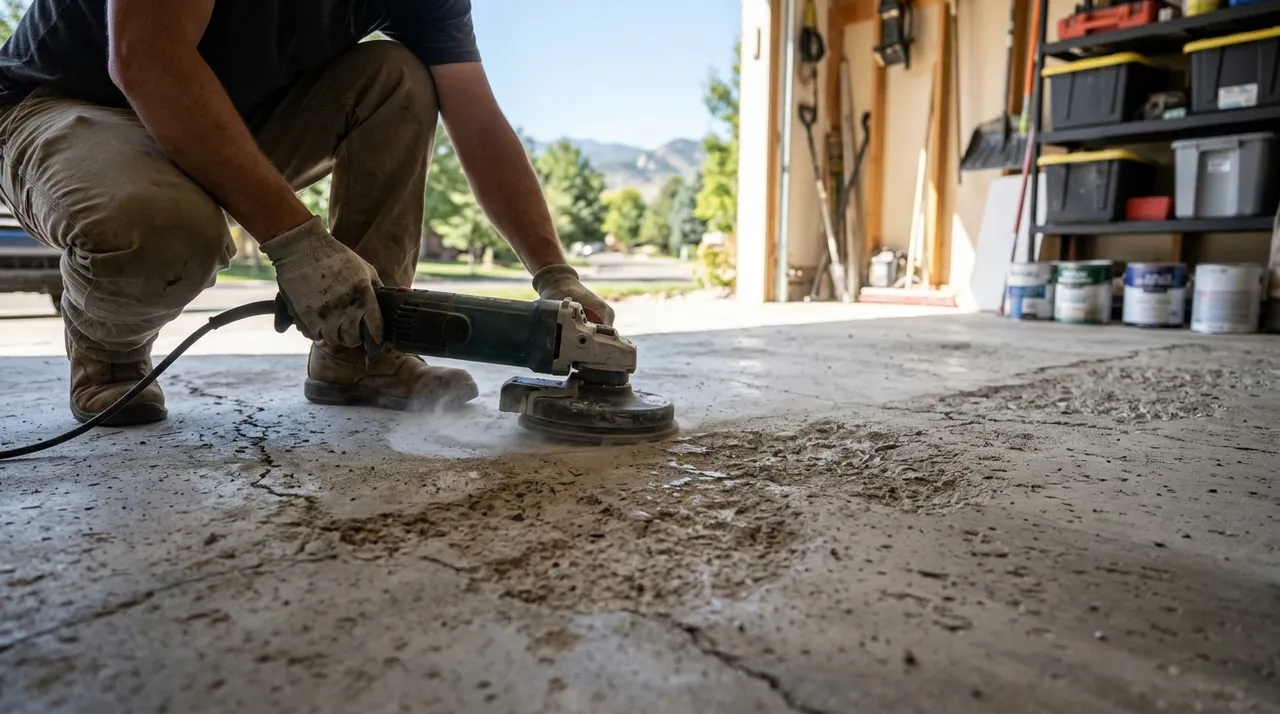
Spalling occurs when the top layer of the concrete begins to flake or chip away. In Fort Collins, this is usually caused by de-icing salts dragged in by your tires, which then attack the concrete surface. If the damage is localized and shallow, a contractor can grind down the surface and apply a resurfacer to restore the finish and protect the slab.
When Replacement Is the Only Option
There comes a point where a complete garage floor replacement makes more financial sense than throwing money at temporary fixes.
Significant Heaving and Dropping
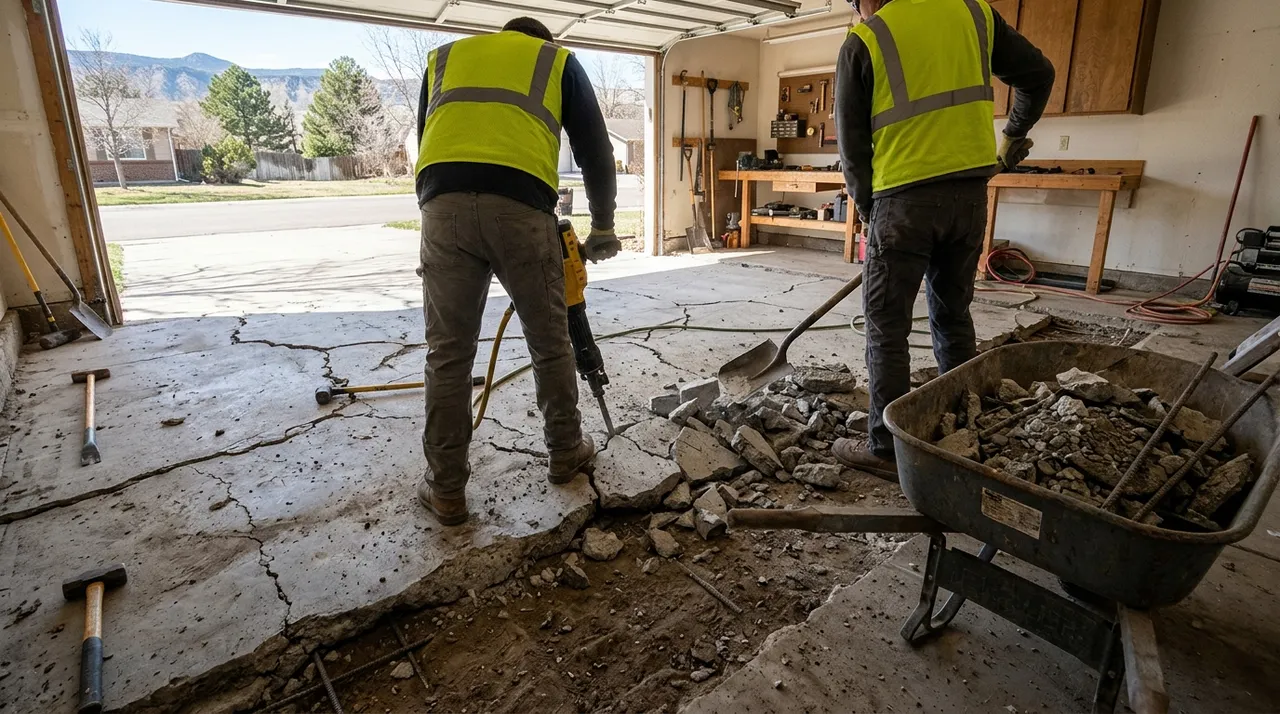
When one side of a crack is visibly higher than the other, known as differential settlement, the slab has lost its structural integrity. You will feel a distinct bump when driving in, and it creates a serious trip hazard. Once a slab has sheared and heaved significantly, patching the crack will not stabilize it. The ground movement has already won, and the slab needs to be removed so the sub-base can be properly rebuilt and compacted.
Widespread Spiderweb Cracking
If your floor looks like a shattered windshield, the concrete has failed. This usually indicates a poor original mix, inadequate slab thickness for the weight it bears, or a completely failed subgrade. No amount of caulking or resurfacing will hold this together. The pieces will continue to grind against each other every time you drive over them.
Deep Pitting and Exposed Aggregate
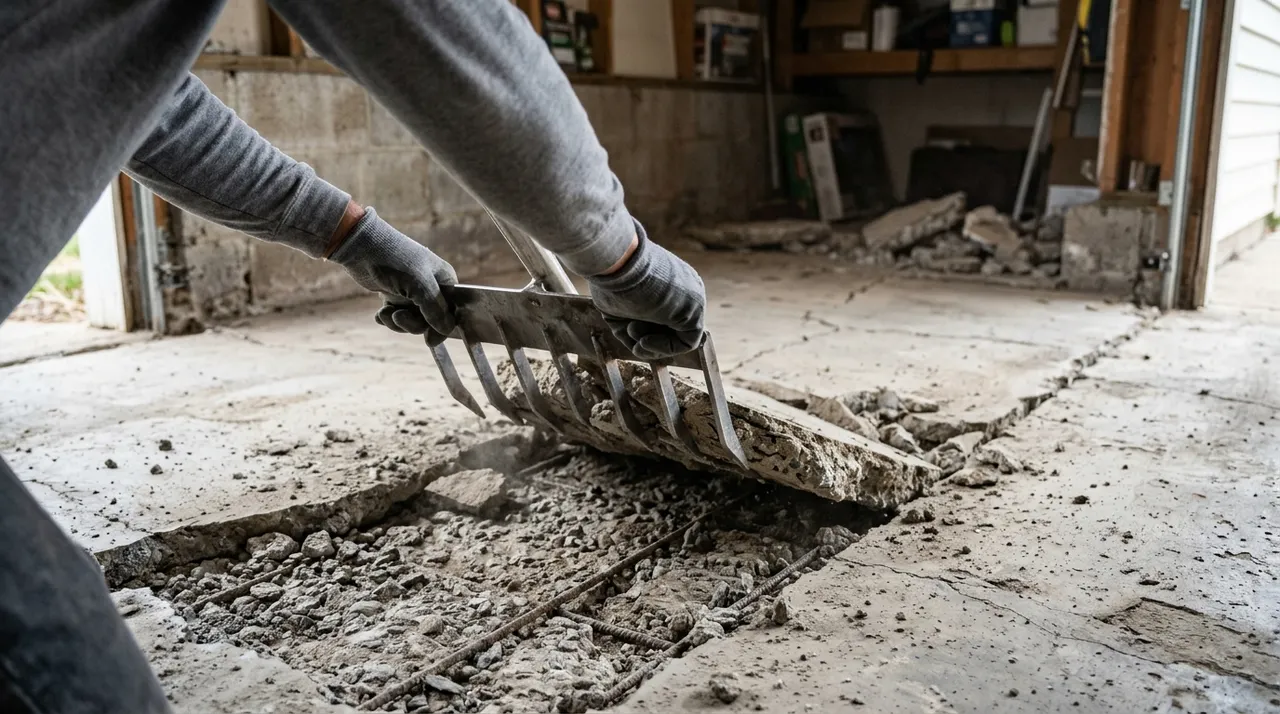
When spalling goes unchecked, the surface deterioration eventually exposes the coarse aggregate inside the concrete. Once water reaches the internal structure, it accelerates the breakdown. If moisture reaches the steel reinforcement inside the slab, the steel will rust and expand, literally blowing the concrete apart from the inside. At this stage, a tear-out is necessary.
The Hidden Dangers of Ignoring a Failing Slab
Many homeowners see a cracked garage floor as a mere cosmetic issue. Unfortunately, ignoring structural failure can lead to cascading damage. Your garage floor is designed to pitch slightly toward the driveway, directing water away from your home's foundation. When a slab settles unevenly, that pitch is often reversed.
Water from melting snow off your car suddenly pools against the interior drywall or, worse, against the foundation wall of the house itself. In Fort Collins, this pooling water eventually freezes, causing frost heave that can push against your home's structural framing. Fixing a ruined garage slab is a straightforward concrete job. Fixing a compromised foundation is a completely different nightmare. Addressing the slab early protects the rest of the structure.
The Replacement Process: What to Expect
If you decide that a replacement is the right route, you should know how the process actually works. A professional replacement is not a quick afternoon project.
Demolition and Removal
First, the heavy equipment arrives. The old concrete is broken up with jackhammers or skid steers equipped with hydraulic breakers. The debris is loaded into dump trucks and hauled away. This step is noisy and dusty, but it is usually completed quickly.
Soil Correction and Base Compaction
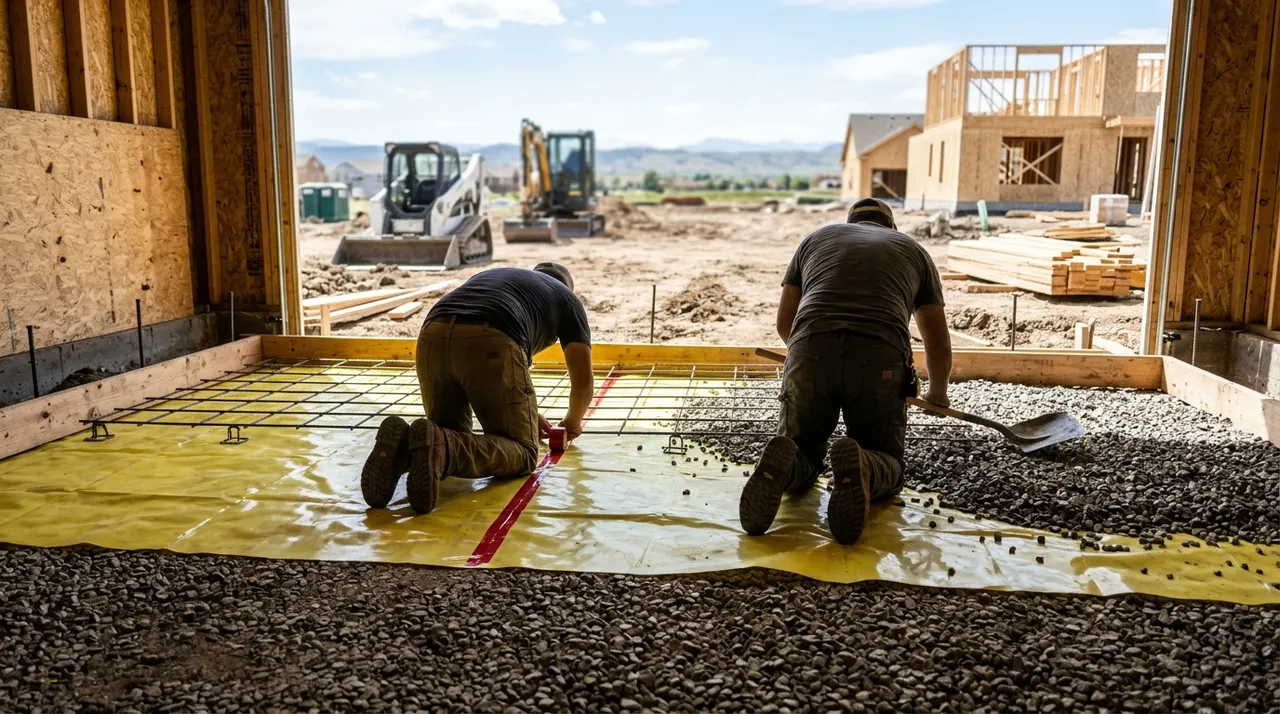
Once the old slab is gone, the dirt underneath is evaluated. This is the most critical phase. Any loose or wet soil is removed. A structural aggregate base, usually crushed gravel, is brought in and compacted heavily with vibratory plate compactors. This creates a solid, stable layer that separates the new concrete from the native clay, mitigating the effects of soil expansion.
Forming and Reinforcement
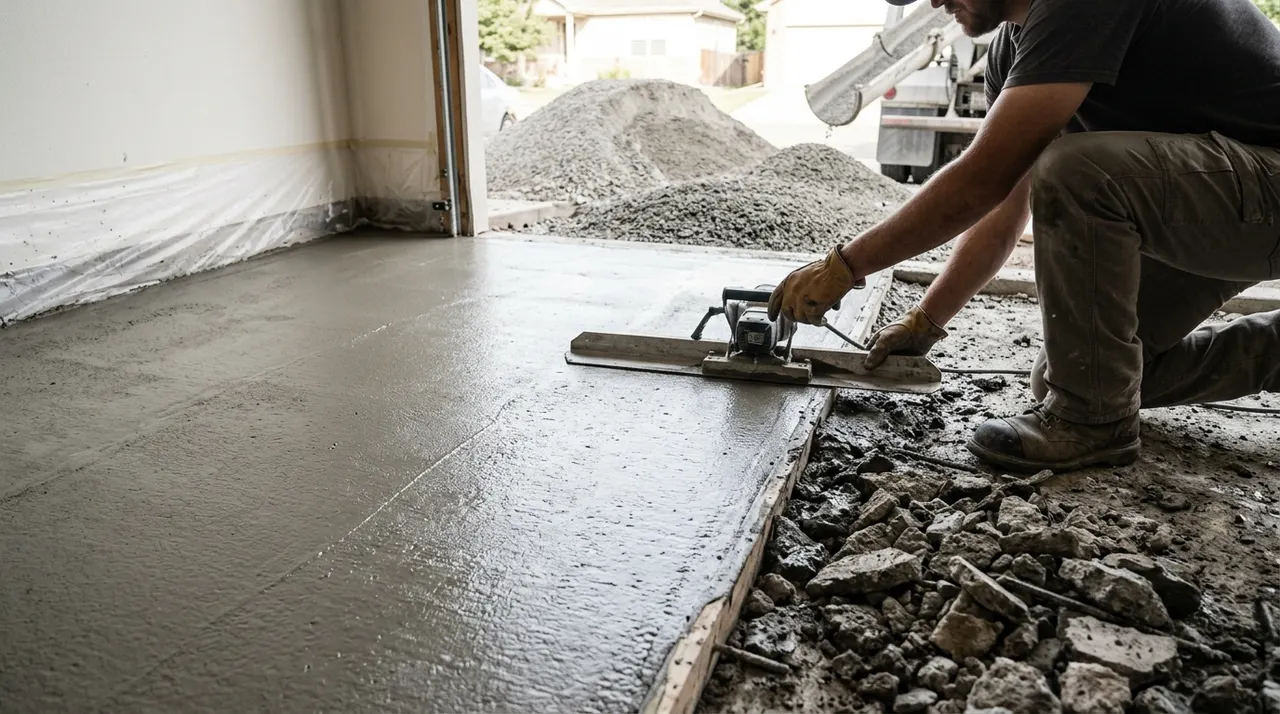
With the base set, the perimeter is formed. Expansion joint material must be placed against the foundation to allow the slab to move independently of the house walls. Next, the steel reinforcement is laid out. Whether using rebar grids or heavy-duty wire mesh, the steel must be elevated so it sits right in the middle of the concrete layer, rather than sinking to the bottom where it provides no tensile strength.
The Pour and Finish
On pour day, the concrete is placed, screeded, and finished. For a garage, a smooth steel-trowel finish is standard, making it easy to sweep. Control joints are then cut into the slab. These joints act as planned weak spots, ensuring that when the concrete inevitably shrinks during the curing process, it cracks in a straight, hidden line rather than randomly across the floor.
Comparing Repair Methods: Mudjacking vs. Polyurethane Foam
If your garage floor has simply sunk but remains mostly intact, you will likely encounter two main methods for lifting it: traditional mudjacking and modern polyurethane foam injection.
Mudjacking is the older method. It involves drilling large holes into the slab and pumping a slurry of water, dirt, and cement underneath. The pressure of this heavy slurry forces the slab back up. While effective, mudjacking has drawbacks. The slurry itself is very heavy, which can further compress the already weak soil underneath, leading to future settling. Plus, the large patch holes are highly visible.
Polyurethane foam injection works on the same principle but uses a lightweight, high-density expanding foam. The drill holes are much smaller, making the repair far less conspicuous. When the foam is injected, it expands rapidly, seeking out voids and compacting the loose soil before lifting the slab. Because the foam cures in minutes and is completely waterproof, it won't wash away during the next heavy rain. For minor settlement issues, this is often the preferred choice.
Fort Collins Building Codes and Requirements
You might be wondering about the red tape involved in tearing out and pouring a new slab. According to Larimer County and Fort Collins building guidelines, basic exterior flatwork is often exempt from permitting. However, interior slabs that are poured monolithically with the foundation, require heavy structural reinforcement, or contain under-slab plumbing and conduit will generally require permits and inspections.
This distinction matters heavily for attached garages versus detached structures. Because requirements vary strictly by municipality and the exact scope of the work, confirm with your local building department before relying on this. Getting it wrong could leave you with an unpermitted structural slab causing headaches down the line.
What Drives the Cost of a Replacement?
A common question we hear is about price. According to market data from Forbes, the national average for a standard two-car garage floor replacement ranges from roughly $4,300 up to $7,800, depending heavily on the region and scope. However, your actual cost depends on your specific property. The only way to know is to contact us for an estimate.
The price varies based on several distinct factors. Removing old, reinforced concrete is heavy, labor-intensive work. Subgrade preparation also drives the price. Failing to compact a proper gravel base over the native clay guarantees the new floor will fail just like the old one. Concrete mix and thickness also matter. A standard slab might be four inches thick, but if you park heavy trucks, you may need a thicker pour with a higher compressive strength mix.
Preventive Maintenance to Extend Your Floor's Lifespan
Whether you just paid for a full replacement or you repaired your existing floor, you want it to last. Colorado winters are hard on concrete, but a little maintenance goes a long way.
Consider applying a penetrating sealer. A silane-siloxane sealer penetrates the pores of the concrete, causing melted snow to bead up on the surface rather than soaking in, dramatically reducing freeze-thaw damage. Also, be mindful of vehicle drips. Engine oil and coolant can stain and slowly degrade the surface over time, so clean up spills immediately using a proper degreaser.
Finally, manage snow and ice carefully. Avoid using harsh chemical de-icers that contain ammonium nitrate, which actively destroy concrete. Even standard rock salt can cause spalling if overused. Frequently wash out the undercarriage of your car during the winter so you aren't dragging blocks of salt and slush into the garage to melt overnight.
How We Handle Concrete Projects
At Above and Below Concrete, we don't just dump wet cement on bad dirt and hope for the best. Managed by Colorado natives, our team brings hands-on experience to every job and understands what local freeze-thaw cycles do to concrete. We are a bonded and insured, and insured outfit operating right here in Fort Collins.
We are OSHA 30 certified, meaning our job sites are run safely and professionally. We also offer fast, dynamic quoting so you aren't left waiting weeks just to find out what a project might cost. Most importantly, we stand behind our work with a 100% satisfaction guarantee. The job is not finished until you are completely happy with the result.
Make the Right Call for Your Property
If you are trying to decide whether to limp along with a cracked slab or start fresh, you need an honest assessment. Sometimes a repair is all you need; sometimes it's throwing good money after bad. Working with an experienced concrete contractor ensures you get the right diagnosis for the specific damage on your property.
Your garage floor takes a beating every single day. If your floor is showing severe signs of failure, ignoring it will only lead to more expensive foundation issues down the line. The team at Above and Below Concrete is ready to look at your slab, explain what the underlying soil is doing, and lay out your options. Reach out today to schedule an inspection and get an accurate quote for your specific project.
Common Questions
Frequently Asked Questions
Ready To Start?
Get Your Free Quote Today
Get a free quote from Above and Below Concrete — serving Fort Collins and surrounding areas.