Preventing Road Salt Pitting on Fort Collins Garage Floors
Shield your slab from Front Range winters and harsh magnesium chloride runoff.
The Short Answer
To prevent garage floor pitting from road salt in Fort Collins, apply a high-quality penetrating silane or siloxane sealer to block moisture, or invest in a professional polyaspartic coating. Homeowners should also hose down garage floors on warm winter days to remove accumulated magnesium chloride dripping from vehicles, and place heavy-duty containment mats under tires to keep corrosive brine from touching the concrete.
Preventing garage floor pitting from road salt in Fort Collins requires stopping corrosive winter brines from penetrating the concrete's porous surface. This is achieved by applying a hydrophobic penetrating sealer or a topical polyaspartic coating, combined with regular winter rinsing to clear off magnesium chloride. Without these protective barriers, the constant freeze-thaw cycles on the Front Range will rapidly expand salt-induced micro-cracks into permanent, crumbling pits.
Living in Northern Colorado means adapting to volatile winter weather. A single winter storm in Fort Collins can dump inches of heavy snow, followed by brilliant sunshine that melts the accumulation, only for temperatures to plunge back below freezing after nightfall. While road maintenance crews work around the clock to keep major thoroughfares safe, the chemicals they spread on the asphalt present a severe threat to residential properties. When your vehicle parked inside your garage drips salty slush onto the concrete slab, it initiates a destructive chemical and physical process that can quickly turn a smooth garage floor into a rough, dusty, and structurally compromised surface.
The chemical mixtures used to keep Front Range roads clear do not simply vanish when the asphalt dries. Instead, they cling to tire treads, wheel wells, and vehicle undercarriages, traveling directly into residential garages. The resulting puddles are highly concentrated chemical brines that bypass standard cleaning methods. Once absorbed into the unfinished concrete slab, these chemicals slowly disintegrate the cement paste from the inside out. For homeowners in Fort Collins, preventing this damage requires a mix of consistent winter maintenance, chemical barriers, and professional-grade sealing. By taking action before the first major snowstorm of the season, you can preserve both the visual appeal and the structural integrity of your garage floor.
The Chemistry of Front Range Road Salts and Deicers
While most people blame standard rock salt, Colorado road crews actually use liquid magnesium chloride and other chemical mixtures. According to the Colorado Department of Transportation deicing guidelines, municipal road crews rely heavily on liquid magnesium chloride during Front Range winter storms. These liquid deicers are sprayed onto major roads like College Avenue and Prospect Road before snow storms to prevent ice from bonding to the pavement. While this practice makes winter driving much safer, liquid magnesium chloride is highly aggressive when tracked onto residential garage floors.
Magnesium chloride is preferred by transportation departments because it remains active at much lower temperatures than standard rock salt. It is also highly hygroscopic, which means it actively attracts and holds moisture from the surrounding environment. When magnesium chloride dripping from your car pools on your garage slab, it does not evaporate as quickly as pure water. Instead, it remains in a liquid state for extended periods, allowing the chemical brine to sink deep into the concrete's porous matrix. As the water slowly evaporates, the salt recrystallizes inside the pores, creating tremendous physical pressure that slowly breaks apart the internal structure of the concrete.
In addition to liquid magnesium chloride, road crews frequently apply solid deicers like Ice Slicer, which consists of granular sodium chloride enriched with various trace minerals. When these solid crystals dissolve in melting snow, they create a highly concentrated salt brine. This brine is carried into your garage, where it accumulates in the low spots of the slab. Over several winter seasons, the constant accumulation of these chemical agents alters the chemistry of the concrete, making it increasingly susceptible to water absorption and physical degradation.
The Double-Threat: Freeze-Thaw Expansion and Chemical Leaching
To understand why road salt is so destructive, it helps to examine the physical structure of concrete. Although concrete appears solid, it is actually a highly porous, mineral-based material, similar to a dense hard sponge. This pore network is formed during the mixing and curing process, leaving microscopic pathways throughout the slab. When salty brine pools on the surface of an untreated garage floor, gravity and capillary action draw the liquid deep into these pores. Once inside, the salt initiates a double-pronged attack on the concrete's structural integrity.
The first threat is the acceleration of freeze-thaw cycling. Pure water freezes at 32 degrees Fahrenheit, expanding by approximately nine percent in volume as it transitions into ice. This expansion generates intense hydraulic pressure within the concrete's pores. In a typical Fort Collins winter, the temperature frequently fluctuates above and below freezing. This temperature swing forces concrete to undergo over one hundred freeze-thaw cycles every year. When road salts are introduced, they lower the freezing point of the water. While this prevents ice from forming at 32 degrees, it actually increases the frequency of freeze-thaw cycles by shifting the freezing window. As the temperature hovers around the brine's lower freezing point, the liquid freezes and thaws far more times than pure water would. The resulting hydraulic pressure eventually exceeds the tensile strength of the concrete, fracturing the microscopic walls of the pores and causing the surface to flake away.
The second threat is a chemical reaction known as calcium hydroxide extraction. Concrete relies on calcium hydroxide, a byproduct of cement hydration, to maintain its high alkalinity and bind the aggregate together. When chloride ions from road salt penetrate the concrete, they react chemically with this calcium hydroxide. This reaction forms calcium chloride, which is highly soluble in water, or expands into calcium oxychloride crystals. As water moves through the slab, it leaches the dissolved calcium hydroxide out of the concrete, leaving behind a weakened and hollowed-out structure. The fine, gray-white dust that homeowners constantly sweep up in their garages is often not dirt, but the actual pulverized remnants of the cement binder that has been chemically stripped from the sand and aggregate.
Identifying the Early Signs of Salt Damage
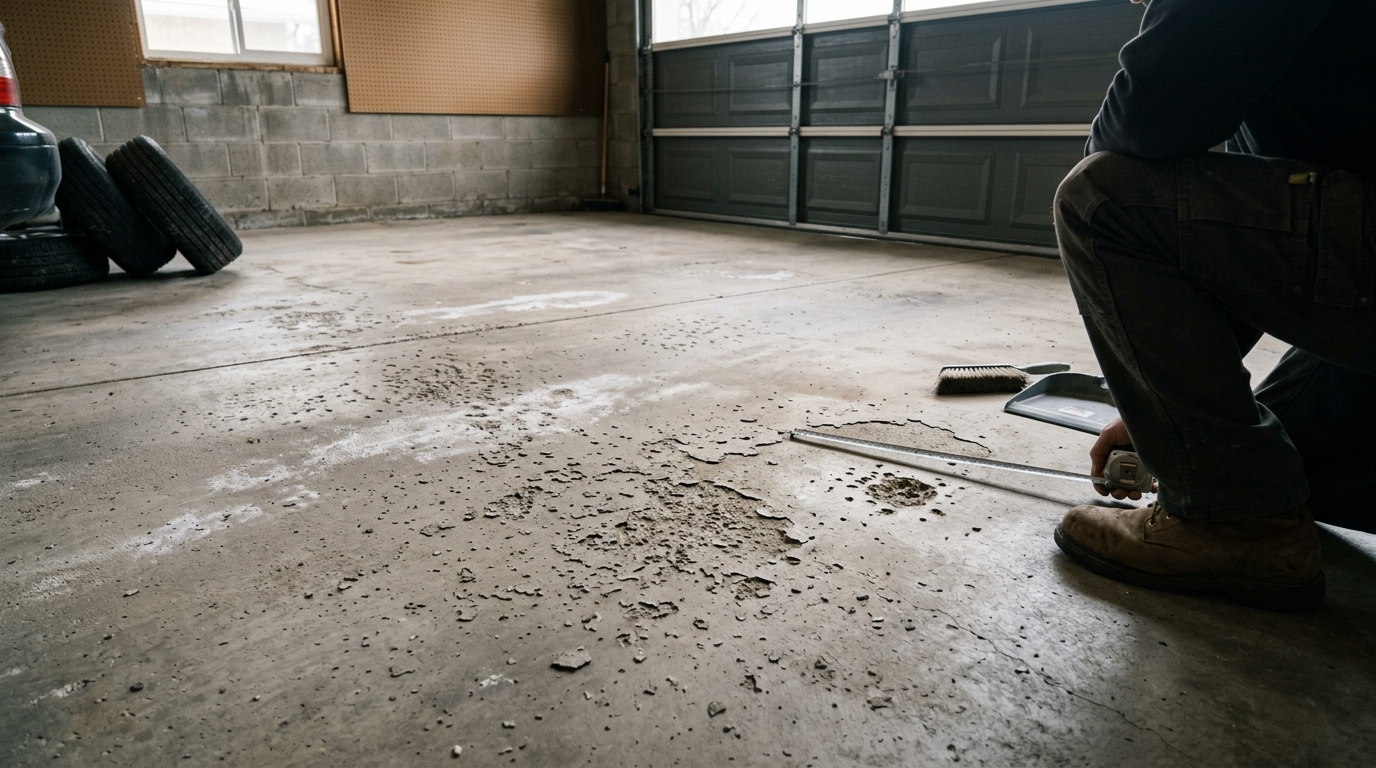
Catching salt-induced concrete damage early is essential to preventing complete slab failure. The first sign of trouble is typically the appearance of a white, powdery residue on the surface of the concrete, a phenomenon known as efflorescence. This occurs when salty water inside the slab migrates to the surface and evaporates, leaving behind a crust of salt crystals. While efflorescence itself is cosmetic, it indicates that salts have successfully penetrated deep into the concrete's pore network and are actively moving through the slab.
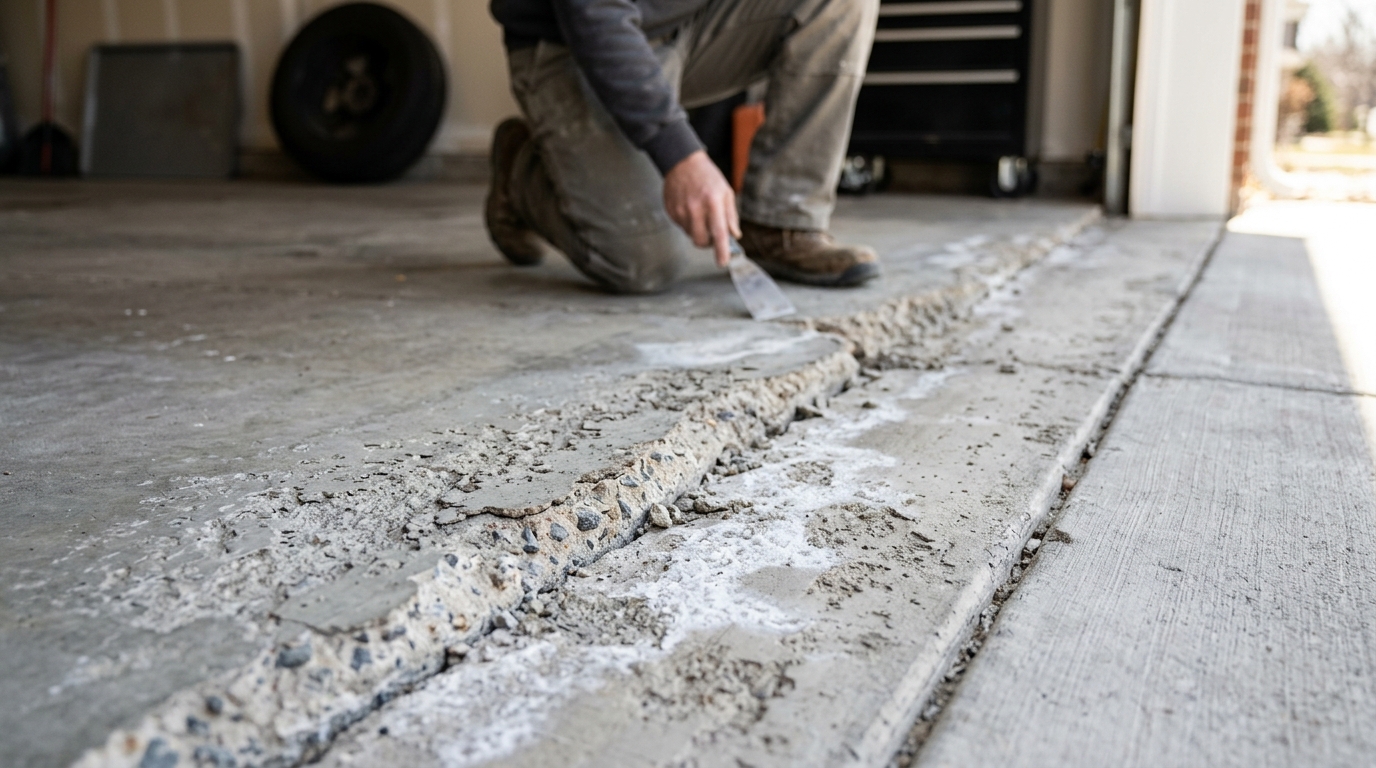
As the damage progresses, you will begin to notice surface scaling or spalling. This manifests as thin flakes of concrete peeling away from the top finished layer of the slab. This flaking is often most severe in the wheel paths where your vehicle parks, as these areas receive the highest concentration of dripping brine. Below the flaking surface, the concrete will feel rough and sandy to the touch. If left untreated, these small flakes will transition into distinct pits and craters. Each pit acts as a miniature reservoir, collecting even more salt water during the next storm and accelerating the rate of destruction. Over time, the pits can deepen to the point where they expose the underlying gravel aggregate or even the steel reinforcement mesh, leading to structural instability.
Proven Prevention Methods for Fort Collins Garage Floors
A highly effective way to address road salt pitting is to prevent the chemical brine from ever contacting the concrete's pore network. This can be achieved through a combination of diligent maintenance and professional surface treatments. For homeowners who want to protect their investment, several reliable strategies exist to block salt penetration.
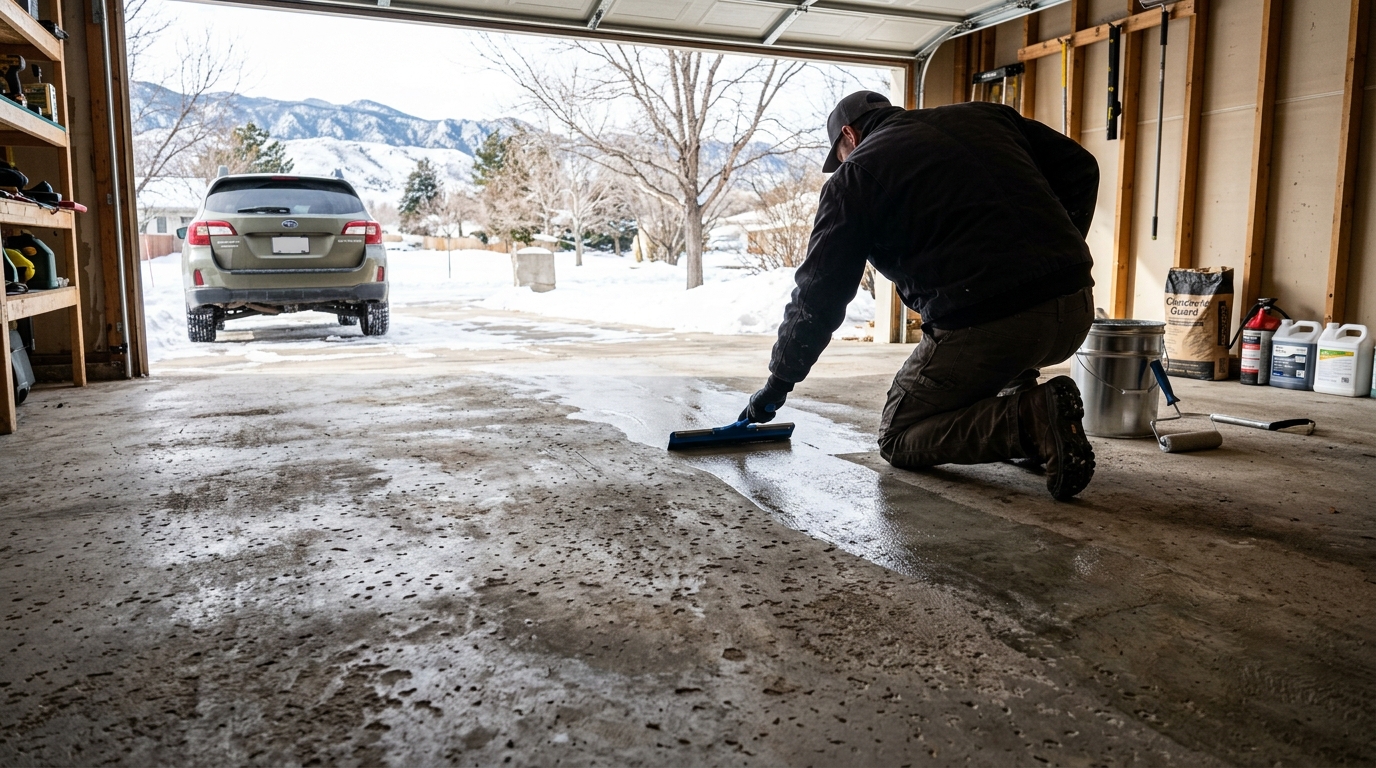
Regular winter rinsing is the simplest physical maintenance strategy. On warmer winter afternoons in Fort Collins, use a garden hose or a pressure washer to thoroughly rinse the garage floor, focusing on the areas under your vehicle's tires and wheel wells. Sweeping or squeegeeing the soapy water out of the garage prevents the brine from pooling and soaking into the concrete. For added protection, many homeowners install heavy-duty containment mats. These mats feature raised edges that trap melting snow, mud, and road salt, keeping the corrosive liquid contained until you can sweep or vacuum it away.
While physical maintenance is helpful, long-term protection requires a chemical barrier. This is why homeowners hire professionals for garage floors in Fort Collins to handle advanced surface sealing. High-performance penetrating sealers, such as silane or siloxane blends, are designed to sink deep into the concrete's pores. Once inside, they chemically react with the mineral structure to form a hydrophobic barrier. This barrier does not form a film on top of the concrete, so it will not peel, flake, or make the floor slick. Instead, it lines the interior of the pores, repelling water and chloride ions while allowing the concrete to breathe. Because the brine cannot enter the pores, freeze-thaw damage and chemical leaching are completely halted.
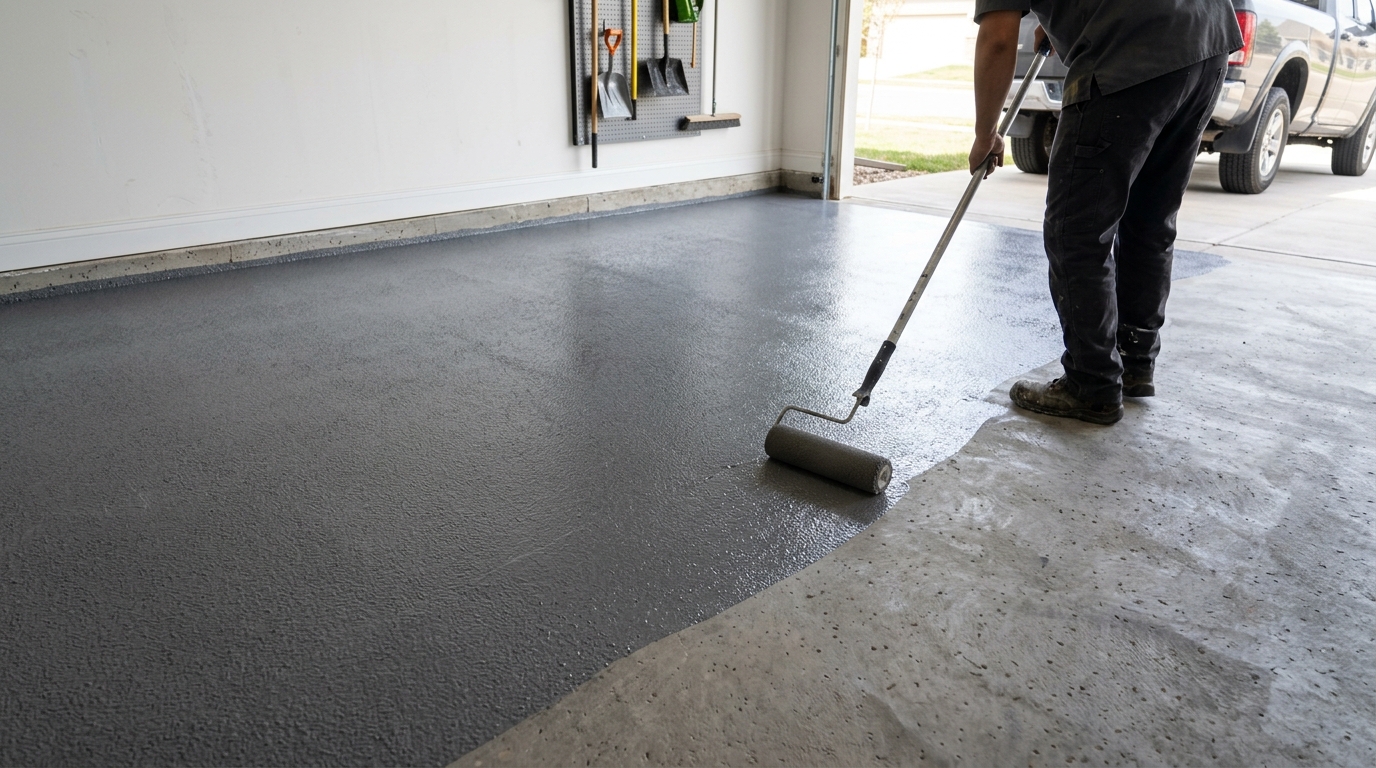
For maximum protection, topical coatings like polyaspartic systems offer an impermeable, high-durability shield. Unlike cheap DIY epoxy paint kits that quickly peel under hot tires and chemical exposure, a professional multi-coat polyaspartic system bonds directly to the concrete on a molecular level. It creates a thick, solid barrier that completely isolates the concrete slab from the external environment. Any road salt, oil, or chemical dripping from your car simply pools on top of the durable coating, where it can be easily wiped away without doing any damage to the concrete underneath.
Restoring an Already Damaged Garage Slab
If your garage floor is already showing signs of pitting, scaling, or deep cracking, simply applying a sealer will not fix the problem. Sealers are designed to protect healthy concrete, not structural defects. To restore a damaged slab, you must remove the contaminated material and rebuild the surface.
The restoration process begins with mechanical diamond grinding. This step is essential because it grinds away the weak, salt-contaminated top layer of concrete, exposing clean, structurally sound material underneath. Acid etching is not a reliable substitute for diamond grinding, as it cannot remove deep-seated chlorides and can actually introduce unwanted moisture into the slab. Once the surface is prepared, any deep pits, craters, or cracks must be cleaned and filled with high-strength, polymer-modified cementitious repair mortars. These specialized repair materials are engineered to bond tightly to the existing concrete, restoring a flat, even surface.
After the patching materials have fully cured, the entire slab must be sealed or coated to prevent the damage from starting again. Working with an experienced concrete contractor in Fort Collins ensures that the proper repair materials are selected for our specific climate and that the surface preparation is executed correctly. Attempting to repair salt-damaged concrete with cheap, off-the-shelf patch kits usually results in failure, as the patch will quickly delaminate and pop out during the next freeze-thaw cycle.
Fort Collins Building Codes and Regulatory Standards
When planning a major garage floor project, consider local building regulations. The City of Fort Collins enforces strict residential building codes to ensure all structural work is safe and durable.
While cosmetic maintenance, surface sealing, and minor non-structural repairs are typically exempt from building permits in Larimer County, full slab replacements or structural additions require a formal building permit — though requirements vary by municipality, so confirm with your local building department. If your garage floor has settled significantly, cracked through the entire thickness of the slab, or suffered severe structural failure due to salt-induced rebar corrosion, a complete replacement may be necessary. In these situations, the new concrete must be poured to meet precise code requirements, including proper slab thickness, appropriate steel reinforcement, and a continuous slope toward the garage door to prevent water from pooling against the home's foundation — though requirements vary by municipality, so confirm with your local building department.
The team at Above and Below Concrete has spent five years serving the Northern Colorado community as a trusted concrete contractor. As a family-owned and operated business, we are bonded, insured, and OSHA 30 certified, and we back all of our work with a 100% satisfaction guarantee. We understand the specific nuances of local building codes and the harsh climate conditions of the Front Range. When you work with us, we ensure that every repair, sealing project, or slab replacement complies with municipal standards, protecting your property value and ensuring long-term durability.
Factors That Influence the Cost of Garage Floor Protection and Repair
The cost of protecting or restoring your garage floor depends on several project-specific variables. Because every garage slab has a unique history of wear, chemical exposure, and structural settling, there is no one-size-fits-all pricing model. Understanding the key factors that influence the overall cost can help you make an informed decision for your home.
The current condition of your concrete is the most significant driver of cost. A brand-new, clean concrete slab requires very little preparation before a sealer can be applied, making the process highly efficient. Conversely, an older garage floor that is covered in oil stains, peeling paint, or deep salt pits requires extensive diamond grinding, crack chasing, and patch work before any protective treatment can begin. The amount of preparation labor and repair material needed directly impacts the project's complexity.
The type of protective system you select also plays a major role in the overall cost. A high-quality penetrating silane or siloxane sealer is an affordable option that provides excellent protection against moisture and road salt while maintaining the concrete's natural appearance. A multi-layer polyaspartic coating system represents a larger initial investment, but it offers a highly durable, easily cleanable, and decorative finish that completely seals the slab. While the upfront cost of a full coating is higher, its long lifespan and superior protection often make it the most economical choice over the lifespan of your home.
Finally, the physical size of your garage and any layout complexities will influence the final cost. A standard two-car garage requires less material and labor than a large three-car garage or a custom workshop space. Access issues, such as built-in cabinetry, water heaters, or structural columns, can also add to the labor required to properly grind and treat the edges of the slab. Getting a professional, on-site inspection is a recommended way to receive an accurate, reliable estimate for your specific property.
Protect Your Garage Investment Today
Do not wait until the next Front Range winter storm leaves your garage floor covered in corrosive, salt-laden slush. Protecting your concrete slab from liquid magnesium chloride and freeze-thaw damage is an investment that pays off by preventing premature concrete failure, dusty interiors, and costly structural repairs. Whether you need a high-performance penetrating sealer for a new garage floor or a complete surface restoration for an older, pitted slab, taking action now will save you time, money, and stress.
Our experienced team at Above and Below Concrete is ready to help you find the perfect protection or restoration system for your home. We combine local expertise and high-quality materials to deliver outstanding results across Northern Colorado. Fill out our online contact form today to request an on-site evaluation and get a detailed quote to protect your Fort Collins garage floor.
Common Questions
Frequently Asked Questions
Ready To Start?
Get Your Free Quote Today
Get a free quote from Above and Below Concrete — serving Fort Collins and surrounding areas.