How to Prevent Concrete Sidewalk Frost Heave in Fort Collins
Learn how proper excavation, compacted aggregate base, and drainage prevent winter frost heave in Colorado.
The Short Answer
To prevent concrete sidewalks from heaving in Colorado, you must remove moisture from the subgrade before it freezes. This involves excavating native clay, installing a thick base layer of compacted crushed stone, and grading the surrounding landscape so water drains away from the slab. Using air-entrained concrete and sealing control joints will also stop surface water from infiltrating the base during winter.
Walk down any older neighborhood in Fort Collins after a January freeze, and you will see the jagged, tripping hazards of lifted pavement. When a sidewalk heaves overnight, the concrete itself did not fail—the ground beneath it did. Ignoring Larimer County’s winter climate during the prep phase guarantees a short lifespan for any flatwork. Here is exactly what happens beneath the surface when temperatures drop, and the structural steps required to keep slabs flat.
The Mechanics of Frost Heave in Northern Colorado
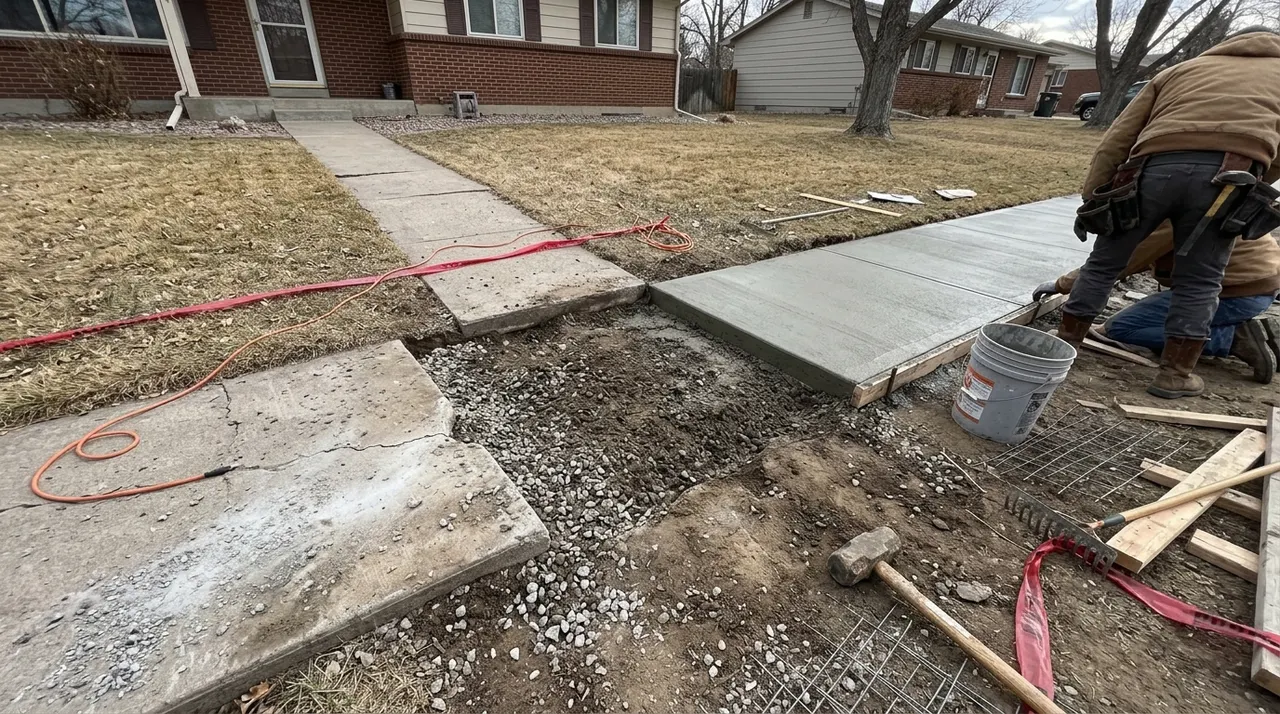
To stop frost heave, you first have to understand the physics of what is happening beneath your feet. When water turns to ice, it expands by roughly nine percent. This phase change exerts a massive amount of upward pressure. The Front Range experiences an average of 149 freeze-thaw cycles every single year. During the day, the intense Colorado sun melts snow and ice, turning it into liquid water that seeps into the ground. When the sun goes down and temperatures plummet, that trapped water freezes and expands, pushing the soil upward. When the ground thaws the next day, it leaves a microscopic void behind. More water flows into that new void, freezes the following night, and pushes the ground even higher. This compounding effect acts like a hydraulic jack. Over the course of a long winter, this ratchet mechanism is capable of lifting slabs of pavement that weigh thousands of pounds, creating dangerous uneven edges along public walkways.
Expansive Clay: Colorado’s Second Underground Threat
The native dirt in our region drastically complicates the frost issue. According to the Colorado State University Extension, expansive clay soils are a primary source of structural movement for homes and hardscapes across the state. Clay is comprised of microscopic, plate-like particles that hold onto water like a sponge. It refuses to drain quickly. When clay gets wet, it swells significantly and pushes upward against whatever is built on top of it. When that same saturated clay freezes, it expands even more due to the ice. Conversely, when the clay dries out during the scorching summer months, it shrinks back down, leaving the rigid pavement completely unsupported from beneath. If you pour a heavy material directly onto expansive clay, the slab is guaranteed to shift, sink, and eventually snap under its own weight. Managing this specific soil type is the core challenge of any outdoor construction project in Northern Colorado.
Excavation and Removing the Problem
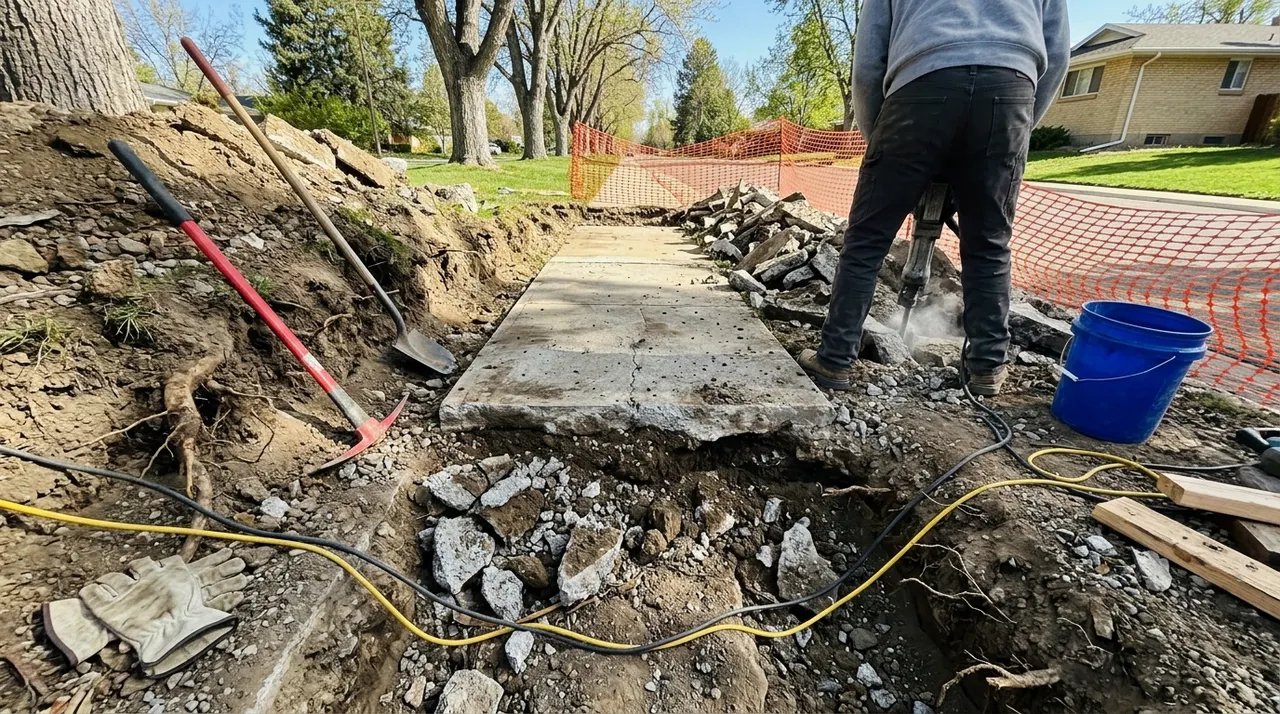
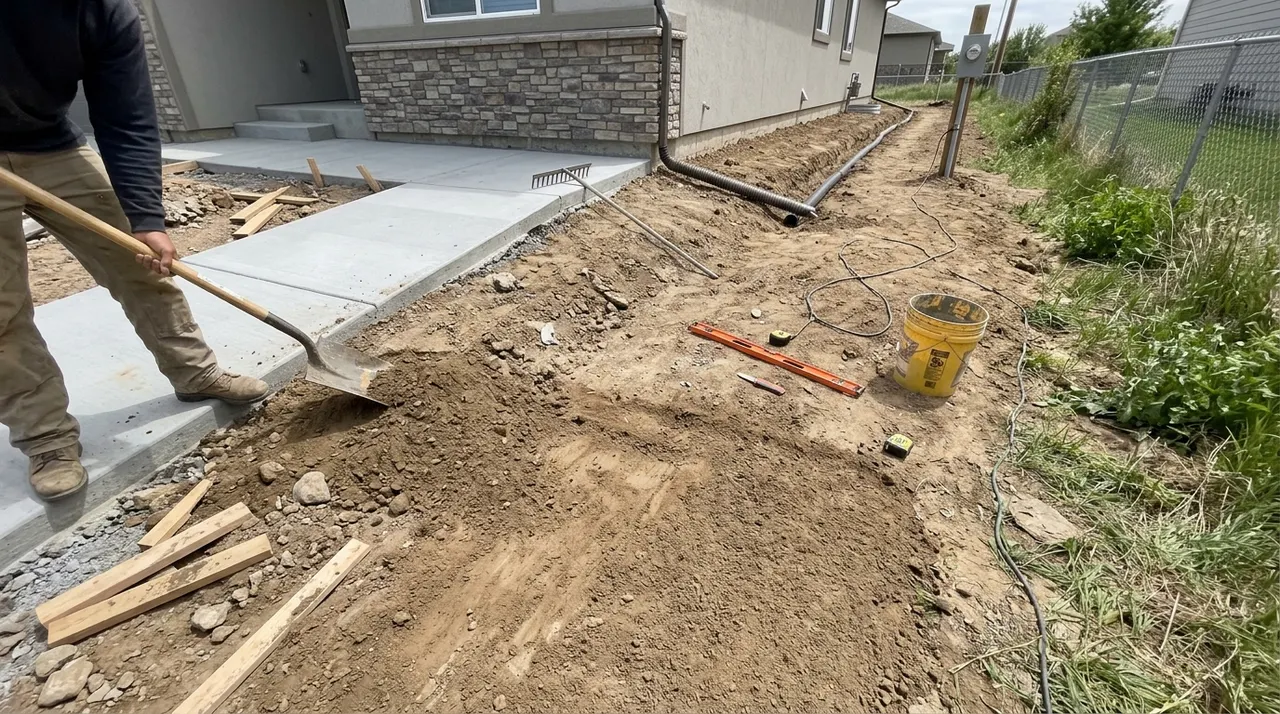
You cannot simply scrape away the surface grass and pour a new walkway over native dirt. Hiring a reputable Fort Collins concrete contractor ensures that the existing soil profile is evaluated and properly removed before any forms are built. The standard practice for pedestrian walkways involves excavating down at least four to six inches below the final planned elevation. However, if the ground is heavily saturated or consists of highly expansive clay, the crew may need to dig much deeper to reach stable earth. Every trace of organic material, including tree roots, topsoil, and decaying vegetation, must be cleared from the trench. Organic matter naturally decomposes over time. If it is left beneath a freshly poured walkway, it will rot away over the next few years, leaving empty pockets of air hidden beneath the surface. The heavy pavement will eventually collapse into those voids, leading to severe structural failure long before the mix itself actually wears out.
The Crucial Role of the Aggregate Base
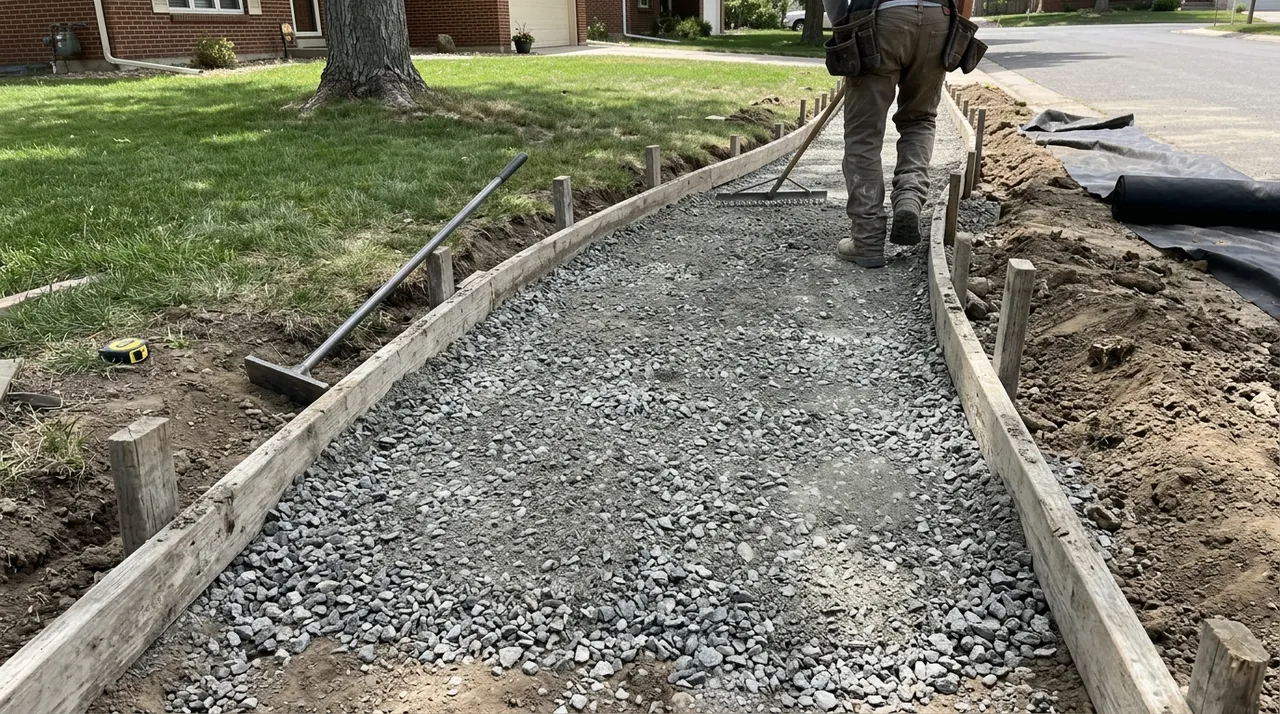
Once the problematic dirt is removed, the void must be filled with a structural material that will not hold water. Class 6 road base is the industry standard for this application. This specific mix of crushed rock and coarse sand creates a vital capillary break. Instead of water wicking up into the soil and sitting directly against the bottom of the walkway, moisture drains safely through the jagged gravel. Larimer County street and pedestrian facility standards emphasize strict subgrade preparation for this very reason. The goal is to create a predictable, stable platform that separates the rigid pavement from the unpredictable native soil below. Without a thick layer of crushed aggregate, there is no buffer between the freezing ground and the finished surface. Providing an escape route for trapped water is the single most effective way to eliminate the extreme pressures that cause winter heaving.
Compaction: The Step That Dictates the Lifespan
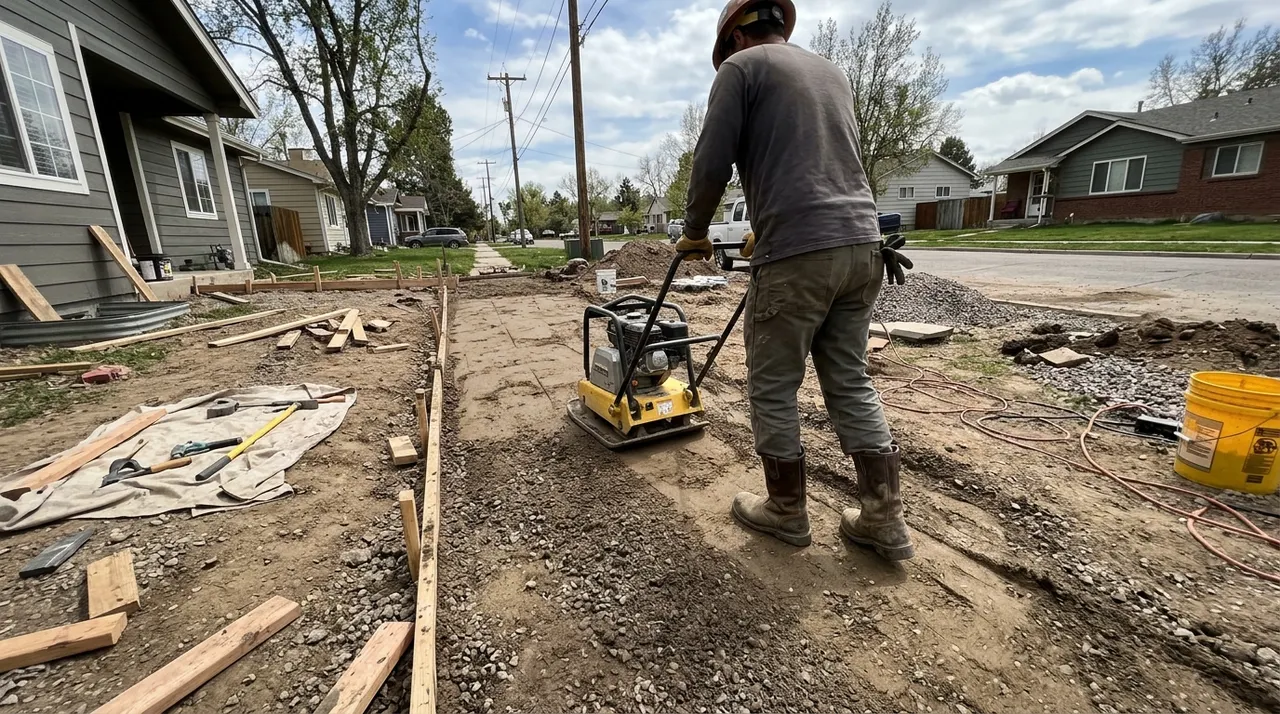
Dumping crushed rock into a trench is only half the battle. The base material must be mechanically compacted to remove air voids and lock the aggregate together. This is typically done using a heavy vibratory plate compactor. The intense vibration forces the jagged edges of the crushed stone to settle into tightly interlocked positions, creating a dense, unyielding foundation. A major mistake made by inexperienced crews is trying to compact too much material at once. If someone dumps six inches of gravel into a trench and only runs the compactor over the top, the vibration never reaches the bottom. The lower layers remain loose and uncompacted. When rain and foot traffic eventually cause that loose gravel to settle, the surface above it loses critical support. To do it correctly, the base must be compacted in thin layers, known as lifts, ensuring maximum density from the bottom of the trench all the way to the top grade.
Drainage and Grading Away from the Concrete
Frost heave requires trapped moisture to occur. If the water drains away, it cannot freeze under your walkway. Proper site grading is absolutely critical to the longevity of the project. The surface needs a slight built-in slope, usually about a quarter inch of drop per foot of width, to shed rain and melting snow toward the street or the lawn. Furthermore, the surrounding yard must also slope away from the edge of the pavement. Downspouts discharging directly next to a walkway are a guaranteed recipe for winter heaving, as they dump concentrated volumes of water directly into the subgrade right before temperatures drop. Sprinkler heads should also be adjusted so they do not flood the edges of the formwork. Keeping the surrounding environment dry is just as important as the structural integrity of the pour itself.
Air-Entrained Concrete for Winter Climates
The material poured on top of the base also needs to be formulated to handle the cold. In Colorado, all exterior flatwork requires air-entrained concrete. This specialized mix contains microscopic air bubbles intentionally trapped within the cement paste during the batching process at the plant. Concrete is naturally porous, meaning surface moisture will inevitably absorb into it. When that trapped moisture freezes within the pavement, these tiny bubbles act as internal pressure relief valves. The ice expands into the microscopic bubbles instead of blowing the surface of the slab apart. Without proper air entrainment, a walkway in our climate will quickly suffer from scaling and spalling, where the smooth top layer flakes off and exposes the rough aggregate underneath. Using the right mix design is non-negotiable for anyone building in the Front Range.
Steel Reinforcement: Rebar versus Wire Mesh
Many homeowners assume that adding heavy steel reinforcement prevents the ground from heaving entirely. It does not. There is no amount of steel that can stop frozen, expanding earth from pushing upward. However, installing a grid of steel rebar prevents the pavement from separating vertically when the ground inevitably shifts. A properly reinforced walkway might tilt slightly during a deep January freeze, but it will move together as a single structural unit. This prevents the jagged two-inch lip that creates a severe tripping hazard for pedestrians. While wire mesh is sometimes used for light residential work, half-inch steel rebar placed on specialized chairs ensures the reinforcement stays perfectly centered in the middle of the slab, providing maximum tensile strength to hold the sections together during extreme temperature swings.
Strategic Control Joints and Proper Sealing
Concrete shrinks slightly as the water evaporates and the chemical curing process takes place. Because cracking is an inevitable part of the hardening process, installers must cut or tool control joints into the surface to dictate exactly where those cracks happen. These joints create weakened lines, forcing the material to crack in a straight, hidden line rather than spider-webbing across the surface. These joints must be cut to a depth of at least one-quarter of the total thickness to work properly. More importantly, leaving these joints completely open allows rain and snowmelt to drain directly into the subgrade. Sealing control joints with a high-quality, self-leveling polyurethane caulk keeps the water out of the base layer. Preventing surface water from bypassing the slab and soaking the foundation is a highly effective way to mitigate winter damage.
Winter Maintenance to Protect Your Investment
How you treat the pavement in December directly affects how long it will last. Shoveling snow promptly prevents meltwater from pooling along the edges of the concrete and seeping beneath it. Homeowners should also be extremely careful with the chemical de-icers they purchase at the hardware store. Products containing rock salt, also known as sodium chloride, and magnesium chloride artificially lower the freezing point of water. This causes the surface to thaw and refreeze dozens of times during a single cold snap, rapidly accelerating surface damage and stressing the subgrade beneath. Using plain sand or specialized pet-safe traction grit is much safer for the material, providing the grip you need without introducing corrosive chemicals that destroy the cement paste.
What Drives the Cost of a Sidewalk Project
When flatwork fails entirely and creates a massive tripping hazard, patching is usually a waste of money. Tearing out and replacing concrete sidewalks in Fort Collins involves significant manual labor and heavy material disposal fees. What you pay for a full replacement depends heavily on the linear footage, how deep the crew has to excavate to reach stable soil, the accessibility of the site for heavy machinery, and the type of finish applied to the surface. Every single property sits on slightly different soil with different yard drainage challenges. Because the base preparation dictates the majority of the labor, the only honest way to get an accurate number for your home is through an on-site inspection. Anyone quoting a project over the phone without seeing the soil is simply guessing.
Quality Flatwork from Local Professionals
The team at Above & Below Concrete understands exactly what it takes to build hardscapes that survive the Front Range climate. We are a family-owned operation that has spent 5 years dealing with the specific soil and weather challenges of this region. Our crews are OSHA 30 certified, bonded and insured, and bonded, ensuring that every project is handled safely and professionally. We back our work with a 100% satisfaction guarantee because we know that doing the preparation right the first time is the only way to build a lasting product. If your walkways are settling, holding water, or lifting dangerously during the winter months, do not wait for the problem to worsen. Contact us today to schedule a site visit and talk through the best structural solution for your property.
Common Questions
Frequently Asked Questions
Ready To Start?
Get Your Free Quote Today
Get a free quote from Above and Below Concrete — serving Fort Collins and surrounding areas.