How to Prevent Concrete Pool Deck Cracking in Fort Collins Winters
Protect your outdoor living space from Colorado's brutal freeze-thaw cycles.
The Short Answer
The best way to prevent a concrete pool deck from cracking in winter is to combine a properly compacted gravel sub-base, a freeze-thaw-resistant concrete mix, and strategic control joints. You must also apply a high-quality penetrating sealer before the first freeze to keep water from entering the pores, expanding as ice, and fracturing the slab.
Northern Colorado winters are incredibly tough on outdoor flatwork. Between the heavy snow loads, rapid temperature swings, and the notoriously active clay hiding under the topsoil, your backyard takes a beating from November through April. When water seeps into unprotected concrete and freezes, it expands with enough force to literally blow the surface apart. Protecting your investment requires an understanding of how the climate attacks the slab and what defensive measures actually work.
The Twin Threats: Freeze-Thaw Cycles and Expansive Clay
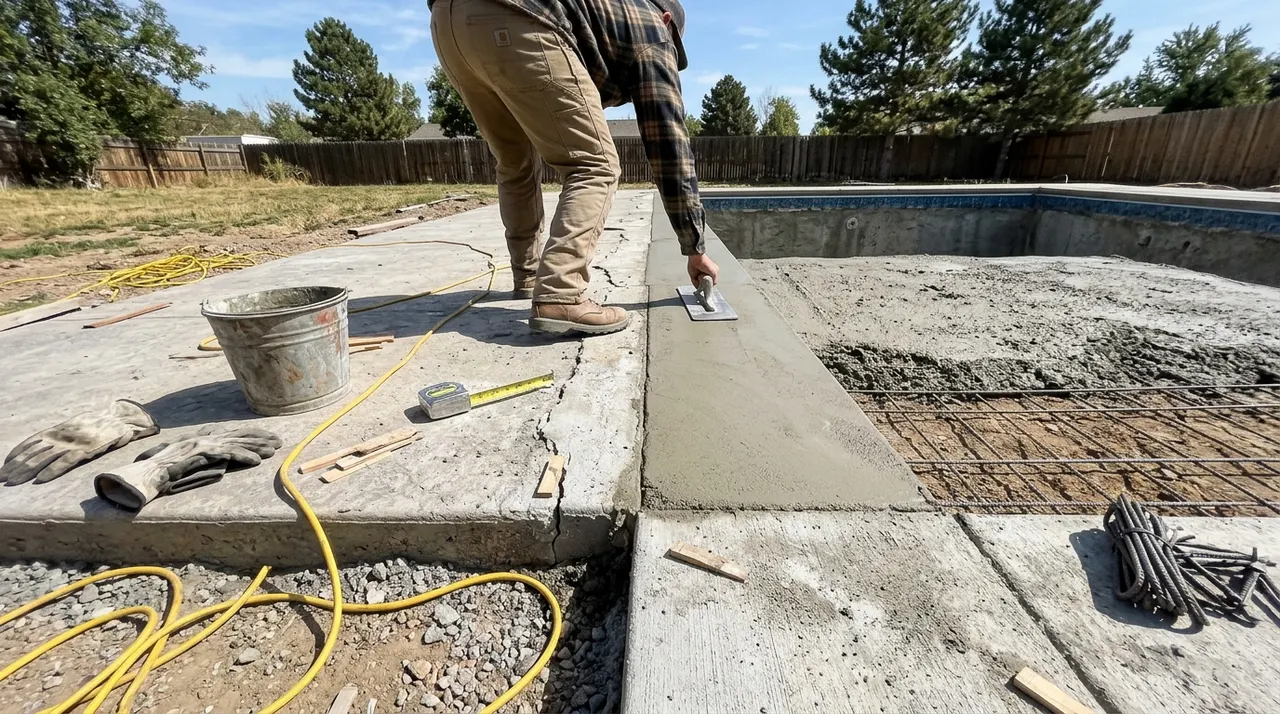
To understand how to protect your concrete, you have to know what you are fighting. Fort Collins sits at an elevation of roughly 5,000 feet, which exposes flatwork to intense UV radiation and rapid temperature fluctuations. During a typical winter, we experience many freeze-thaw cycles. A sunny 45-degree January afternoon easily melts the snow resting on your deck. That water runs into the microscopic pores of the concrete surface. As the sun drops behind the foothills, the temperature plummets below freezing. The trapped water turns to ice, expanding its volume by about 9 percent. This creates immense hydraulic pressure inside the slab. Do this over and over, and the surface begins to pop and flake off, a condition known in the trade as spalling.
The second major threat comes from below. The Front Range is infamous for its expansive soils, heavily laced with bentonite clay deposited by ancient inland seas. Moisture can cause this clay to expand and exert serious upward pressure. When the ground gets wet before a hard freeze, it heaves upward, bending the concrete. When it dries out, it shrinks and drops. The slab is constantly being pushed and pulled, which will easily snap a poorly prepped deck in half.
Managing Surface Water: Pitch and Drainage
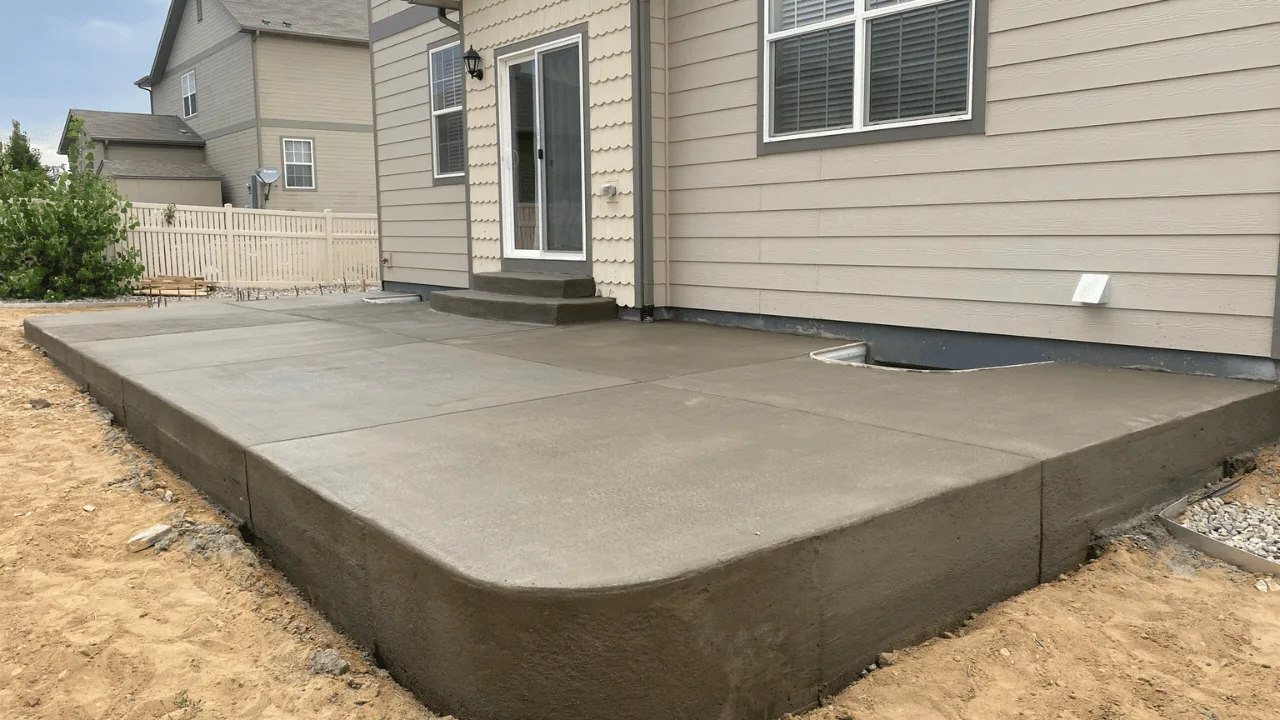
Because standing water is the primary catalyst for winter damage, surface water management is the first line of defense. A pool deck cannot be poured perfectly flat. It must be pitched away from the pool shell at a specific grade, usually about a quarter-inch of drop for every foot of run. This ensures that melting snow and heavy spring rains naturally flow off the deck and into the surrounding yard rather than pooling in low spots where the water will inevitably freeze.
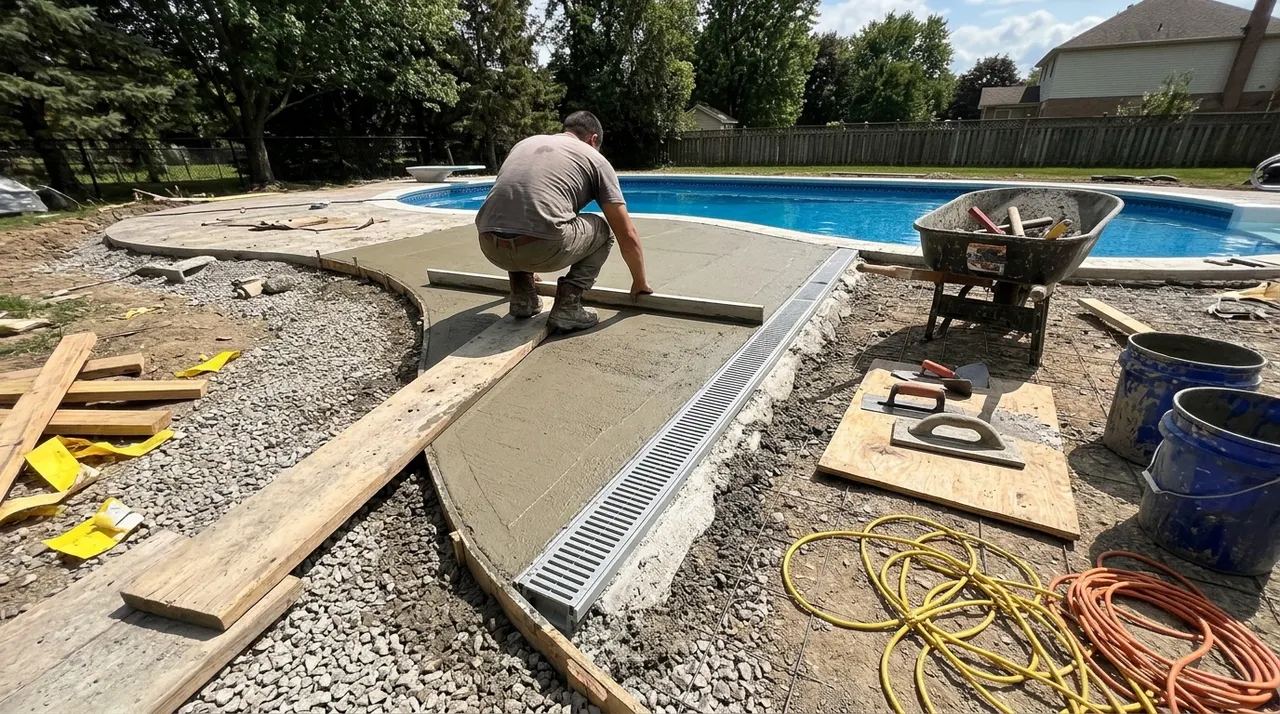
In many backyards, the landscape grading does not allow water to simply run off into the grass without flooding a patio or running back toward the house foundation. In these cases, installing channel drains (often called deck drains) directly into the concrete is required. These linear grates catch the runoff and pipe it safely away from the active soil zone beneath the deck.
The Danger Zone: Backfill and the Mastic Joint
The soil immediately surrounding a swimming pool is inherently unstable. When a pool is installed, the excavation is always dug wider than the shell itself to allow room for plumbing and structural supports. That gap is then backfilled with dirt. If that backfill is not mechanically compacted in small, precise lifts, it will slowly settle over the years. Because the pool deck is poured half on the undisturbed virgin soil and half on this backfilled zone, any settling creates a hollow void under the concrete. The slab is left hanging in the air, supporting its own weight until it eventually cracks under the pressure of a heavy snow load.
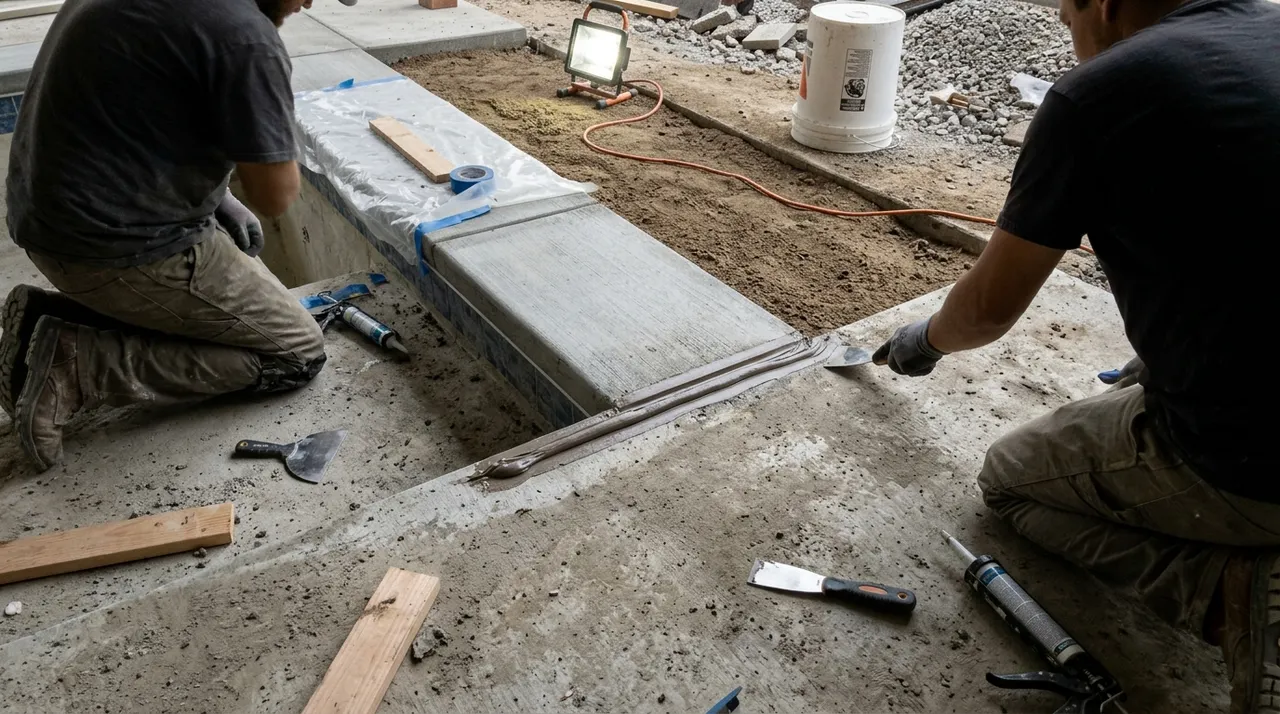
Another vulnerable area is the expansion joint between the concrete deck and the pool coping. This gap is typically filled with a flexible sealant called mastic. Over time, UV exposure and winter weather dry out the mastic, causing it to peel away. When this seal fails, melting snow pours directly down the back of the pool shell, saturating the backfill. When that saturated soil freezes, it causes massive frost heave that lifts the deck entirely out of alignment.
Engineering a Stable Sub-Base
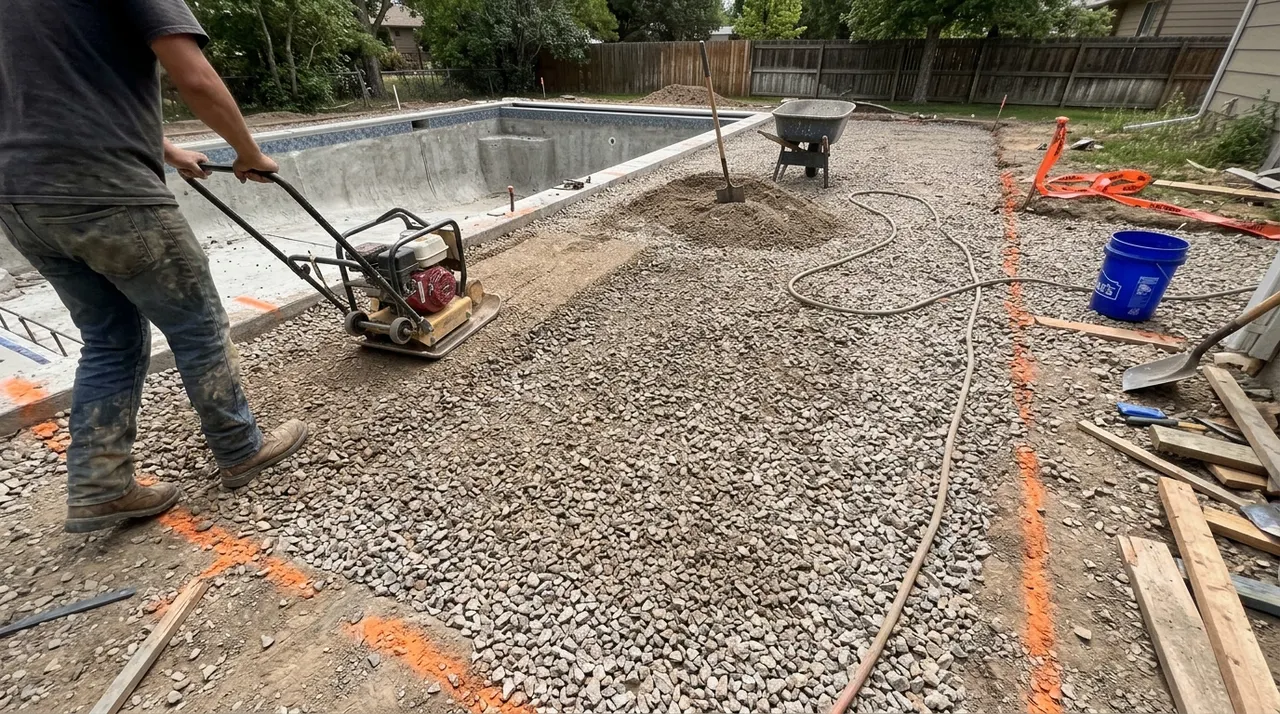
The secret to surviving a Colorado winter happens long before the concrete truck arrives. You cannot simply grade the native dirt and start pouring. The top layer of organic material and active clay must be excavated. In its place, a thick layer of crushed stone or road base is laid down and aggressively compacted with heavy equipment.
This gravel layer serves two vital functions. First, it provides a stable, load-bearing platform that will not shrink or swell when the moisture content in the ground changes. Second, it creates a capillary break. Just like a sponge, clay soil pulls water upward. The jagged edges and air voids in the crushed stone prevent moisture from wicking up from the deep soil and saturating the underside of the concrete. Good drainage beneath the slab is just as important as good pitch on top of it.
Concrete Mix Design and the Curing Process
Not all concrete is the same. The mix delivered for an indoor basement floor is entirely different from what belongs outdoors. For exterior flatwork in a cold climate, air-entrained concrete is strictly non-negotiable. This specialized chemical admixture introduces billions of microscopic air bubbles into the wet concrete. According to the American Concrete Institute's freeze-thaw durability standards, these tiny voids act as internal pressure relief valves. When trapped water freezes and expands inside the slab, the ice pushes into these empty air bubbles instead of fracturing the rigid cement paste.
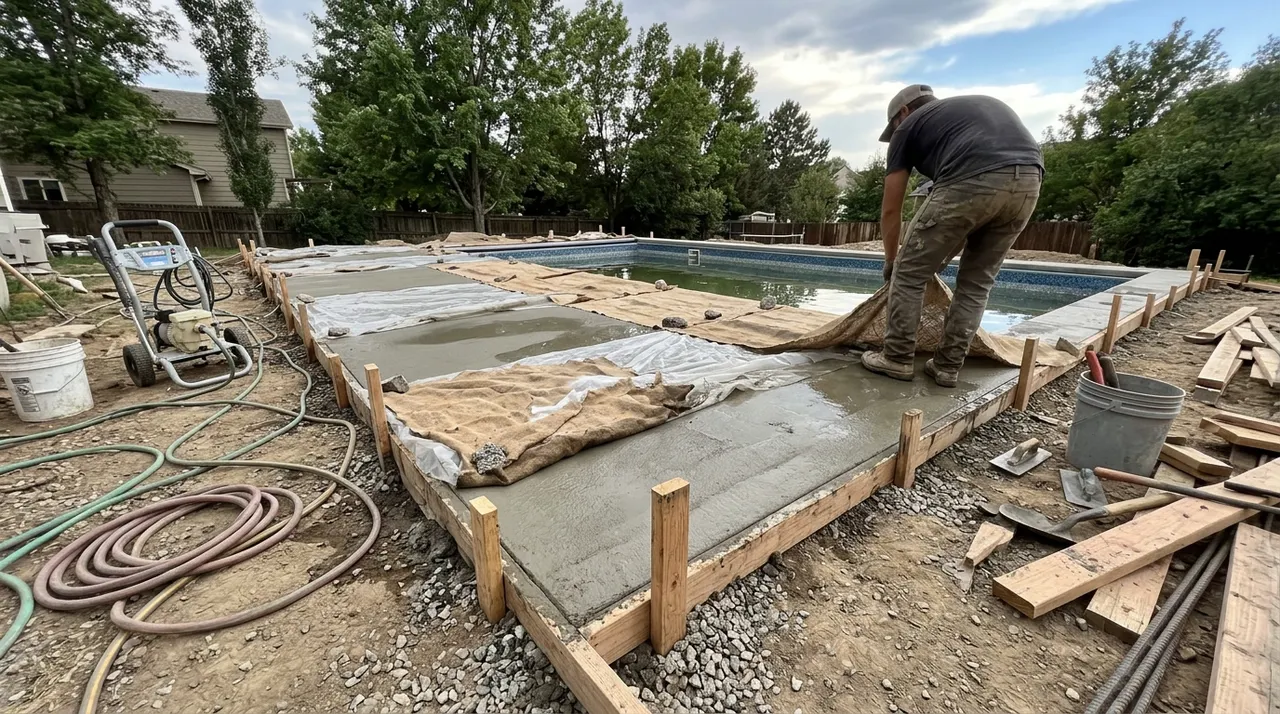
The water-to-cement ratio is also tightly controlled. A mix poured too wet might be easier for a lazy crew to push around with a rake, but it results in weak, highly permeable concrete that acts like a sponge. Finally, the curing process must be respected. Curing is a chemical reaction called hydration, not a drying process. If concrete is poured late in the season and freezes before it reaches sufficient compressive strength, it can lose up to half of its ultimate strength, virtually guaranteeing it will crumble during its first winter.
Steel Reinforcement and Control Joints
Even with perfect soil preparation and an ideal mix, concrete is going to move slightly. Steel reinforcement holds the slab together when that movement happens. Whether using a tied rebar grid or heavy welded wire mesh, the steel acts as the internal skeleton. Concrete has incredibly high compressive strength, meaning it can hold a massive amount of weight, but it has very low tensile strength, meaning it pulls apart easily. The steel provides that missing tensile strength.
When installing a new concrete pool deck, contractors also place control joints at specific intervals. Concrete naturally shrinks slightly as it cures, which builds up internal stress. A control joint is a deliberate weak point cut or grooved into the surface. It tells the concrete exactly where to crack, hiding the fracture neatly inside the straight groove rather than letting it wander in a jagged web across your seating area. Proper depth and spacing of these joints are critical to keeping the visible surface pristine.
The Critical Role of Concrete Sealers
You can do everything right during the pour, but if you do not seal the concrete before winter, you are leaving the door wide open for ice damage. Sealers are your first line of defense. Penetrating sealers, such as silanes and siloxanes, soak deep into the capillaries of the concrete and chemically react to form a water-repellent barrier. They do not change the look of the surface, they do not peel, and they do not make the deck slippery.
On the other hand, if you have a stamped concrete pool deck, a topical acrylic sealer is usually applied to protect the color and provide a slight sheen. Because topical sealers can become slick when wet, it is standard practice to mix a fine, slip-resistant aggregate into the final coat. All sealers wear down over time due to intense Colorado sun and foot traffic, so plan to have your deck cleaned and resealed every few years to maintain the protection.
Winter Maintenance Best Practices for Homeowners
Homeowners play a massive part in winter survival. When a snowstorm hits Fort Collins, do not let the snow sit on your pool deck for weeks on end. Shovel it off promptly. The longer snow sits, the more opportunities it has to melt during the day and refreeze in the surface pores at night.
Never use rock salt (sodium chloride) or harsh chemical de-icers on concrete. These chemicals artificially lower the freezing point of water, which actually increases the number of freeze-thaw cycles your deck experiences in a single afternoon. They also attack the cement paste chemically, leading to severe scaling. If you need traction around the yard, use plain sand. Also pay attention to the brass anchors holding your winter pool cover. If they sit slightly above the concrete, metal snow shovels can catch and damage them, or water can pool around the recessed fittings and freeze, popping the anchors right out of the slab.
The Real Cost of Winter Concrete Damage
Neglecting these preventative steps leads to incredibly expensive repairs. Repair costs depend on your specific property, the severity of the frost heave, and the accessibility of your backyard. Contact us for pricing on your situation.
Replacing a deck is a messy, disruptive process that turns your backyard into a heavy construction zone. It is always cheaper to build it right the first time and maintain it. While standard flatwork generally does not require a building permit in Larimer County unless it involves structural retaining walls, though requirements vary by municipality, so confirm with your local building department. The work still must adhere to strict local building codes for safety, drainage, and longevity.
Working with a Local Fort Collins Contractor
Concrete is a highly localized trade. The techniques that work perfectly in Florida or Arizona will fail completely in Colorado. The team at Above and Below Concrete knows the local soil, the weather, and the mix designs required to make flatwork survive here.
We don't cut corners on the sub-base, the steel reinforcement, or the finishing. If you are tired of patching the same cracks every spring, contact us to schedule a consultation.
Common Questions
Frequently Asked Questions
Ready To Start?
Get Your Free Quote Today
Get a free quote from Above and Below Concrete — serving Fort Collins and surrounding areas.