How Often Should Stamped Concrete Be Sealed in Fort Collins?
Preserve the beauty and durability of your decorative concrete surfaces with professional Front Range maintenance.
The Short Answer
In Fort Collins, stamped concrete typically needs to be resealed every two to three years. The harsh Colorado climate, characterized by intense high-altitude ultraviolet rays and frequent freeze-thaw cycles, rapidly breaks down protective coatings. Factors like foot traffic, snowblower usage, and chemical exposure from deicing salts also affect sealer longevity, making regular inspections essential to preserve color and prevent surface damage.
Walk outside to your patio on a bright Larimer County morning, and you expect to see the rich, deep tones of your stamped concrete shining in the sun. But over time, the high-altitude elements of Northern Colorado can take a toll on those decorative textures and pigments. Without a solid layer of protection, even the most beautifully designed patio can start to look dusty, faded, and worn down by the elements. Regular maintenance is the key to keeping your outdoor areas looking as striking as the day they were poured.
The High-Altitude Toll on Front Range Concrete
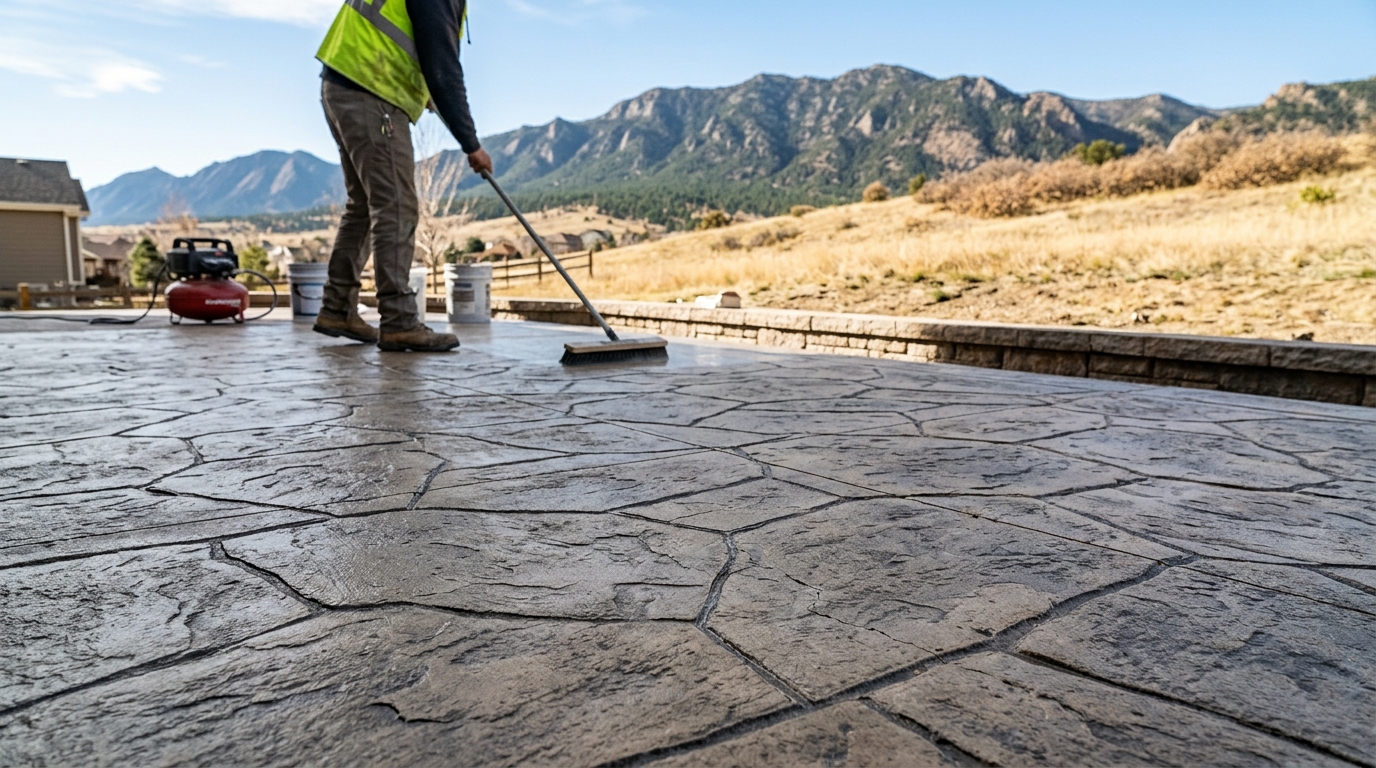
Fort Collins sits at an elevation of roughly 5,003 feet above sea level. This high altitude means the atmosphere is thinner, allowing more intense ultraviolet (UV) radiation to reach the ground. UV light acts as a catalyst for chemical degradation in standard acrylic sealers. These sealers are essentially thin plastic films that bond to the surface of the concrete. Under constant bombardment from high-altitude solar rays, the polymer chains within the sealer begin to break down, a process known as photodegradation. Over time, this causes the sealer to lose its gloss, turn brittle, and eventually wear away entirely.
In addition to intense sunlight, the Front Range experiences dramatic temperature swings. It is not uncommon for a winter day in Fort Collins to start below freezing, warm up to fifty degrees in the afternoon sun, and plummet back into the teens overnight. This creates extreme freeze-thaw cycles. When moisture penetrates unsealed concrete, it settles into the microscopic pores of the material. As the temperature drops, that water freezes and expands by about nine percent. This expansion exerts immense internal pressure on the cement paste. Over dozens of these cycles each winter, the pressure can cause the top layer of concrete to flake, scale, or crack, ruining the beautiful stamped pattern. Sealer acts as a hydrophobic barrier, preventing water from entering those pores in the first place.
The Core Rule: Typical Sealing Intervals
For most homes in Northern Colorado, the sweet spot for resealing stamped concrete is every two to three years. This timeframe strikes a balance between maintaining a continuous protective barrier and avoiding the issues associated with excessive sealer buildup. However, this is not a one-size-fits-all rule. The exact frequency depends heavily on the level of exposure and the specific type of sealer applied during the initial installation.
According to the industry guidelines for sealing stamped surfaces, neglecting to reseal can eventually lead to color loss and structural weathering. Some sheltered areas, such as covered back patios or heavily shaded breezeways, may maintain their protective coating for four or even five years. Conversely, high-exposure surfaces like driveways, unshaded south-facing pool decks, and sidewalks that receive heavy foot traffic often require attention closer to the two-year mark. It is important to monitor the surface rather than relying solely on a calendar. Applying new coats too frequently can actually cause more harm than good, leading to a thick, cloudy buildup that traps moisture and ruins the appearance of the stamped pattern.
Understanding the Environmental Variables in Fort Collins
Several local factors influence how quickly your protective coating wears down. One of the primary culprits is winter maintenance. Homeowners often use chemical deicers or rock salt to clear snow and ice from their walkways and driveways. While these products make walking safer, they are incredibly destructive to concrete sealers. Ammonium nitrate, ammonium sulfate, and calcium chloride can chemically attack the sealer and accelerate the scaling of the underlying concrete. Even sodium chloride (rock salt) accelerates the freeze-thaw process by increasing the number of freeze-thaw cycles the concrete undergoes.
Mechanical wear is another factor. If you use a metal-bladed shovel or a heavy snowblower to clear your driveway, you can easily scratch, chip, or scrape away the thin acrylic film. Heavy vehicle traffic also accelerates wear, particularly in the tire tracks where hot tires can occasionally lift solvent-based acrylics off the surface. Finally, drainage patterns play a key role. Areas that experience standing water or constant runoff from roof gutters will see localized sealer failure much faster than sloped, well-draining surfaces.
The Chemistry of Concrete Sealers: Water-Based vs. Solvent-Based
When planning to seal your decorative concrete, understanding the chemistry behind the products is essential. Most residential stamped concrete projects are sealed using acrylic-based sealers. Acrylics are favored because they are breathable, meaning they allow moisture vapor within the slab to escape rather than trapping it underneath. Acrylic sealers generally fall into two categories: solvent-based and water-based.
Solvent-based acrylics have historically been the preferred choice for stamped concrete because of their ability to enhance color. They darken the concrete and show off the variegated pigments, creating a rich, glossy "wet look" that many homeowners desire. However, solvent-based products are subject to strict environmental regulations. In Colorado, air quality standards are governed closely, particularly along the Front Range urban corridor. On May 1, 2020, Colorado adopted the Ozone Transport Commission (OTC) Model Rule II for Architectural and Industrial Maintenance (AIM) coatings. This rule imposes strict limits on the volatile organic compound (VOC) content allowed in concrete sealers and other surface treatments—though requirements vary by municipality, so confirm with your local building department.
To comply with these environmental standards, manufacturers developed low-VOC solvent formulations and advanced water-based acrylic sealers. Modern water-based acrylics offer excellent durability and UV resistance with very low odor and minimal environmental impact. While water-based sealers typically provide a more satin or matte finish rather than a high-gloss shine, they are incredibly resilient and comply fully with local clean air mandates—though requirements vary by municipality, so confirm with your local building department. Choosing the right product requires balancing your aesthetic goals with the regulatory standards of Larimer County.
How to Tell When Your Stamped Concrete Needs a Reseal
You do not have to guess whether your concrete is ready for a fresh coat of sealer. Homeowners can perform a simple diagnostic check known as the "Water Splash Test." Splash a bucket of water onto various areas of your stamped surface, particularly in high-traffic or highly sun-exposed sections. If the water immediately beads up and sits on top of the surface like water on a freshly waxed car, your sealer is still doing its job. If the water quickly soaks into the concrete, turning the surface dark and damp, the protective barrier has worn away, leaving the porous concrete vulnerable to moisture absorption and winter damage.
Visual cues are also highly reliable indicators. When acrylic sealer wears thin, the rich colors of the stamped pattern will begin to fade. The surface will look dull, chalky, or dry. You might notice fine scratches, or a powdery residue when you sweep. If you ignore these signs, the underlying concrete will begin to lose its smooth texture, becoming rough to the touch as the sand and aggregate particles in the concrete mix are exposed to weather and foot traffic. Catching these signs early prevents the need for costly color restoration or surface repairs.
The Pitfalls of Over-Sealing: Why More Is Not Always Better
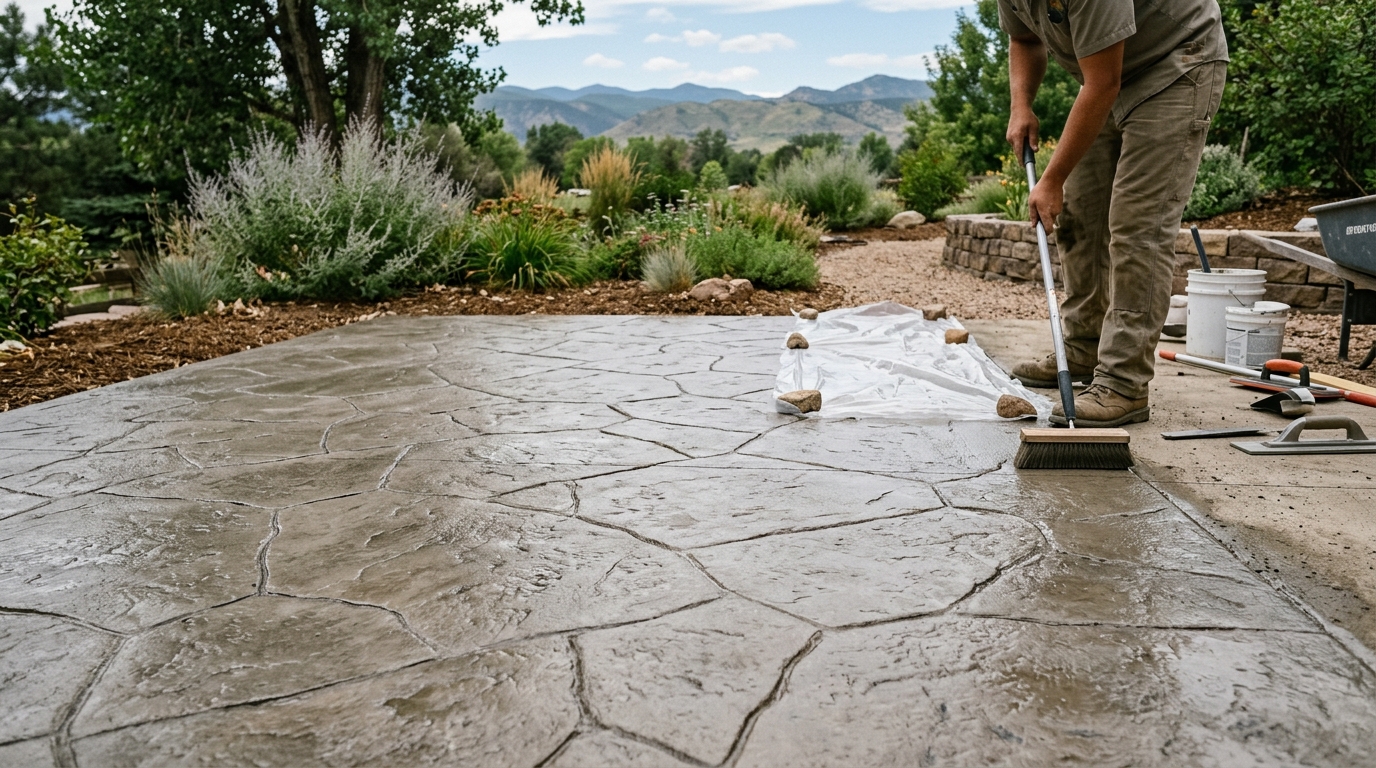
Many well-meaning homeowners believe that if a little sealer is good, a lot must be better. This is one of the most common and expensive mistakes made in concrete maintenance. Acrylic sealers are designed to wear away gradually over time. If you apply a fresh coat of sealer every single year without allowing the previous layers to wear down, you will build up a thick, impermeable plastic barrier on top of the slab.
This excessive buildup prevents the concrete from breathing. Concrete is naturally porous and constantly absorbs moisture from the soil beneath it. This moisture must be allowed to evaporate through the surface. When a thick, solid layer of sealer blocks this evaporation, the moisture becomes trapped at the concrete-sealer interface. Under the heat of the summer sun, this trapped water vapor expands and forces the sealer to detach from the concrete, creating unsightly bubbles or blistered areas.
In addition, trapped moisture often causes a chemical reaction known as "blushing," where the sealer turns a milky-white, hazy color. Instead of a beautiful, rich pattern, you are left with a blotchy, unattractive mess. Fixing an over-sealed slab is a difficult and messy task. It requires applying harsh chemical strippers to dissolve the multiple plastic layers, scraping away the residue, washing the concrete, and starting the sealing process over from scratch. Applying sealer in thin, controlled coats at the proper multi-year intervals is the best way to avoid this headache.
The Professional Application Process: How We Do It Right
Properly sealing stamped concrete is a precise process that requires careful preparation and execution. If you have recently invested in beautiful stamped concrete in Fort Collins, protecting that investment requires more than just rolling a product onto the surface. At Above and Below Concrete, we follow a careful application process for a long-lasting, durable finish that holds up to the Colorado climate.
The process begins with a deep, thorough cleaning of the slab. We wash the surface to remove all dirt, dust, mold, mildew, oil, and organic stains. Any debris left on the concrete will be permanently trapped under the clear coat, ruining the final appearance. After washing, the concrete must dry completely. We typically recommend waiting at least twenty-four to forty-eight hours after washing before applying any sealer. Applying sealer to even slightly damp concrete will trap moisture, leading to instant cloudiness and adhesion failure.
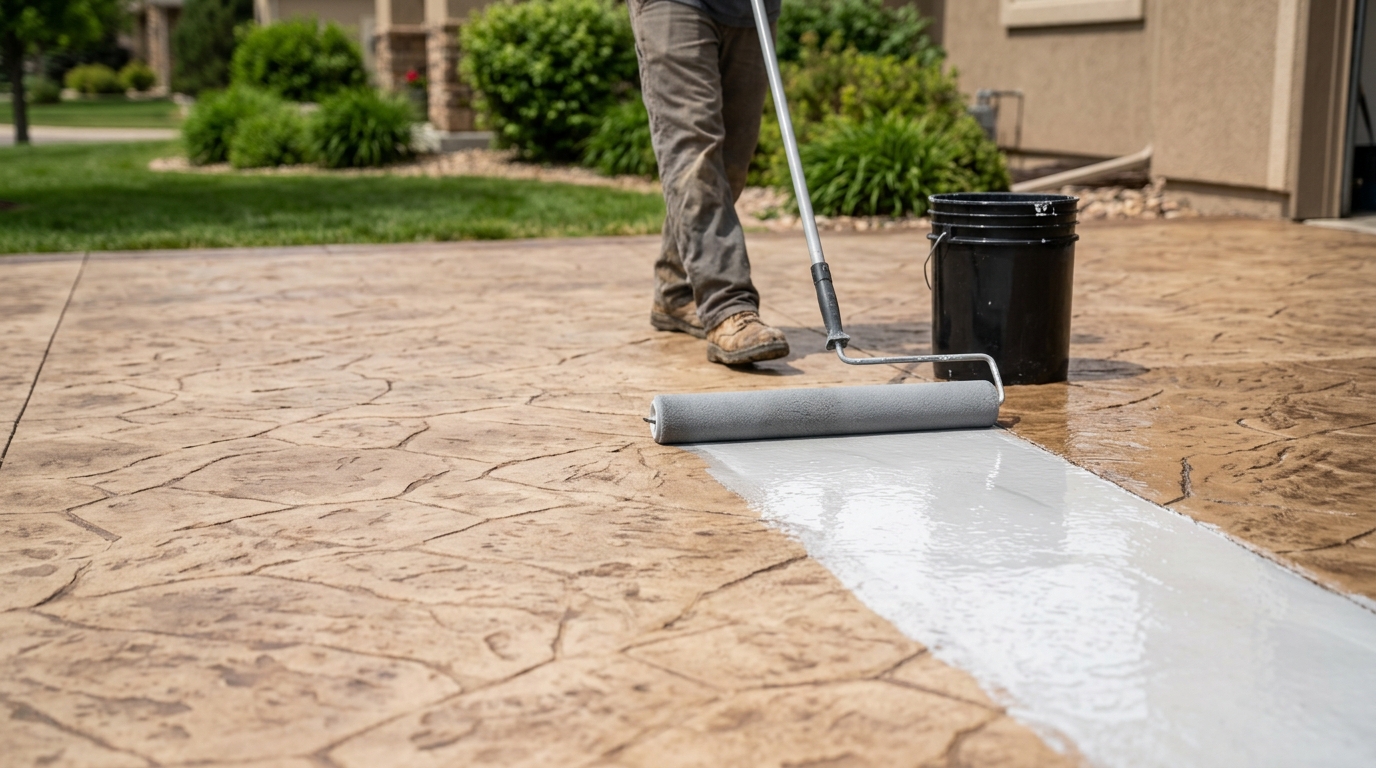
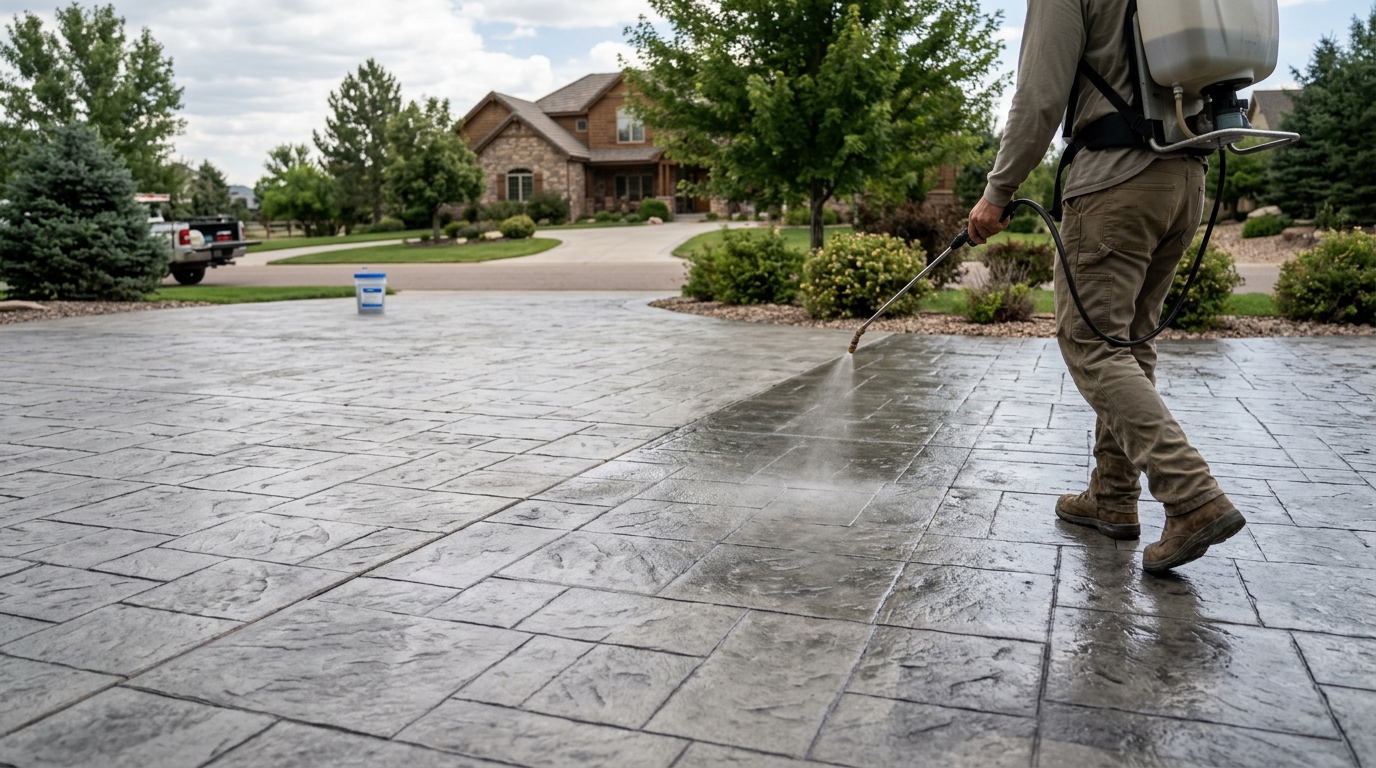
Once the surface is completely dry, we inspect the expansion joints and repair any minor surface cracks. We then apply the sealer using professional-grade sprayers and lint-free rollers. A successful application requires applying the product in thin, uniform coats. We never allow the sealer to pool or puddle in the deep impressions of the stamped pattern, as pooled sealer will bubble and peel. For most projects, we apply two thin coats for complete, even coverage.
Because stamped concrete can become quite slick when wet or icy, we also recommend incorporating a slip-resistant additive. We mix a micronized polymer grip agent directly into the sealer during the application of the final coat. This creates a subtle, microscopic texture on the surface that significantly improves traction for family members and guests without altering the appearance or beauty of the stamped design.
Protecting Your Investment with Above and Below Concrete
Maintaining the visual appeal and physical integrity of your stamped concrete requires regular professional care. While some homeowners consider sealing a DIY weekend project, the technical demands of chemical compatibility, VOC regulations, and proper application techniques make professional service a reliable choice. Our team at Above and Below Concrete brings local hands-on experience as an established concrete contractor in Fort Collins, providing quality maintenance and installation services.
We understand the unique demands that the Northern Colorado climate places on decorative concrete surfaces. As a family-owned and operated business, we are bonded and insured, and our field crew is OSHA 30 Certified, ensuring high standards of safety and professionalism on every job site. We back our work with a 100% Satisfaction Guarantee, giving you peace of mind that your patios, driveways, and sidewalks are in expert hands.
Whether you need to restore the fading colors of an older stamped patio or protect a newly poured surface, we are here to help. Contact us to schedule an onsite inspection, discuss your concrete's specific needs, and request an estimate for professional sealing services. Let us help you keep your home's outdoor features looking beautiful and performing perfectly for years to come.
Common Questions
Frequently Asked Questions
Ready To Start?
Get Your Free Quote Today
Get a free quote from Above and Below Concrete — serving Fort Collins and surrounding areas.