Fort Collins Homeowner Sidewalk Maintenance & Repair Responsibility
Understand your liability and repair options for public walkways.
The Short Answer
In Fort Collins, the city's Street Maintenance Program handles major infrastructure repairs, but adjacent property owners remain legally responsible for keeping their sidewalks safe and clear of snow—though requirements vary by municipality, so confirm with your local building department. If a private tree heaves your concrete, or you are replacing your driveway approach, you must handle the repairs yourself. When you cannot wait for the city's schedule, you need a bonded contractor to pull the proper right-of-way permits and fix the hazard.
If you own a home in Larimer County, the line between private property and public right-of-way can feel blurry right at the curb. According to local municipal guidelines, the concrete walkway in front of your house is a public asset, yet the burden of keeping it safe and clear of hazards rests heavily on your shoulders—though requirements vary by municipality, so confirm with your local building department. While a tax-funded street maintenance initiative exists, residential neighborhoods often sit on a years-long waiting list. If a tree root has shattered your concrete or a trip-and-fall risk is keeping you up at night, dealing with municipal codes, permits, and demolition becomes your job to solve.
The Core Rule: Fort Collins Codes and Your Liability
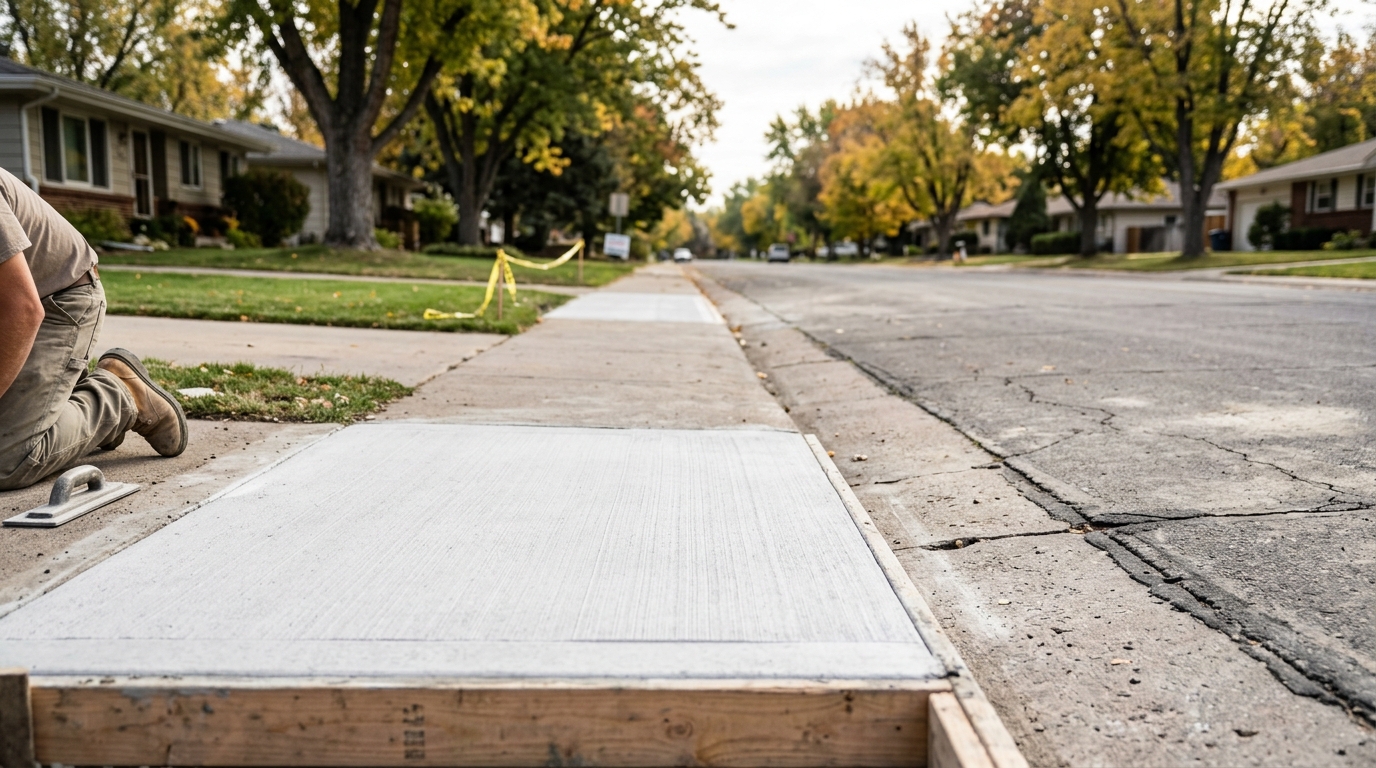
In many parts of Colorado, the municipality technically owns the sidewalk, but the adjacent property owner carries the legal duty to maintain it—though requirements vary by municipality, so confirm with your local building department. The most common and immediate example of this is winter weather. After a winter storm hits the Front Range, Fort Collins municipal code requires you to clear the snow and ice from your adjacent walkways within 24 hours of the snowfall ending—though requirements vary by municipality, so confirm with your local building department. If you ignore this requirement, Code Compliance can hire a private crew to shovel the path and send the bill directly to you—though requirements vary by municipality, so confirm with your local building department.
That exact same logic applies to the structural integrity of the concrete itself. If your slab settles, cracks, or heaves, it creates a serious trip hazard. While the city owns the right-of-way, an injured pedestrian can still pull you into a liability claim if they trip on the property line. Because of this shared legal exposure, simply waiting around for municipal help is not always the smartest financial move. When the hazard is severe, you have to take action.
How the Fort Collins Street Maintenance Program (SMP) Works
Fort Collins does take its infrastructure seriously. Voters recently extended the 1/4-Cent Street Maintenance Tax through 2045, which directly funds the Street Maintenance Program (SMP). This program actively repairs roads, curbs, gutters, and sidewalks across town. You can view the official city guidelines for sidewalk repair to see how they plan their seasonal construction.
So, if the city has a dedicated program with millions in funding, why would a homeowner ever pay out of pocket for a repair? It comes down to prioritization. The SMP targets high-traffic arterials like Harmony Road, College Avenue, and Prospect Road first. They use a specific prioritization model based on pavement condition scores and daily pedestrian volume. If you live on a quiet cul-de-sac in a residential subdivision, a two-inch trip hazard in front of your house might not see a city concrete crew for five to ten years. When you have a dangerous situation and you want it fixed now, you have to bypass the city schedule and hire a private contractor.
When Homeowners Are Forced to Handle the Repairs
There are a few specific scenarios where relying on the city simply will not work, and you must bring in a professional team to handle the heavy lifting.
Private Tree Root Heave
Expansive clay soils are tough on concrete, but mature tree roots are significantly worse. If a large tree on your private property extends roots under the public sidewalk and pushes the slabs upward, that damage is tied directly to your landscaping. The city's Forestry Division can issue a Notice to Remove if a private tree creates a public safety risk in the right-of-way—though requirements vary by municipality, so confirm with your local building department. In these cases, it is your responsibility to cut back the roots and replace the shattered concrete.
Driveway Upgrades and Replacements
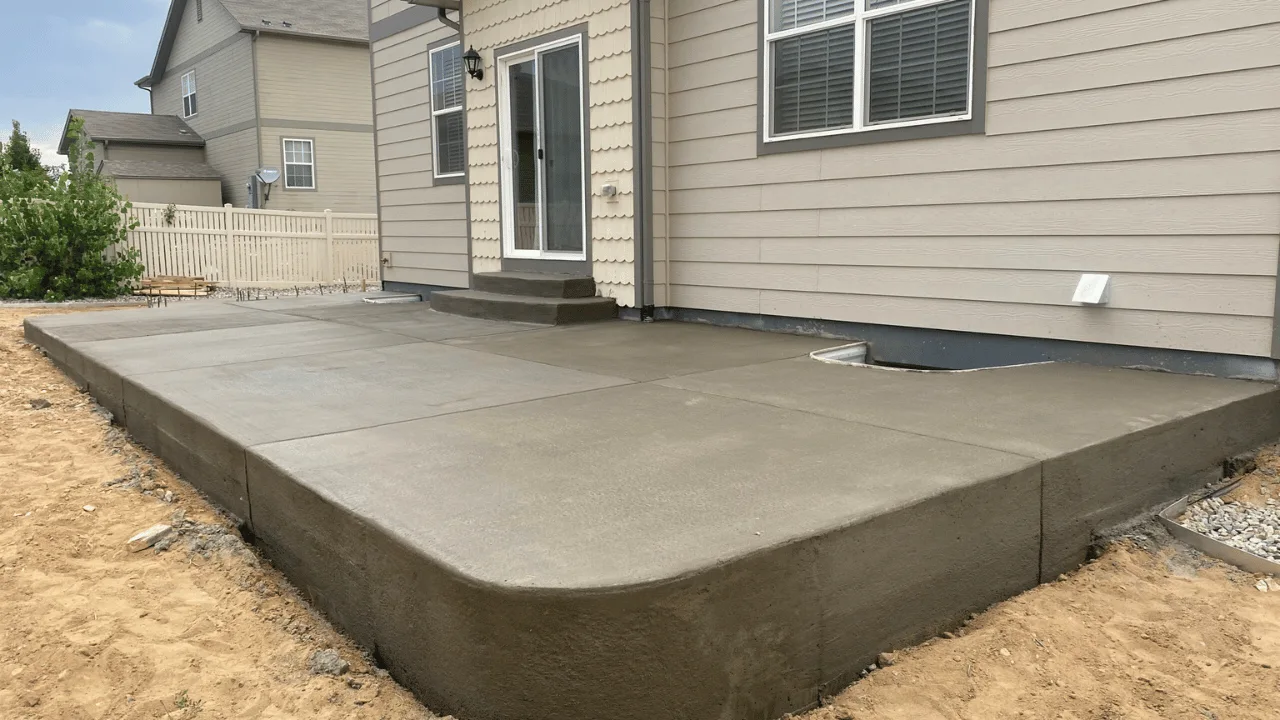
You cannot pour a fresh, level driveway and leave a crumbling, sunken sidewalk attached to it. When we are installing new driveways in Fort Collins for local homeowners, the project almost always includes replacing the driveway approach and the adjoining sidewalk sections. The city requires this continuity to ensure that water drains properly into the gutter rather than pooling on the walkway—though requirements vary by municipality, so confirm with your local building department. The entire structure must tie together properly.
Selling Your Home
A shattered walk is a glaring red flag during a real estate inspection. Buyers do not want to inherit a code compliance issue or a lingering liability risk. We frequently receive calls from sellers who need to resolve severe cracking or settling before closing day. If the city's timeline is three years out, the seller has no choice but to hire a contractor to clear the inspection contingency.
Permits and Right-of-Way Requirements
You cannot simply buy a few bags of ready-mix from a big box store and start pouring concrete in the public right-of-way. This regulation ensures the contractor actually knows how to match the city's required concrete mix, depth requirements, and subgrade compaction standards—though requirements vary by municipality, so confirm with your local building department. If a homeowner attempts to DIY a public walkway without the right permits, the city can forcefully require them to rip it all out and start over from scratch at their own expense—though requirements vary by municipality, so confirm with your local building department.
At Above and Below Concrete, our team handles the bureaucratic side of the job so you do not have to. Homeowners often tell us they feel overwhelmed by the complex technical requirements of right-of-way construction. We secure the necessary engineering permits, coordinate the utility locates, and ensure the final finish matches the municipal standards exactly. Because we are bonded and insured, and insured, the project is done safely and legally.
How the Colorado Climate Destroys Walkways
Understanding why your concrete failed helps you understand what goes into a proper repair. Fort Collins experiences aggressive freeze-thaw cycles throughout the winter and spring. During a sunny afternoon, snowmelt seeps into the tiny pores and micro-cracks in your concrete. When the temperature plummets overnight, that trapped water freezes and expands. Over a few seasons, this hydraulic pressure literally blows apart the surface of the slab, a process known as spalling.
Beyond the ice, the Front Range is notorious for its expansive clay soils. When it rains heavily, the clay absorbs water like a sponge and swells, pushing the concrete upward. During a dry, hot August, the soil shrinks, creating a void underneath the slab. As pedestrians or vehicles move over it, the unsupported concrete eventually snaps under the pressure. Proper subgrade preparation mitigates this movement, but many older neighborhoods were poured directly onto the native dirt decades ago.
What Drives the Cost of a Sidewalk Replacement?
We do not post generic pricing online because no two jobs in Larimer County are identical, and throwing out blind numbers usually results in broken budgets. What you will pay depends heavily on the conditions buried under the surface. When estimating a job, we evaluate several specific variables:
- Demolition and Haul-Away: Removing four to six inches of old, heavy concrete requires specialized equipment and significant disposal fees at local recycling yards.
- Subgrade Preparation: If the original slab failed because the soil washed out, we have to bring in fresh Class 6 road base and compact it thoroughly. Pouring new concrete over a bad foundation guarantees it will crack again in a year.
- Root Mitigation: If tree roots caused the heave, they must be ground down or cut back safely before the new pour, which requires extra labor.
- Scope of Work: Tying a single sidewalk panel into an existing curb is a vastly different project than replacing a fifty-foot stretch along your entire property line and installing a new ADA-compliant ramp.
If you are comparing quotes, pay close attention to the preparation work. Contractors who bid exceptionally low often cut corners on the subgrade or skip the municipal permitting process entirely, leaving you holding the bag if the city inspector shows up. We take the time to build a proper, stable base so the new concrete lasts.
The Repair Process: Doing the Job Right
Fixing a walkway is not just about making the property look nice; it is about restoring safe pedestrian access and maintaining proper drainage. Here is exactly how we approach pouring new sidewalks in Fort Collins, CO.
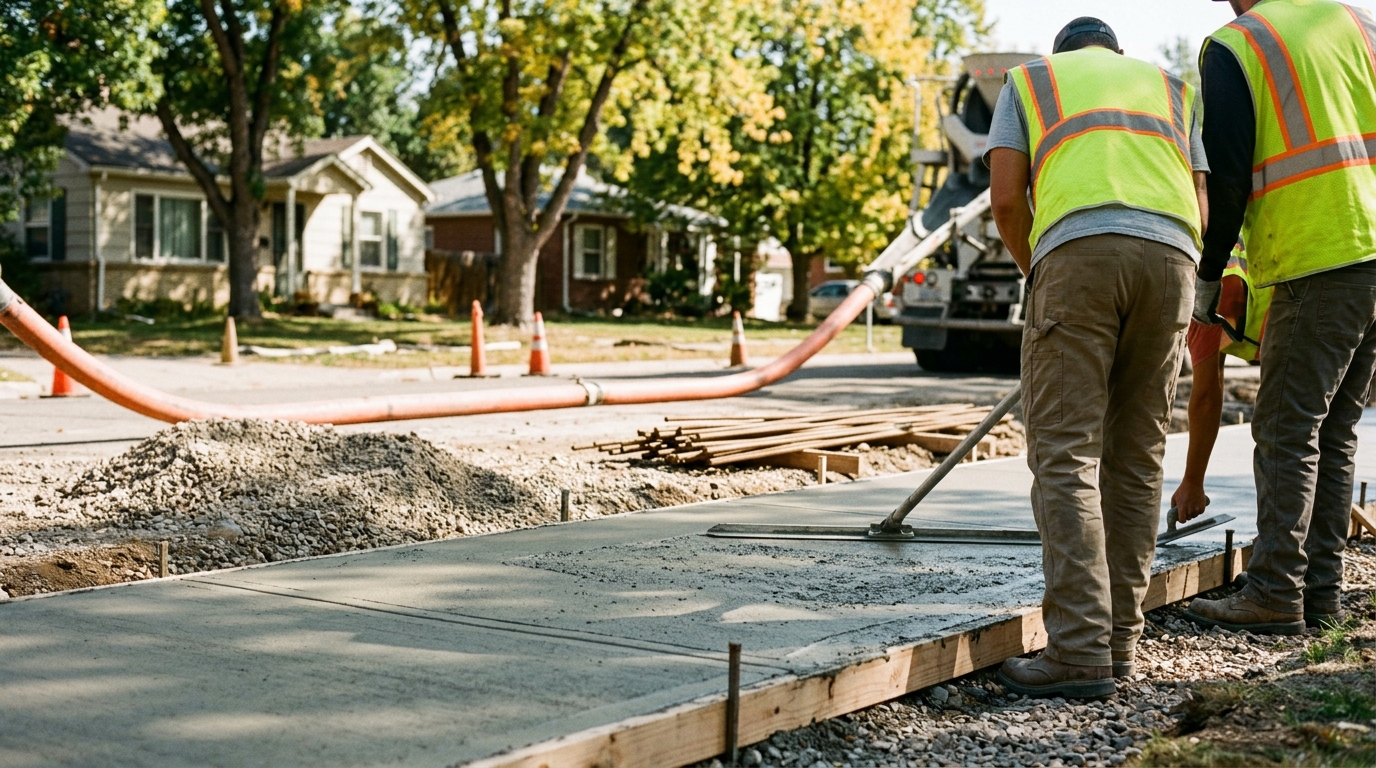
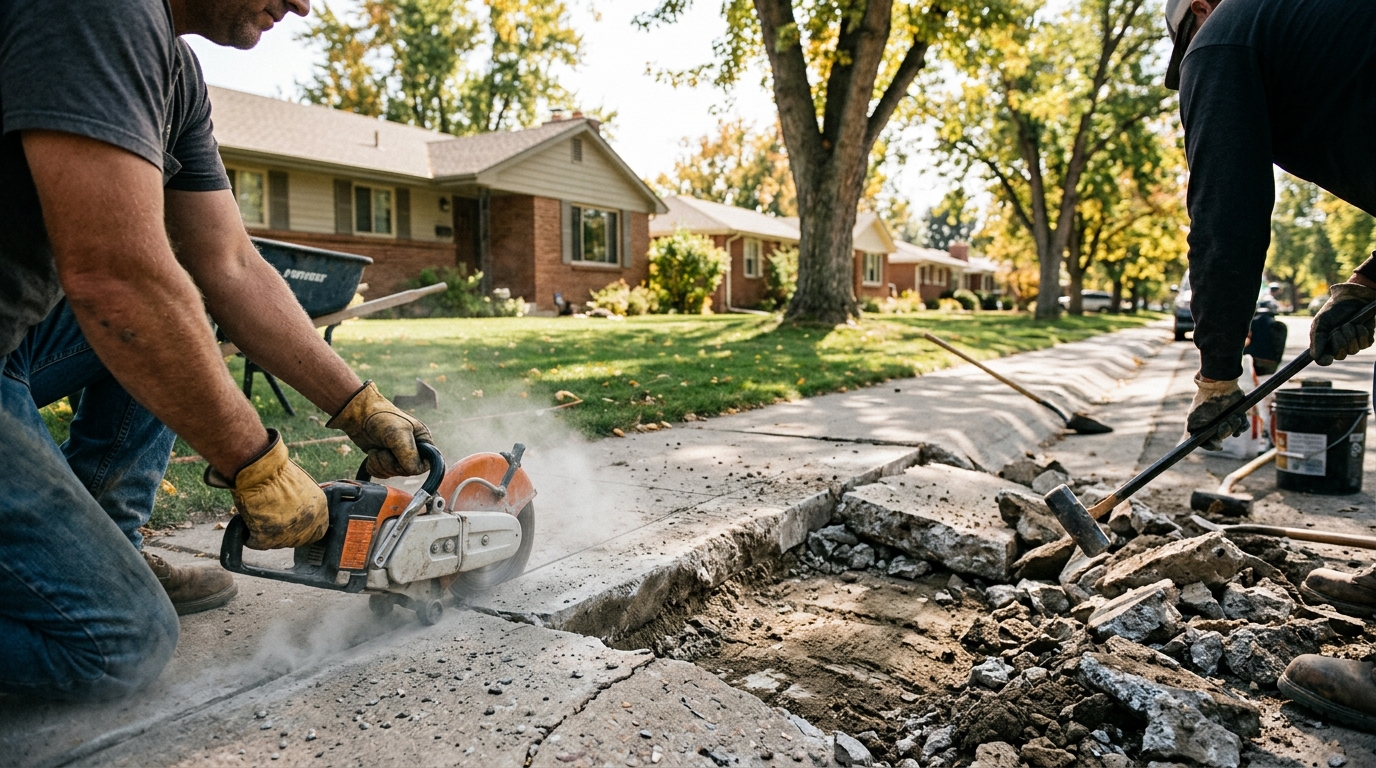
First, we call in 811 to mark all underground utilities. Fort Collins has a dense network of buried lines, and striking a fiber optic cable or municipal water line is an expensive disaster. Once the area is cleared, we saw-cut the edges of the damaged panels to ensure a perfectly clean break from the surviving concrete.
Next, we rip out the debris and evaluate the dirt underneath. We address any invasive roots, bring in structural fill, and run heavy plate compactors over the area. We then set our forms to match the exact slope and grade required by the city's engineering department—usually a slight cross-slope to shed water toward the street without making it too steep for wheelchairs or strollers.
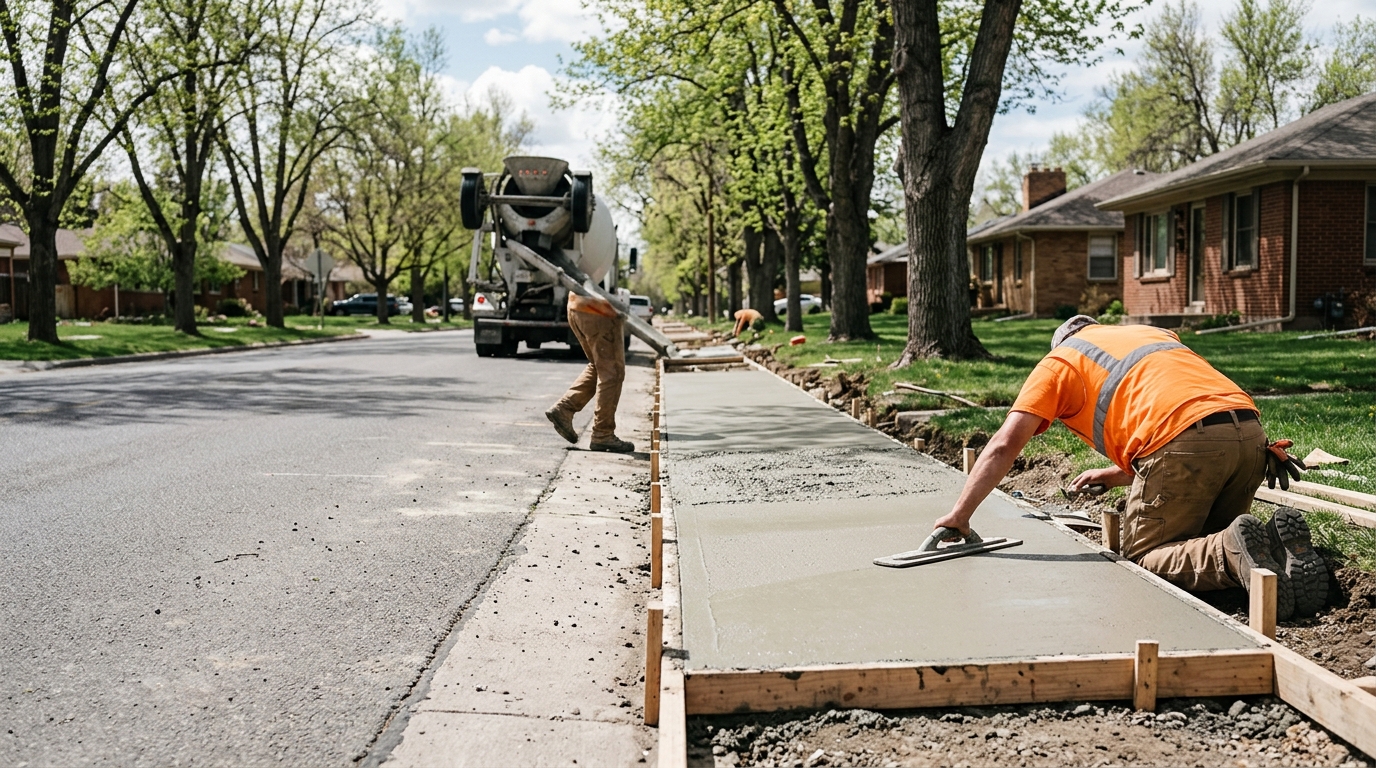
Finally, we pour the concrete, work it to the proper depth, apply a broom finish for essential slip resistance, and cut control joints to manage future expansion and contraction. We carefully manage the curing process because concrete that dries too fast in the arid Colorado air will lose its structural strength.
Frequently Asked Questions About Local Walkway Maintenance
Can I just grind down a trip hazard instead of replacing the concrete?
Sometimes. If a slab has heaved less than an inch and the concrete itself is still structurally sound, a contractor can grind the edge down to remove the lip. However, if the slab is cracked in multiple places, actively sinking, or heaved by several inches, grinding will not solve the underlying structural failure. Full replacement is the only permanent fix.
What if a city-owned tree causes the damage?
If the tree sits in the parkway—the strip of grass between the curb and the sidewalk—it is generally considered a city tree. In that scenario, you should report the hazard to the city. The Forestry Division handles the tree maintenance, and the Street Maintenance Program may cover the concrete repair, though you will still be subject to their long prioritization schedule.
Do I need an inspection after the repair is done?
Yes—though requirements vary by municipality, so confirm with your local building department. When a right-of-way permit is pulled, a city inspector will review the forms and the subgrade before the pour, and they will check the final finish afterward—though requirements vary by municipality, so confirm with your local building department. This protects you as the homeowner and ensures the work meets all local safety codes.
Get a Clear Estimate for Your Concrete Project
Dealing with failing concrete is stressful enough without trying to navigate municipal codes, permit applications, and technical drainage requirements on your own. If you have a severe trip hazard, a code compliance notice, or a driveway project that requires corresponding sidewalk work, our team is ready to step in.
We manage concrete projects across the region, communicating clearly from the first site visit to the final inspection. Because every property sits on different soil and faces different structural challenges, a reliable way to know what your project requires is an in-person look.
Reach out to our team to get an accurate quote for your specific property. We will walk you through the repair options, explain the permitting process, and get your walkways safe, level, and up to code.
Common Questions
Frequently Asked Questions
Ready To Start?
Get Your Free Quote Today
Get a free quote from Above and Below Concrete — serving Fort Collins and surrounding areas.