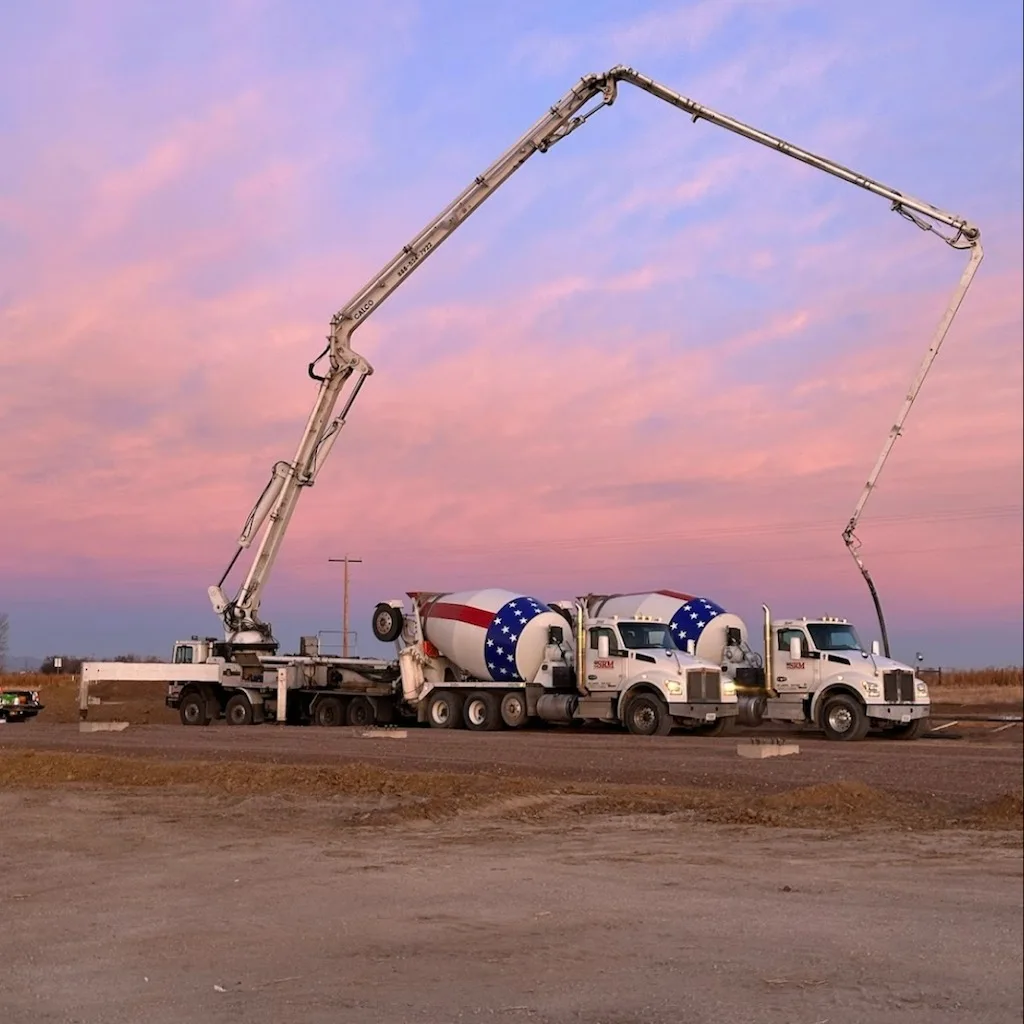
Fort Collins Concrete Patio Permit and Landscaping Rules
Navigating permit codes, HOA rules, and soil preparation for your Fort Collins backyard.
The Short Answer
In Fort Collins, you do not need a building permit for a basic, ground-level concrete patio, as the city exempts standard concrete flatwork from permit requirements — though requirements vary by municipality, so confirm with your local building department. However, if your patio is elevated more than 30 inches above the ground, serves as a required exit door, or includes a solid cover or roof, a permit is mandatory. All projects must still follow local setback, zoning, and drainage rules.
Planning a concrete patio in Fort Collins brings up plenty of exciting choices, from selecting the perfect stamped texture to positioning your outdoor grill for clear summer evenings. Yet, before the mixer truck even backs down your driveway, you have to think about local permit codes. Fort Collins home improvements are shaped by a unique combination of municipal rules, strict homeowner association covenants, and demanding environmental conditions. Skipping these details often results in code violations, drainage issues, or structural damage that can ruin your investment before you even get to enjoy it.
We want to help you make sense of the local rules so your project starts on solid ground. Understanding how the city manages property improvements ensures your backyard upgrade is beautiful, safe, and fully compliant with local laws. Here is what you need to know about municipal permissions, zoning restrictions, and the technical requirements of pouring concrete in our community.
Is Ground-Level Concrete Flatwork Exempt in Fort Collins?
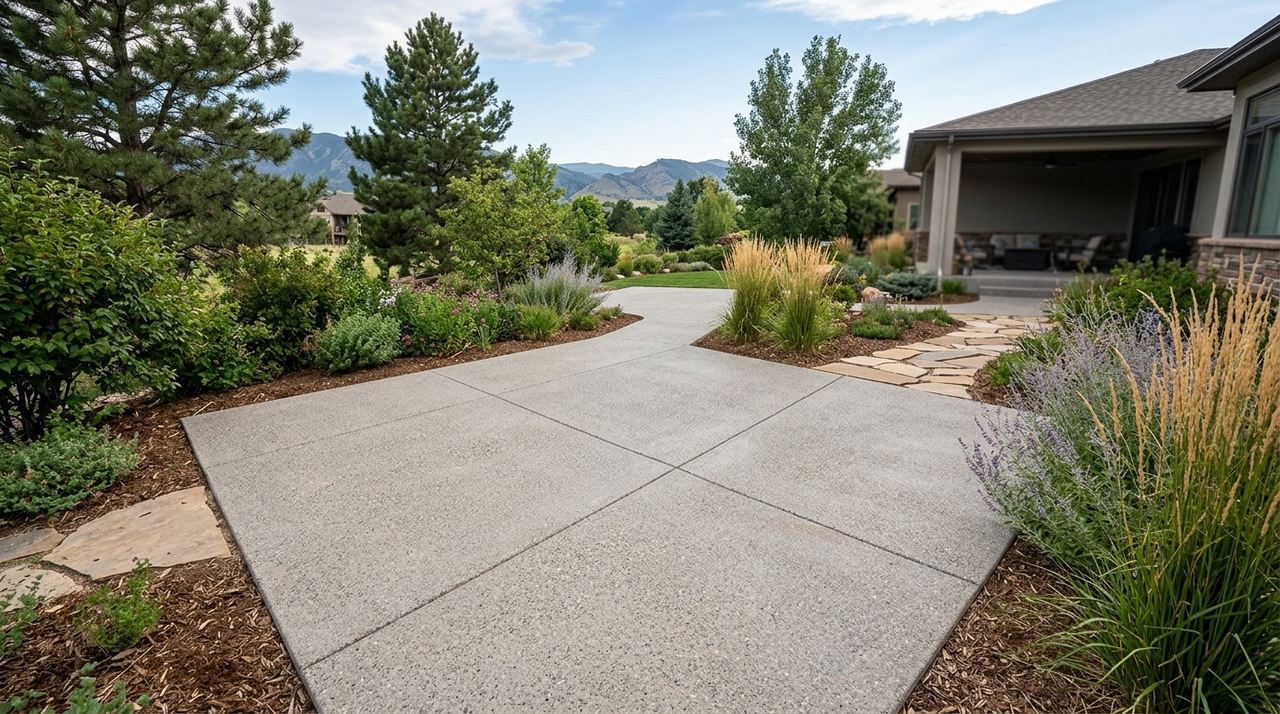
The good news for local homeowners is that the Fort Collins Community Development Department classifies basic, ground-level concrete work under permit exemptions — though requirements vary by municipality, so confirm with your local building department. According to official guidelines from Fort Collins Residential Building Services, concrete flatwork, including standard driveways, walkways, and ground-level backyard patios, does not require a structural building permit. This exemption exists because flatwork rests directly on the earth, meaning it does not pose the same structural collapse risks as elevated structures like decks or balconies.
However, this exemption comes with a major warning that many homeowners overlook. Being exempt from a structural building permit does not mean your project is exempt from local building codes, zoning rules, or land use regulations. If you pour a ground-level concrete pad that blocks a neighbor's runoff or encroaches on a protected property line, the city can still require you to tear it out at your own expense. Before you plan a new concrete patio in Fort Collins, you must confirm that your layout respects these underlying rules.
When Does a Patio Project Require a Permit?
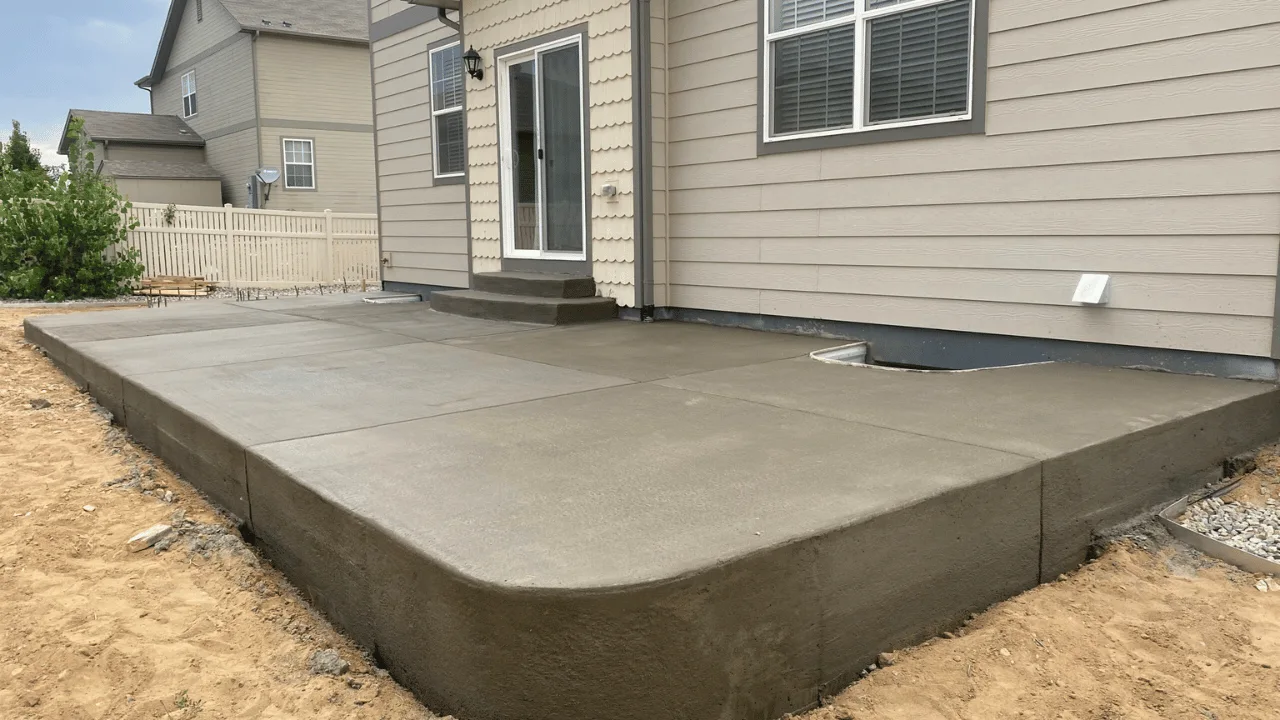
While simple ground-level pads are exempt, the moment your patio project goes vertical, the rules change. There are three common scenarios where you will need to pause and submit a permit application before any concrete is mixed:
First, if your patio is elevated more than 30 inches above the surrounding grade at any point, it is legally classified as a deck or elevated porch under the International Residential Code — though requirements vary by municipality, so confirm with your local building department. These structures require deep footings, specific structural framing, and a building permit to ensure they can safely handle weight loads and won't collapse.
Second, if your patio serves as a required exit door for your home, it must meet specific landing dimensions and step rules, which generally triggers a permit requirement to verify emergency escape routes remain safe.
Third, adding overhead shelter is a major permit trigger. If you want a solid patio cover, a roof extension, or a large enclosed porch, you must obtain a residential building permit. The city publishes a specific handout for patio covers that outlines engineering requirements, especially regarding snow loads. In Colorado, heavy spring snowstorms can put thousands of pounds of pressure on an outdoor roof, making professional structural calculations necessary.
Even open structures like pergolas and arbors have strict boundaries. In Fort Collins, a pergola is only exempt from a building permit if its roof is at least 67 percent open, its total area is 120 square feet or less, its height is 8 feet or less, and it sits at least 3 feet away from your property lines — though requirements vary by municipality, so confirm with your local building department. Exceed any of those metrics, and a permit becomes a legal necessity.
Fort Collins Zoning, Setbacks, and Lot Coverage Limits
Every residential property in Fort Collins belongs to a specific zoning district, such as Low Density Mixed-Use Neighborhood or Low Density Residential. Each district carries strict rules regarding how much of your lot can be covered by hard surfaces, which includes your home, garage, driveways, walkways, and patios.
If you have a smaller suburban lot, pouring a massive concrete slab across your entire backyard might push you past your zone's maximum allowed lot coverage. When lot coverage limits are violated, it reduces the natural soil available to absorb rainwater, putting extra stress on the city's storm sewer system.
Setbacks are another critical factor. Setbacks are the mandatory open spaces between your property lines and any structures. While flatwork is often allowed closer to property lines than elevated buildings, you cannot pour concrete over utility easements. Easements are designated strips of land that utility companies have the right to access for maintaining water, sewer, gas, or electrical lines. If you pour a permanent concrete patio over an easement, and the city needs to dig up a sewer pipe, they have the legal right to jackhammer through your beautiful patio, and they are not required to pay for its replacement.
The Front Range Soil Challenge and Subgrade Preparation
Beyond the legal paperwork, the physical earth under Fort Collins presents its own set of structural challenges. Larimer County is famous for having highly expansive clay soils, which are often referred to as shrink-swell soils. When these clay soils absorb moisture during our wet spring seasons, they expand with immense force. When they dry out during hot, dry summer stretches, they contract and pull away from structures.
This constant movement is the number one enemy of exterior concrete. If a contractor simply pours concrete over raw dirt, the shifting clay underneath will quickly cause the slab to crack, tilt, and shift. To prevent this, proper subgrade preparation is essential.
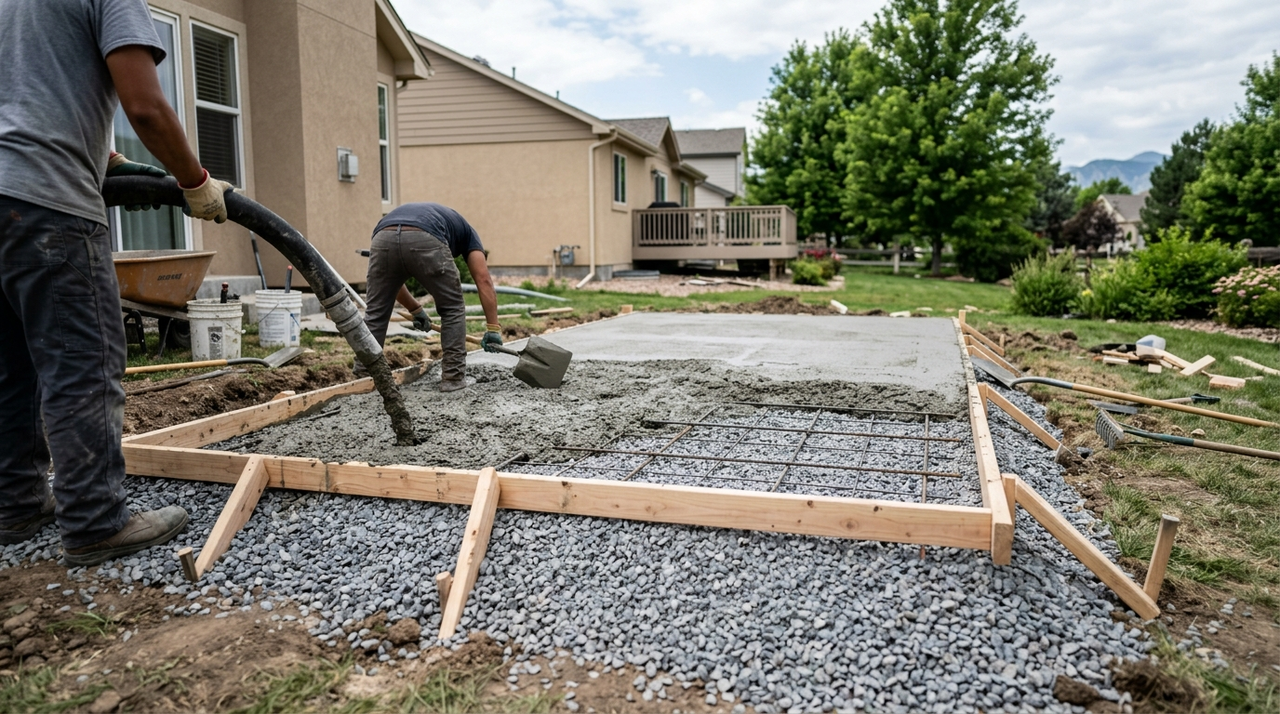
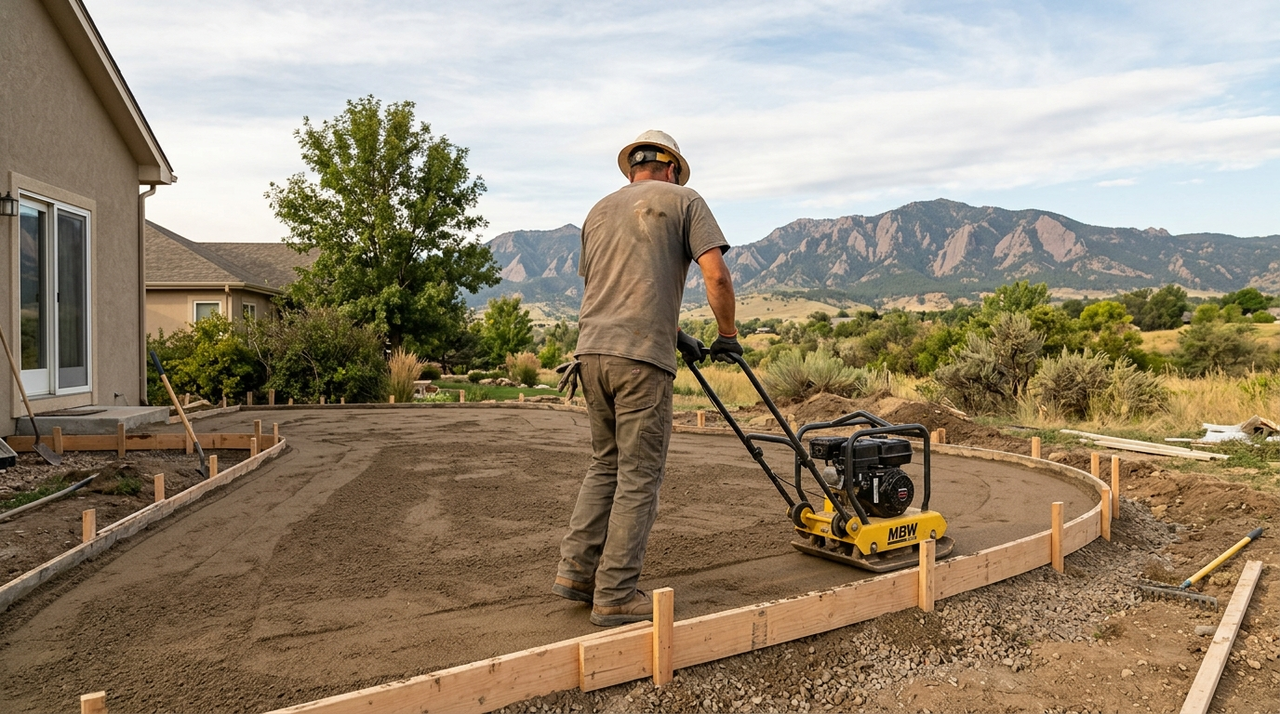
The standard process to build durable flatwork involves excavating the organic topsoil down to stable ground, compacting the native subgrade, and installing a thick layer of crushed gravel base. This gravel layer acts as a buffer, allowing water to drain away rather than pooling directly under the concrete. Slabs are often reinforced with steel rebar rather than wire mesh to help provide better structural support. Rebar holds the concrete together, preventing minor hairline fissures from turning into major, uneven cracks when the ground heaves.
Addressing Northern Colorado Weather: Curing and Sealing
The Front Range is famous for its rapid temperature swings. It is not uncommon for a warm, sunny morning in Fort Collins to be followed by a sudden drop of forty degrees and a late-afternoon freeze. For fresh concrete, these extreme temperature shifts are incredibly dangerous. If the water inside the curing concrete freezes before the slab has reached sufficient strength, the structural integrity is permanently compromised, leading to surface scaling, dusting, and premature failure.
To guard against this, local weather patterns should be closely monitored. During colder months, insulated curing blankets are often used to trap the heat generated by the concrete's chemical curing process. In high-heat summer seasons, managing moisture retention is equally critical. If the concrete dries out too quickly under the intense Colorado sun, the surface will dry and shrink faster than the base, causing spiderweb cracking or curling. Applying a curing compound or using a wet-curing method keeps the moisture balanced throughout the slab.
Once the concrete has fully cured, applying a professional-grade sealer is the final line of defense. Our dry mountain climate combined with winter snowmelt means your patio will be exposed to moisture that can seep into the pores of the concrete. When that trapped moisture freezes, it expands, causing micro-fractures. A silane or siloxane-based penetrating sealer creates a hydrophobic barrier, preventing water absorption and extending the lifespan of your patio for decades.
Drainage Patterns and Grading Rules
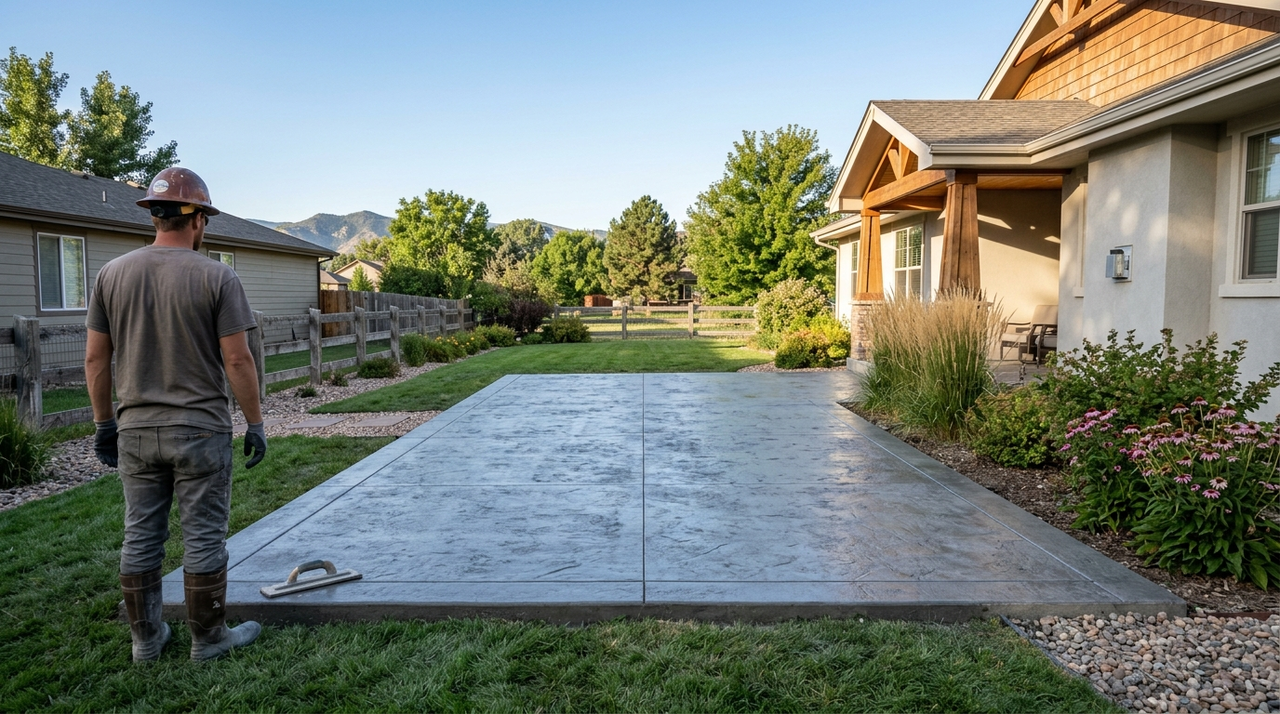
When you replace grass with a solid concrete slab, you alter how rainwater and melting snow move across your property. The City of Fort Collins enforces strict grading and drainage regulations to prevent runoff from damaging homes or neighboring properties.
A newly poured patio must always slope away from your home's foundation to prevent water from pooling against the crawlspace or basement walls. The standard industry slope is a drop of one-quarter inch per linear foot — though requirements vary by municipality, so confirm with your local building department. This subtle angle is barely noticeable to the eye but is highly effective at directing water toward proper drainage areas.
You must also avoid designing your patio in a way that redirects water onto your neighbor's property or blocks a natural drainage channel — though requirements vary by municipality, so confirm with your local building department. If your concrete work causes water to flood a neighboring yard, you could face civil liabilities and municipal code enforcement actions. Working with an experienced concrete contractor in Fort Collins is the best way to ensure your patio's slope and grading align with the natural flow of your land.
Working Within Homeowners Associations (HOAs)
In Colorado, the Colorado Common Interest Ownership Act (CCIOA) grants homeowners associations substantial authority over the design and appearance of residential properties. If your home is located in an HOA-governed community in Fort Collins, municipal code is only your first hurdle.
Even though the city does not require a building permit for ground-level concrete flatwork, your HOA almost certainly requires you to submit an architectural review application before starting. HOAs often regulate the color, texture, shape, and total square footage of backyard patios. Some associations ban certain decorative finishes or require specific borders and landscaping to soften the look of hardscape features.
Always obtain written approval from your HOA's Architectural Control Committee before scheduling your pour. If you proceed without their consent, the association can legally fine you or force you to remove the concrete, even though your project is perfectly legal according to the city's building department.
Our Commitment to Local Craftsmanship
Pouring concrete along the Front Range is a precise science that requires a deep familiarity with local regulations and environmental demands. At our family-owned business, Above & Below Concrete brings five years of local experience to every residential project. We are bonded, insured, and OSHA 30 certified, giving you complete peace of mind throughout the construction process.
Our team understands the nuances of Fort Collins municipal codes, Larimer County soil patterns, and the high standards of local HOAs. We do not believe in taking shortcuts, which is why we offer a 100% satisfaction guarantee on all our work. From initial grading to the final sweep of the broom, we make sure your backyard upgrade is built to last.
If you are ready to design a beautiful, durable outdoor space, we are here to help. Reach out to us today to schedule a consultation and secure an accurate estimate for your upcoming project.
Common Questions
Frequently Asked Questions
Ready To Start?
Get Your Free Quote Today
Get a free quote from Above and Below Concrete — serving Fort Collins and surrounding areas.