Fort Collins Expansive Soil and Concrete Foundation Protection
Protecting your home's foundation starts with understanding the unique clay soils of the Front Range.
The Short Answer
Expansive soils in Fort Collins damage concrete foundations by swelling when wet and shrinking during dry spells. This constant shifting exerts immense vertical heave and lateral pressure on the concrete. Because moisture levels around a property fluctuate, this movement is rarely uniform, resulting in differential stress that cracks slabs, warps door frames, and threatens structural stability.
Expansive soils affect concrete foundations in Fort Collins by swelling significantly when wet and shrinking as they dry, causing differential movement that cracks and shifts concrete structures. This cyclical movement, driven by highly reactive bentonite clay within local geological formations like the Pierre Shale, exerts immense upward and lateral pressure against concrete. Over time, these shifting pressures pull structural elements out of alignment, leading to cracked slabs, sticking doors, and foundation instability.
Understanding the Front Range Soil Geology
Underneath the surface of the Front Range lies a challenging geological reality for builders and homeowners. Much of the region, including Fort Collins, rests on clay-rich soil deposits. Working with an experienced concrete contractor in Fort Collins is the key to preventing long-term structural issues. The primary culprit behind foundation movement is a clay mineral called montmorillonite, commonly referred to as bentonite clay.
Bentonite behaves like a sponge. When dry, it is hard, dense, and appears to be a stable building platform. However, when it comes into contact with water, the microscopic plates of the clay mineral absorb moisture and expand dramatically. In some areas of Colorado, pure bentonite can swell up to fifteen times its dry volume. While the natural soils found on residential and commercial building lots in Fort Collins are not pure bentonite, they still contain enough clay to expand by twenty-five to fifty percent when saturated.
This swelling potential is highly concentrated in local geological formations like the Pierre Shale, which sits near the surface along much of the Front Range. Our regional climate also compounds the issue. Fort Collins experiences dry winters and hot, semi-arid summers punctuated by heavy, concentrated rain in the spring and rapid winter snowmelts. This environment causes soil moisture levels to fluctuate wildly throughout the year, subjecting concrete structures to a constant cycle of lifting and dropping.
How Expansive Soil Exerts Destructive Forces on Foundations
To understand how swelling soils damage concrete, you must look at how water interacts with a building’s foundation. Soil moisture is rarely distributed evenly around a structure. Water from rain, snowmelt, or lawn sprinklers typically accumulates near the outer perimeter of the foundation first.
This uneven water distribution leads to differential heave, meaning one part of the foundation is pushed upward while another part remains stationary or sinks. If the soil under the southwest corner of your home becomes wet while the soil under the northeast corner remains dry, the foundation will bend. While concrete has incredibly high compressive strength, its tensile strength, its resistance to being pulled apart or bent, is quite low. When differential heave forces a rigid concrete foundation to bend, the tension causes deep, structural cracks to form.
Another major hazard is lateral pressure. When clay soils surrounding a basement or crawlspace swell, they expand horizontally as well as vertically. This lateral expansion pushes against the exterior of concrete foundation walls. Because basement walls essentially act as retaining walls, this continuous horizontal pressure can cause the concrete to bow inward. Over time, this stress produces horizontal cracks along the center of the wall, compromising the structural integrity of the entire building.
Recognizing the Warning Signs of Foundation Movement
Most foundation issues start slowly, taking years to manifest as visible damage in your main living spaces. Recognizing the early signs of soil movement allows you to take action before cosmetic damage turns into a structural emergency. Here are the key indicators that expansive soils are shifting beneath your property:
- Doors and Windows that Stick: As the concrete foundation heaves or settles unevenly, it twists the wooden or metal framing of your home. This warps door and window openings out of square. If you notice doors that suddenly rub against the frame, refuse to latch, or windows that are difficult to slide open, your foundation may be shifting.
- Diagonal Interior Cracks: Keep a close eye on your drywall. Cracks that start at the top corners of doors and windows and run diagonally toward the ceiling are classic warning signs of structural movement. These cracks often open wider during wet spring months and narrow during dry summers as the soil contracts.
- Separation of Interior Trim: Gaps appearing between baseboards and the floor, crown molding pulling away from the ceiling, or kitchen cabinets separating from the wall indicate that the walls are moving independently of the floors.
- Uneven or Sloping Floors: If you feel a distinct slope when walking across a room, or if furniture sits unevenly, it is a sign that the concrete slab beneath your flooring is heaving or settling.
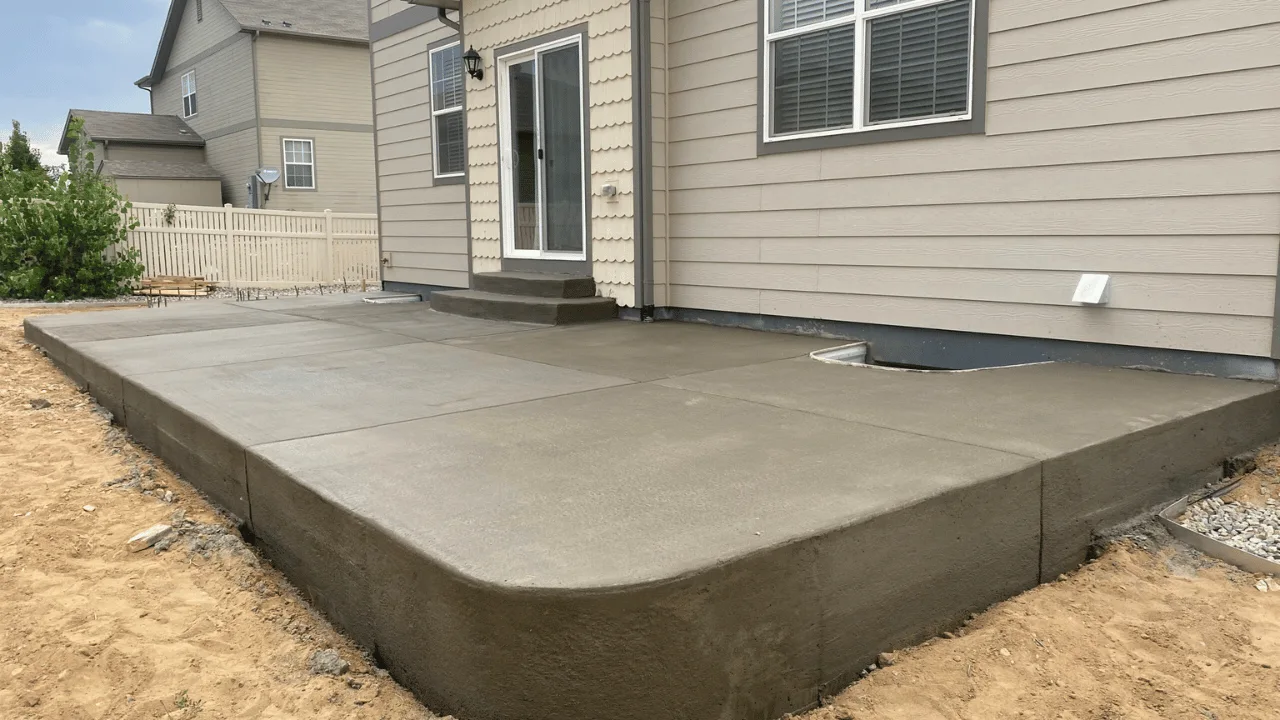
- Displacement of Exterior Slabs: Concrete walkways, patios, and steps are lighter than the main house structure, making them even more vulnerable to soil movement. If your outdoor steps are pulling away from the house, or if your driveway has developed large offsets where slabs meet, the underlying soil is actively swelling.
Professional Engineering Solutions for Swelling Soils
Because expansive soils are so prevalent along the Front Range, modern building codes in Fort Collins require proactive engineering solutions to protect new structures—though requirements vary by municipality, so confirm with your local building department. Building a durable foundation on clay requires isolating the concrete from the shifting ground or replacing the problematic soil entirely.
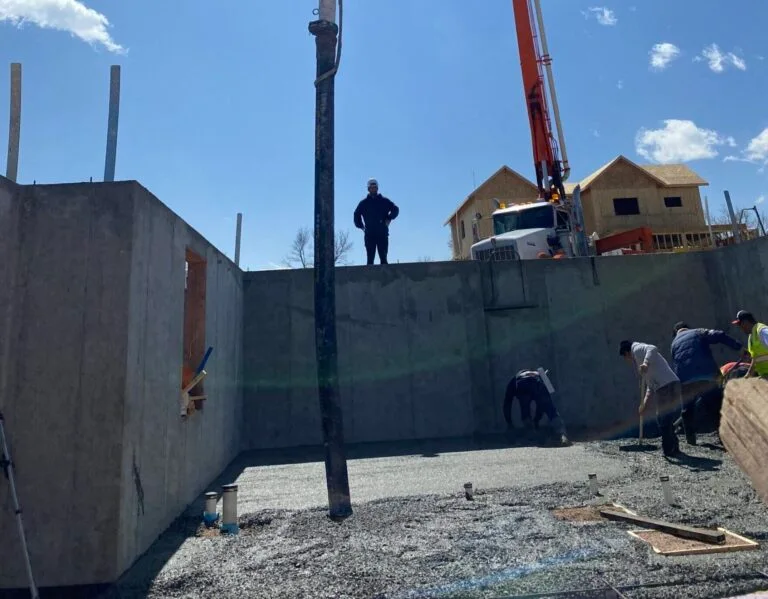
One of the most straightforward methods is over-excavation. Before we pour any concrete, our team excavates several feet below the designed foundation level, removing the active clay soils. We then backfill the excavation with non-expansive, structurally stable fill material, such as crushed gravel or engineered soil mixes. This stable fill is compacted in precise lifts, creating a solid base that does not expand when wet, effectively shielding the concrete above from movement.
For heavier structures or sites with exceptionally deep clay deposits, deep foundation piers are often specified. These are drilled deep into the earth, passing through the active moisture zone and anchoring into stable bedrock. Concrete grade beams are then poured on top of these piers to support the building, keeping the foundation entirely suspended above the unstable surface soils.
For basement construction, we often build structural concrete floors. Instead of pouring a slab directly on the ground, the concrete floor is poured over temporary structural void forms, often made of corrugated cardboard honeycomb. These forms support the wet concrete during the pour. Over time, moisture from the soil degrades the cardboard, leaving a hollow gap beneath the concrete floor. When the underlying soil swells, it expands upward into this empty void without pressing against or cracking the concrete floor above.
How Above and Below Concrete Builds to Last
Constructing durable foundations in Fort Collins requires deep local experience and a rigorous attention to detail. We bring years of local hands-on experience to every project. As a concrete contractor in Fort Collins, we understand the unique challenges of building along the Front Range and treat your property with care.
Our team oversees every excavation, reinforcement grid, and concrete pour to make sure it meets high standards. We are bonded and insured, and our crew is OSHA 30 certified. Whether we are pouring commercial slabs or residential structures, we stand behind our workmanship.
If you are planning a new construction project, partnering with an experienced local contractor is essential. We work closely with local geotechnical engineers to execute soil mitigation plans with absolute precision. From structural design to final finishing, our specialized approach to pouring stable foundations in Fort Collins ensures that your home rests on a solid, long-lasting base that can withstand the test of time and soil movement.
Landscaping and Drainage: Preventing Foundation Stress
While professional engineering is vital during the construction phase, ongoing maintenance is your best defense against foundation damage on existing properties. The single most important goal is to maintain consistent soil moisture levels around the perimeter of your home. Large fluctuations in water content are what trigger the destructive swell-and-shrink cycle.
First, verify that your lot has proper grading. The ground surrounding your foundation should slope away from the house, dropping at least six inches over the first ten feet. This positive slope prevents rainwater and snowmelt from pooling near your foundation walls and saturating the clay soil.
Second, manage your roof drainage. Keep your gutters clean and free of debris, and ensure that every downspout is equipped with an extension that discharges water at least five feet away from the foundation. Emptying gutters directly against the house will saturate the soil and guarantee foundation shifting over time.
Third, plant wisely. Keep high-water plants, trees, and heavy irrigation zones away from the foundation perimeter. Tree roots can draw massive amounts of water from the soil during hot Colorado summers, causing localized soil shrinkage that leads to uneven settling. Instead, choose low-water xeriscape options for your perimeter landscaping and keep sprinkler heads at least five feet away from concrete walls. For more detailed advice on managing soil moisture, refer to the Colorado State University Extension guide on foundation problems and solutions.
What Drives the Cost of Foundation Protection?
The cost of protecting or repairing a foundation on expansive soil varies widely because every property has a unique soil profile and structural design. Several key factors determine the total investment required for your project:
- Soil Analysis: A professional geotechnical engineer must perform soil borings to determine the depth and swell potential of the clay. This initial analysis is required to draft an effective engineering plan.
- Excavation Depth: The deeper the active clay layer, the more soil must be excavated and replaced with stable fill material.
- Steel Reinforcement: Foundations on expansive soils require heavy structural steel rebar grids to resist bending forces. The amount and thickness of the rebar directly affect material and labor costs.
- Foundation Type: Drilled concrete piers and suspended structural floors require more specialized equipment and labor than standard shallow foundations.
While proper soil mitigation increases the initial cost of construction, it is far less expensive than repairing a cracked, failing foundation down the road. The team at Above and Below Concrete is committed to delivering honest, accurate assessments based on your specific property and engineering requirements.
Request an Expert Foundation Inspection in Fort Collins
Do not let shifting soils compromise the structural integrity of your home or commercial building. If you have noticed cracks in your concrete, sticking doors, or uneven floors, get a professional assessment as soon as possible. Our team has the local knowledge and expertise to evaluate your site and execute the precise concrete work needed to protect your investment. Contact Above and Below Concrete today to request a detailed quote for your project and let us help you build on solid ground.
Common Questions
Frequently Asked Questions
Ready To Start?
Get Your Free Quote Today
Get a free quote from Above and Below Concrete — serving Fort Collins and surrounding areas.