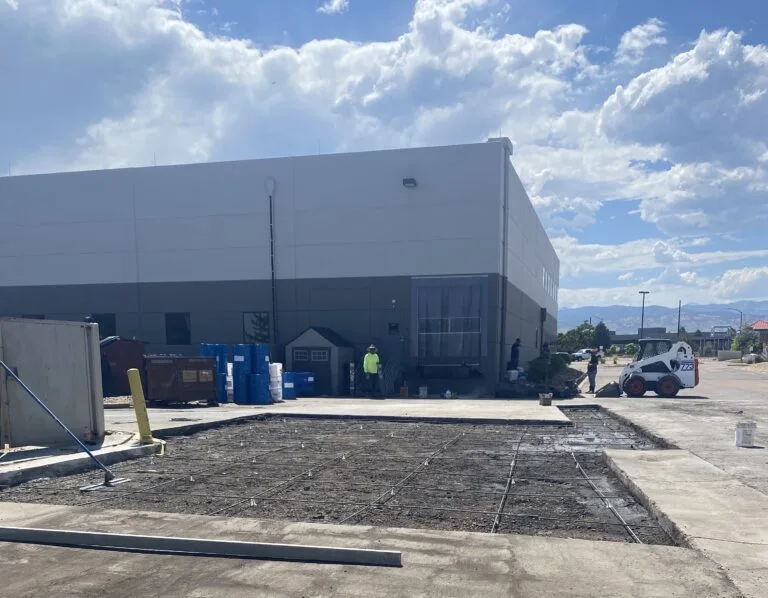
Commercial Concrete Slab Cure Time in Fort Collins, CO
Understand the timeline and local factors for curing high-traffic commercial slabs.
The Short Answer
For a commercial concrete slab to safely handle heavy vehicle traffic or structural loads, it generally needs a full 28-day cure to reach 100 percent of its design strength. While foot traffic is usually safe after 24 to 48 hours, and light equipment might be permitted after 7 days, rushing heavy commercial loads risks permanent structural damage. Always confirm specific timelines with your engineer and local building codes.
When managing a commercial construction project in Northern Colorado, the schedule is always tight, and waiting on a new surface can feel like watching grass grow. But pouring a slab is only half the battle. The real performance of your commercial flatwork or foundation is built during the critical days that follow. Whether you are building out a retail warehouse on South College Avenue or laying down a high-traffic drive lane for a distribution center, the way that slab hydrates and hardens dictates how it will perform for the next fifty years. Impatience costs money, and a compromised slab usually means tearing it out and starting over.
The Difference Between Drying and Curing
Many people outside the trade assume concrete simply dries out. In reality, concrete cures through a chemical reaction called hydration. When water mixes with Portland cement, it sparks an exothermic reaction that forms crystalline bonds. These bonds grow and interlock over time, turning a heavy liquid into a solid structural element. If the water evaporates before those bonds fully form, the chemical reaction stops early. The result is a weak, dusty surface that will crack under pressure.
Because hydration requires moisture and moderate temperatures, the curing process is highly sensitive to the environment. In a commercial setting, where the concrete will eventually support heavy shelving, semi-trucks, or constant forklift traffic, achieving maximum compressive strength is mandatory. You cannot afford a surface failure. That means keeping the moisture inside the slab and controlling its temperature until the internal structure is ready to bear the load.
The Standard Timeline for Commercial Concrete
According to the American Concrete Institute (ACI 318) and general industry standards, concrete curing follows a predictable curve. While the surface might look hard the next morning, the internal matrix is still highly fragile. Here is the standard progression for traditional concrete mixes.
24 to 48 Hours: Initial Set and Foot Traffic
Within the first day or two, the concrete achieves its initial set. It is usually safe for the crew to walk on the surface to remove forms or cut expansion joints. However, the surface is still soft enough that dropping a heavy tool or dragging metal across it will leave permanent gouges. At this stage, the concrete has only a fraction of its final strength.
7 Days: The 70 Percent Mark
After a full week of proper curing, standard concrete generally reaches about 70 percent of its designated compressive strength. For many projects, this is the point where light equipment can carefully access the site. A standard passenger vehicle or a light rubber-tired scissor lift might be permitted on the slab, provided the contractor gives the green light. However, heavy commercial loads are still strictly off-limits. Bringing a fully loaded forklift onto a seven-day-old slab risks point-load fractures that ruin the integrity of the pour.
28 Days: Full Design Strength
The 28-day mark is the gold standard in the trade. By this time, the hydration process has progressed enough that the concrete has reached 100 percent of its specified design strength. This is when the slab is officially ready for heavy commercial traffic, including loaded pallet jacks, semi-trucks, and heavy structural loading. While the concrete will actually continue to harden slowly for years, 28 days is the threshold where it meets the structural engineer's requirements for full operational use.
If your project schedule cannot accommodate a 28-day wait, there are high-early strength mix designs available. These specialized mixes use different cement types and chemical accelerators to reach target strength in a fraction of the time. However, they require precise handling and are highly sensitive to weather conditions.
How Fort Collins Weather Impacts the Cure
Colorado presents a unique set of challenges for concrete work. The climate in Fort Collins is semi-arid, meaning the air is incredibly dry. Combine that with high altitude sun exposure, and moisture can be sucked out of a freshly poured slab at an alarming rate. If the surface dries too fast, it shrinks rapidly while the bottom remains wet, leading to severe curling and surface cracking.
Temperature swings are another major factor. A pleasant 65-degree afternoon in Larimer County can easily drop below freezing by 3:00 AM. Concrete must be protected from freezing during its initial curing phase. If the water inside the concrete freezes before the hydration bonds are strong enough, the expanding ice crystals will literally blow the concrete apart from the inside, destroying its structural integrity.
To combat these local conditions, professional crews use several strategies. During hot, dry summer pours, contractors often use wet curing methods, applying moisture-retaining blankets or spraying a chemical curing compound that forms a membrane over the slab to lock the water inside. During the colder months, the approach shifts. Crews often rely on heavy insulated concrete curing blankets to trap the heat generated by the hydration process, keeping the slab warm enough to continue curing even when the ambient air temperature drops below freezing.
Types of Commercial Traffic and Point Loading
When asking when a slab can handle heavy traffic, it is important to define what "heavy" means. A pickup truck weighing 6,000 pounds distributes its weight across four large, pneumatic rubber tires. The actual pressure on any single square inch of the concrete is relatively low.
A warehouse forklift, on the other hand, is a completely different beast. A standard forklift can weigh 9,000 pounds empty, and carries most of its weight on small, solid polyurethane wheels. The point load—the amount of downward force concentrated on a tiny contact patch—is massive. Driving a forklift over a slab that has only cured for 14 days is a recipe for edge spalling and micro-fractures, particularly near joints where the concrete is most vulnerable. This is why warehouse floors and distribution centers require strict adherence to the full 28-day cure time, and often employ higher compressive strength mixes than standard exterior flatwork.
Building Codes and Load Testing
Commercial construction is heavily regulated to ensure public safety and structural longevity. In our area, projects must adhere to the international building codes adopted locally, and all structural concrete must be designed and cured according to ACI 318 standards. Furthermore, any work happening in the right-of-way or tying into public infrastructure must comply with the Fort Collins Engineering Specs and Standards, which dictate specific materials, subgrade preparation, and testing procedures.
Because local regulations change and are updated regularly, you must verify all specific code requirements and permit conditions with the Fort Collins Building Division before relying on general timelines. On most commercial jobs, you do not just guess when the concrete is ready. Crews typically cast test cylinders from the same batch of concrete used in the pour. These cylinders are stored in similar conditions and sent to a geotechnical laboratory to be physically crushed in a hydraulic press at the 7-day and 28-day marks. These "break tests" provide hard data proving the concrete has achieved the exact compressive strength required by the structural engineer. Only when the lab results come back satisfactory is the slab cleared for full commercial use.
What Happens If You Rush the Schedule?
The pressure to open a facility or clear a site for the next phase of construction is immense. However, rushing heavy traffic onto a green slab is a gamble you will likely lose. When concrete is subjected to heavy loads before it has reached its design strength, several failures can occur.
First, you risk surface abrasion. The top layer of the paste will wear away prematurely under tire friction, leading to a chronically dusty surface that is difficult to clean and maintain. Second, you risk joint spalling. As heavy wheels roll across the control joints, the weakened edges of the concrete will chip and break away, turning clean lines into jagged hazards. Finally, and most severely, you risk structural cracking. If the load exceeds the current tensile strength of the curing slab, cracks will propagate from the bottom up. Once a structural crack forms, water infiltrates the subgrade, leading to frost heave in the winter and rapid deterioration of the entire pad.
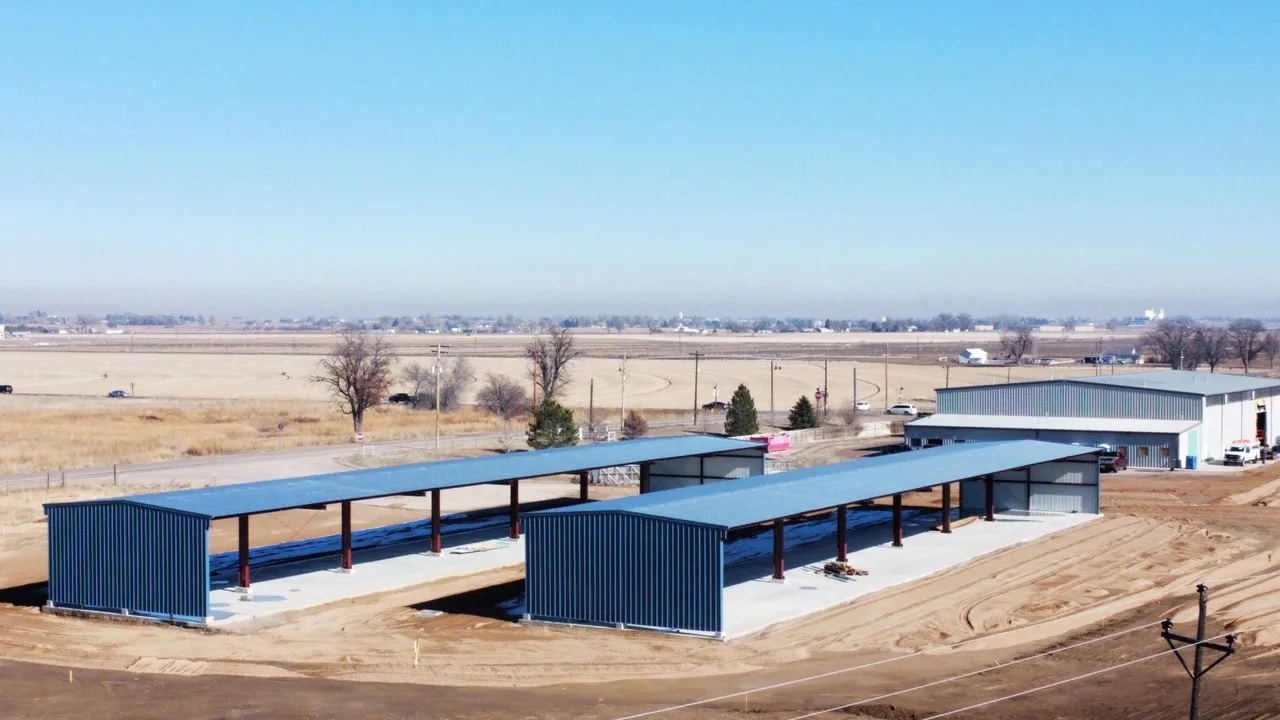
Working with a Local Concrete Professional
Managing the variables of subgrade preparation, mix design, weather protection, and curing timelines requires experience. At Above and Below Concrete, we understand the specific challenges of building in Northern Colorado. We are a family-owned operation managed by Colorado natives, and we bring five years of dedicated business experience to every job site. We are OSHA 30 certified, bonded, and insured, giving you peace of mind that safety and compliance are our top priorities.
Whether you need expansive heavy commercial slab installations for a new facility or a simple equipment pad, we stand behind our work with a 100% satisfaction guarantee. We do not cut corners on the curing process because we know that the longevity of the structure depends on those crucial first few weeks. As a trusted commercial concrete contractor, we handle the logistics so you can focus on the rest of your build.
Get Your Commercial Project Started Right
Every commercial site has unique soil conditions, load requirements, and scheduling demands. There is no one-size-fits-all answer to concrete engineering. The only way to get accurate timelines and cost expectations is to have a professional evaluate your specific plans and site conditions. If you are planning a commercial build in Fort Collins, Greeley, Windsor, or the surrounding areas, do not leave your flatwork to chance. Reach out to our team today to schedule a consultation and get an accurate quote for your specific project.
Common Questions
Frequently Asked Questions
Ready To Start?
Get Your Free Quote Today
Get a free quote from Above and Below Concrete — serving Fort Collins and surrounding areas.