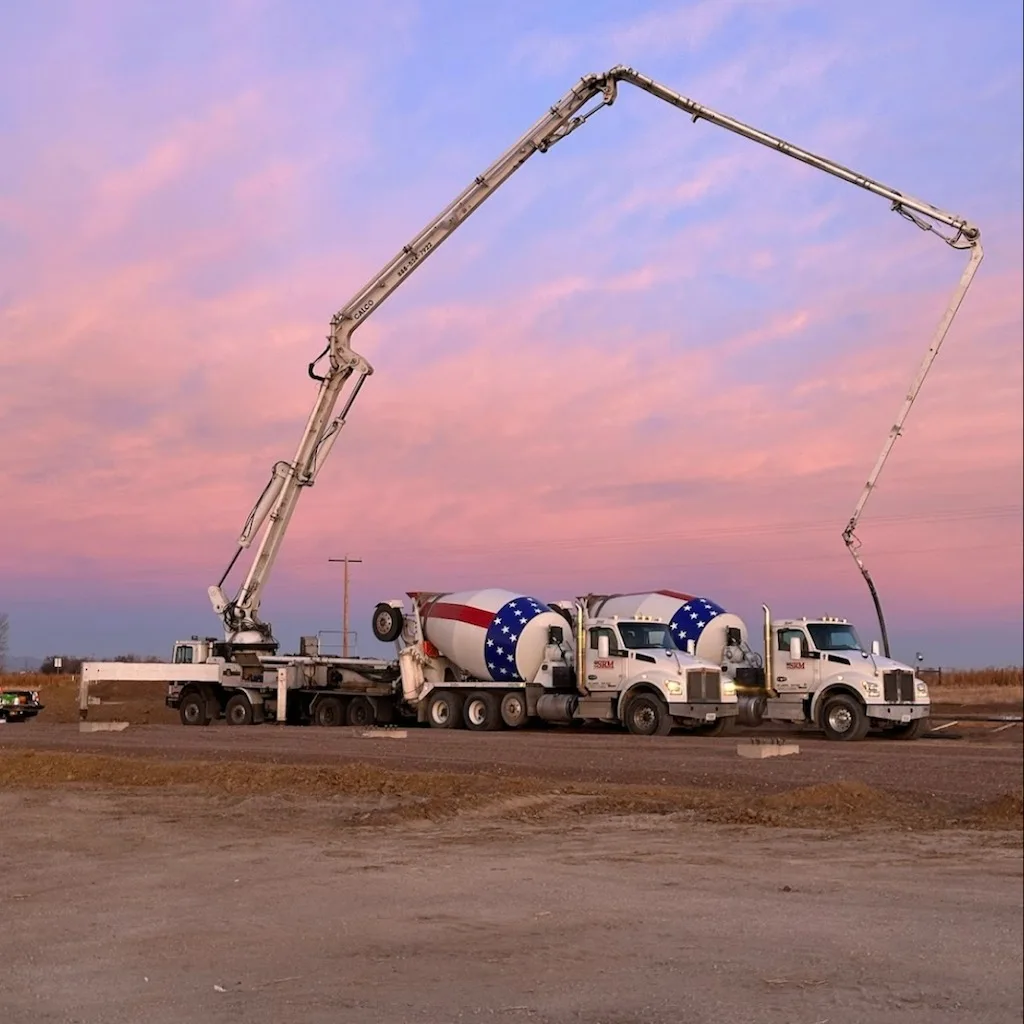
Choosing the Best Concrete Mix and PSI for Fort Collins Driveways
How to select the right compressive strength, air content, and base materials for Front Range winters.
The Short Answer
The best concrete mix for Colorado's freeze-thaw cycles is a 4,000 PSI air-entrained mix with an air content of 5% to 7% and a water-to-cement ratio below 0.45. This dense, low-permeability mixture creates billions of microscopic expansion chambers, allowing water to freeze and expand safely within the slab instead of causing cracks and surface scaling.
The best concrete mix for Colorado freeze-thaw cycles is an air-entrained mix with a compressive strength of at least 4,000 PSI and a water-to-cement ratio below 0.45. This specific mix incorporates 5% to 7% entrained air, creating microscopic expansion chambers that prevent structural cracking and surface flaking during harsh Front Range winters.
For homeowners planning a new concrete driveway installation in Fort Collins, selecting the correct mix design is the single most important factor for long-term durability. Colorado's unique climate puts incredible stress on outdoor concrete. With rapid temperature swings, intense high-altitude sunlight, and frequent snow, standard off-the-shelf concrete mixes simply will not last. Understanding the technical requirements of cold-weather concrete helps protect your investment.
The Science of Freeze-Thaw Destructive Cycles
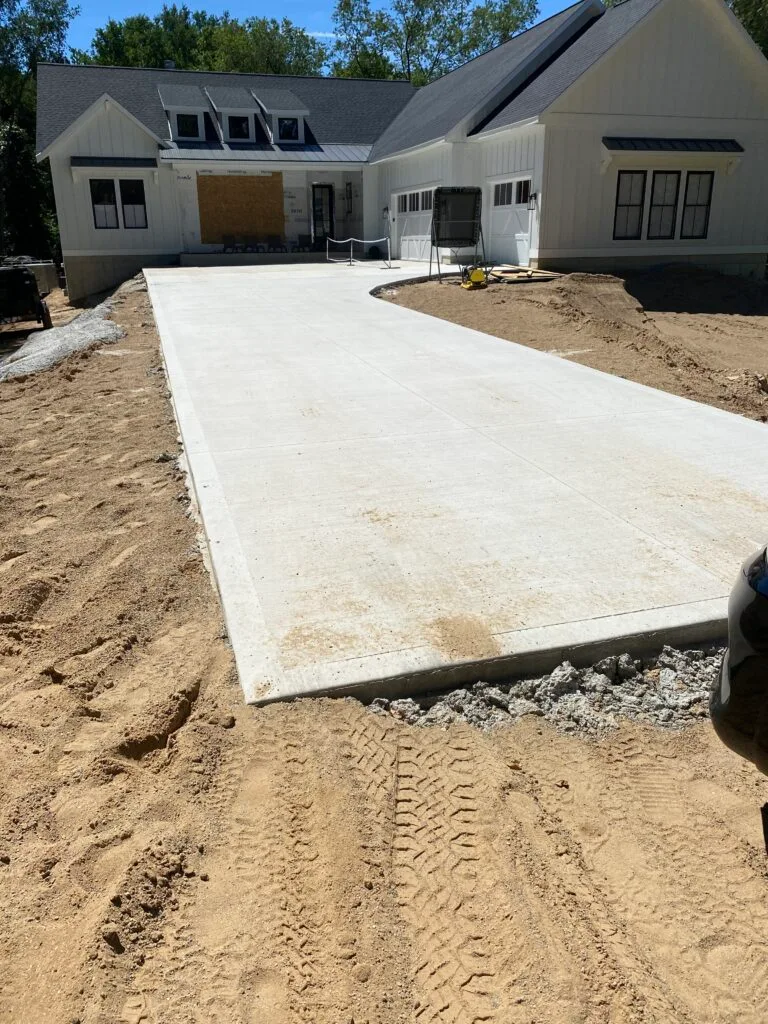
To understand why a specialized mix is necessary, you have to look at what happens inside cured concrete during a Northern Colorado winter. Concrete may look completely solid, but it behaves like a hard sponge. It contains a network of tiny pores, capillaries, and voids that naturally absorb surface moisture from rain, melting snow, and ice.
In Fort Collins, winter weather is characterized by extreme temperature fluctuations. A typical January day might bring warm, sunny afternoon conditions that melt accumulated driveway snow, followed by a sudden plunge below freezing as soon as dusk arrives. When the water trapped inside the concrete pores freezes, it expands by approximately 9% in volume. This expansion exerts immense physical pressure on the surrounding concrete paste. If the concrete is weak or lacks internal relief spaces, this pressure exceeds the tensile strength of the material, causing micro-cracks to form. Over several seasons, these tiny fractures grow, leading to extensive surface scaling, pitting, and deep structural failure.
Why Air-Entrainment is Your Best Defense
The primary weapon against freeze-thaw damage is air-entrainment. This involves introducing billions of microscopic air bubbles into the wet concrete mix during batching. Unlike trapped air pockets caused by poor consolidation, entrained air bubbles are incredibly small, uniform, and distributed evenly throughout the cement paste.
These tiny bubbles function as pressure-relief valves. When moisture inside the concrete capillaries begins to freeze and expand, it is forced into the adjacent air bubbles. This provides a safe zone for the expanding ice, preventing internal pressure from building up and fracturing the cement paste. Once the temperature warms and the ice melts, the water retreats back into the capillaries, leaving the structure intact.
For outdoor residential flatwork in Fort Collins, a professional mix design must specify an air content of 5% to 7%. If the air content falls below this range, the concrete will fail to resist severe freeze-thaw cycles. If it goes too high, the overall compressive strength of the slab decreases. Achieving the perfect air-entrainment balance requires experienced handling from the batch plant to the job site.
Understanding PSI: Why 4,000 PSI is the Baseline
Compressive strength is measured in Pounds per Square Inch (PSI). While a standard 3,000 PSI mix is perfectly acceptable for interior garage floors or basement slabs that remain insulated from the elements, it is insufficient for an outdoor driveway in Northern Colorado. For residential driveways, we always recommend a minimum of 4,000 PSI.
Higher PSI mixes are denser and contain more cementitious material relative to sand and aggregates. This density naturally reduces the size and volume of the internal capillaries, making the cured concrete much less permeable. Less permeability means less water can find its way into the slab, which directly limits the amount of freeze-thaw action that can occur. In addition, a 4,000 PSI slab provides the structural capacity needed to support heavy passenger vehicles, delivery trucks, and trash collectors without cracking under load, especially when the subgrade softens during the spring thaw.
Choosing the Right Aggregate: Why Rock Quality Matters
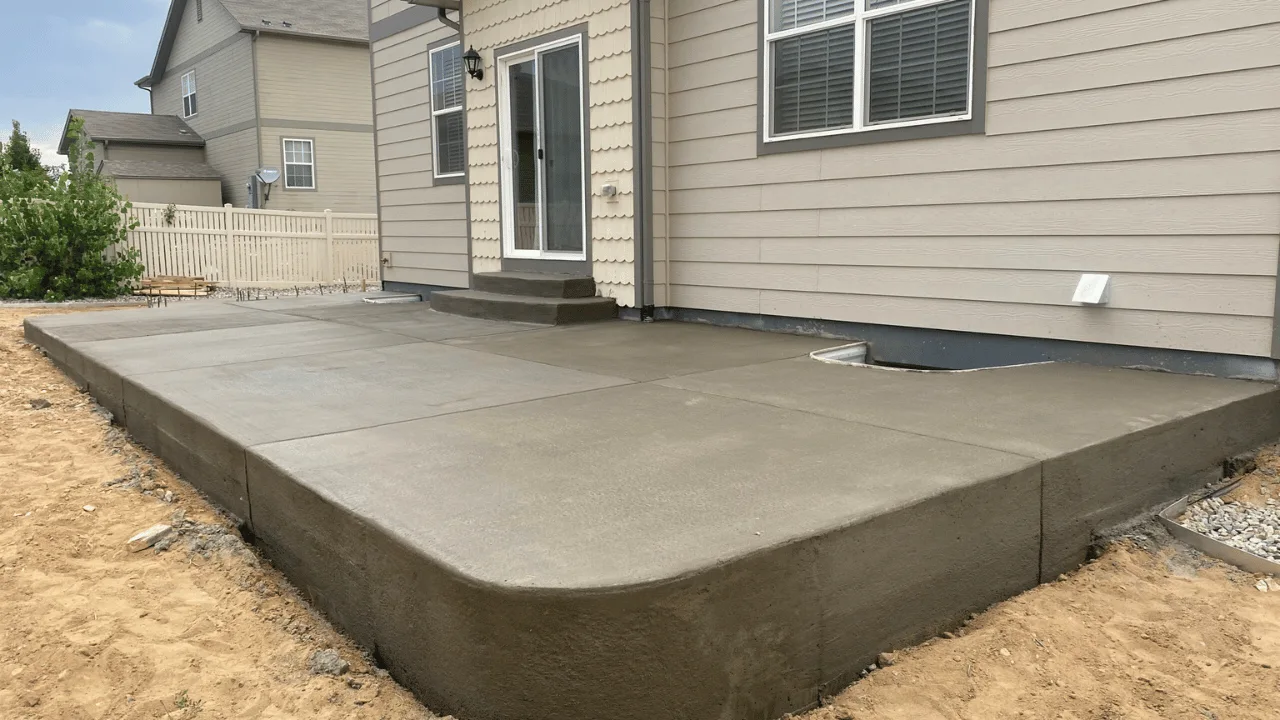
While cement paste is the glue that holds everything together, aggregates make up about 60% to 75% of the total volume of concrete. The quality, size, and type of stone used in your concrete mix are just as important as the PSI rating. In Northern Colorado, ready-mix producers draw aggregates from local riverbeds and quarries. These materials must be carefully washed, graded, and tested for durability.
For outdoor flatwork, we use well-graded aggregates that range from fine sand to coarse rock. Using a mix of different sizes minimizes the space between the stones, which reduces the amount of cement paste required to bind them together. This aggregate optimization is important because cement paste is the component most susceptible to shrinkage cracks and chemical degradation. Local stones must also be resistant to alkali-silica reactions (ASR), a chemical process where silica in the aggregate reacts with alkalis in the cement, causing internal swelling and map cracking. Proper mix design often includes supplementary cementitious materials, such as Class F fly ash, which mitigates ASR and significantly lowers concrete permeability.
The Hidden Danger of Excess Water
The water-to-cement ratio is the weight of the mixing water divided by the weight of the cement. For high-durability outdoor concrete, this ratio should ideally be kept below 0.45. A lower ratio ensures there is just enough water to initiate the chemical reaction known as hydration, which binds the ingredients together.
When concrete arrives on-site, there is often a temptation to add extra water to the truck to make the wet concrete flow more easily. While this makes the concrete easier to place and finish, it is highly destructive to the finished product. The excess water that is not used in the hydration process eventually evaporates, leaving behind a network of large, open capillaries. This drastically increases the permeability of the concrete, making it highly susceptible to water intrusion and subsequent freeze-thaw damage. It also lowers the overall strength of the slab, turning a specified 4,000 PSI mix into a weak, porous surface.
Proper finishing techniques are just as important as the mix design itself. Over-working the surface with steel trowels or dusting dry cement onto wet spots can draw water and fine particles to the top layer. This weakens the surface skin and drives out the protective entrained air, leading to premature scaling and dusting during the first winter.
De-icing Agents: The Chemical Threat to Driveways
Many homeowners do not realize that the salts they spread on their driveway in January can destroy their concrete before spring. Chemical de-icers do not directly eat the concrete. Instead, they work by lowering the freezing temperature of water. This means water stays liquid at lower temperatures, allowing it to penetrate deeper into the concrete pores.
Once the temperature drops below the lowered freezing point, that trapped water freezes with massive force. Because the salt water has penetrated deeper, the resulting internal pressure is concentrated beneath the concrete surface, causing large scales to pop off. Chemical de-icing compounds also accelerate the corrosion of any steel reinforcement, such as rebar or wire mesh, embedded inside the slab. When steel rusts, it expands, cracking the concrete from the inside out. For these reasons, we always advise against applying chemical de-icers to new concrete, especially during its first two winters. Shoveling promptly and using plain sand for traction is the safest way to maintain your driveway.
Subgrade Preparation and Managing Expansive Soil
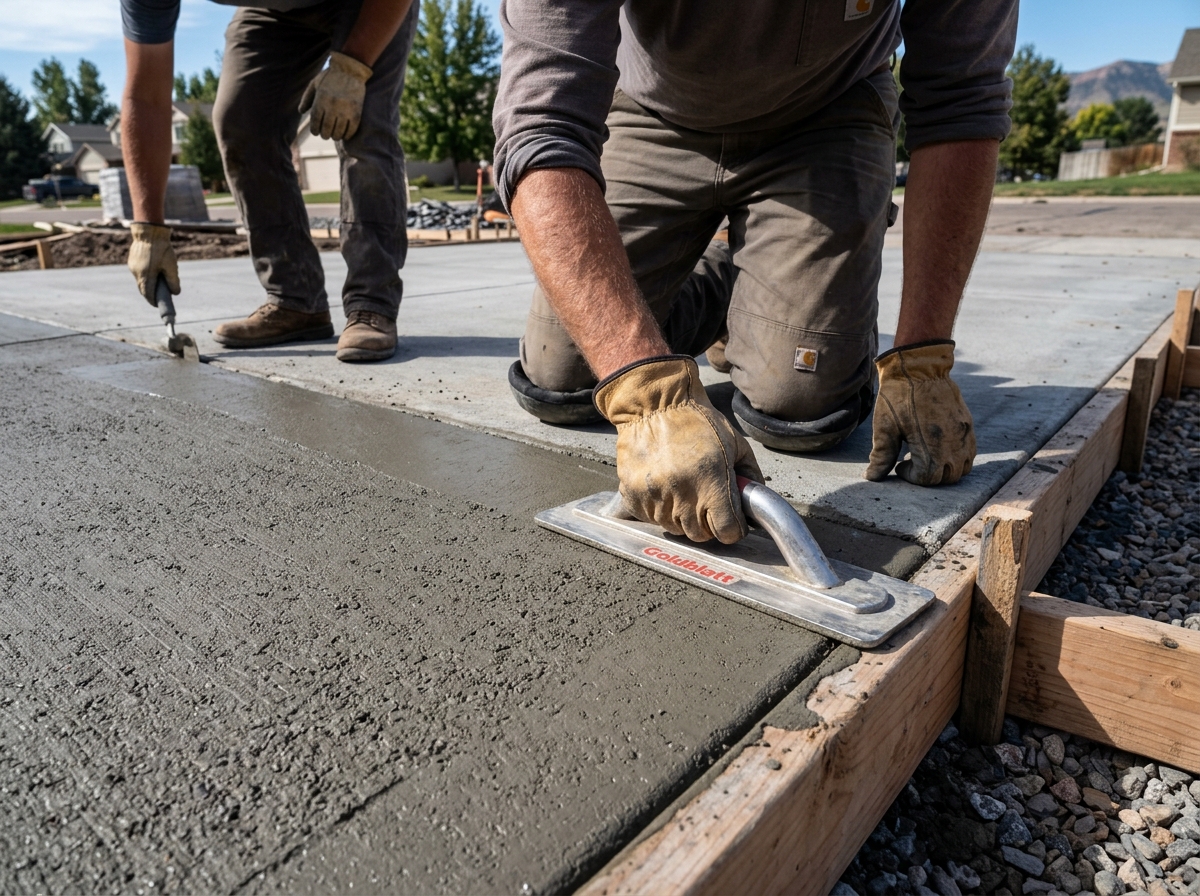
The strongest concrete mix in the world will still fail if it is poured over a weak foundation. In Fort Collins, the native soils consist largely of expansive clay. These clay soils swell significantly when wet and shrink as they dry out, creating constant shifting beneath your driveway.
To prevent this movement from cracking your new slab, thorough ground preparation is required. The native soil must be excavated, graded, and covered with a thick layer of high-quality aggregate base. We recommend a minimum of 4 to 6 inches of compacted road base. This aggregate layer serves two main purposes: it provides a stable, uniform platform that distributes vehicle loads evenly, and it acts as a drainage field, allowing water to flow away from the underside of the concrete rather than pooling where it can freeze and cause frost heave.
Working with an experienced concrete contractor in Fort Collins ensures that your driveway base is properly engineered, compacted, and graded before the concrete is placed. Taking these foundational steps is the only way to prevent uneven settling and structural cracking over time.
Curing and Sealing for Long-Term Protection
Once the concrete is placed and finished, the chemical curing process begins. Curing is not just drying; it is the continuation of hydration. If the moisture inside the fresh concrete evaporates too quickly due to wind, low humidity, or high-altitude sun, hydration stops prematurely, leaving the surface weak and brittle.
To prevent this, professional installers apply a high-quality curing compound immediately after finishing. This compound forms a temporary barrier that locks moisture inside the slab, ensuring the concrete cures evenly throughout its entire thickness. To support these professional standards, the Colorado Ready Mixed Concrete Association provides educational materials and mix design guidelines to help local contractors deliver the highest quality ready-mix concrete for our challenging regional climate.
After the concrete has cured for at least twenty-eight days, applying a high-quality penetrating sealer is highly recommended. Penetrating sealers chemically react with the concrete to form a hydrophobic barrier inside the pores. Unlike surface sealers that can peel, a penetrating sealer blocks water and corrosive de-icing salts from entering the slab while still allowing internal moisture vapor to escape safely.
Choose Quality for Your Next Driveway Project
Investing in a high-quality concrete mix and correct installation methods will save you from expensive repairs, patching, and premature replacement down the road. At Above and Below Concrete, we bring local experience and full bonding and insurance to every job. Our crew focuses on reliable workmanship and clear communication, so your new driveway stands up to Colorado winters.
If you are ready to install a durable, beautiful driveway that can withstand Colorado's toughest winters, we are here to help. Fill out our online request form today to get an accurate estimate tailored to your property's specific needs.
Common Questions
Frequently Asked Questions
Ready To Start?
Get Your Free Quote Today
Get a free quote from Above and Below Concrete — serving Fort Collins and surrounding areas.